Introduction
Turning raw iron ore into a workable tool is one of the most demanding and rewarding skills in primitive technology. Long before industrial foundries and modern forges, our ancestors figured out how to extract iron from the earth using nothing more than clay, charcoal, and forced airflow. The bloomery furnace, a simple shaft furnace made from natural materials, was the gateway to the Iron Age, and understanding how it works connects you directly to thousands of years of human ingenuity and survival engineering.
In this experiment, the Primitive Technology channel tests three distinct methods for consolidating iron prills, the small metallic particles produced by bloomery smelting, into a single usable mass. Each approach reveals unique challenges in heat management, furnace design, and material handling. Whether you are a bushcraft enthusiast, a primitive skills practitioner, or simply fascinated by how early humans mastered metallurgy, this video breaks down the practical realities of iron consolidation without modern equipment.
For survivalists and preppers, the ability to produce tools from raw materials is the ultimate form of self-reliance. If supply chains fail and modern tools wear out or break, knowing how to smelt and forge iron from nothing but earth, charcoal, and airflow could mean the difference between dependence and independence. This is not just an academic exercise in primitive technology. It is a foundational survival skill that connects you to the same knowledge that built human civilization.
The Challenge: From Prills to Usable Iron
The critical lesson here is that smelting iron is only half the battle. After you extract iron from ore in a bloomery furnace, the resulting prills must be consolidated through repeated heating and hammering before any real forging can begin. This video demonstrates three approaches to that crucial step, each with its own strengths and pitfalls. Understanding these methods gives you a foundation for building your own primitive forge setup and working with metal using only natural materials.
Key Survival Takeaways
- Iron prills require consolidation: After smelting iron ore in a bloomery furnace, you are left with small prills of metallic iron scattered throughout the slag. These must be consolidated into a single mass before any forging can take place. This step is just as critical as the smelting itself and cannot be skipped.
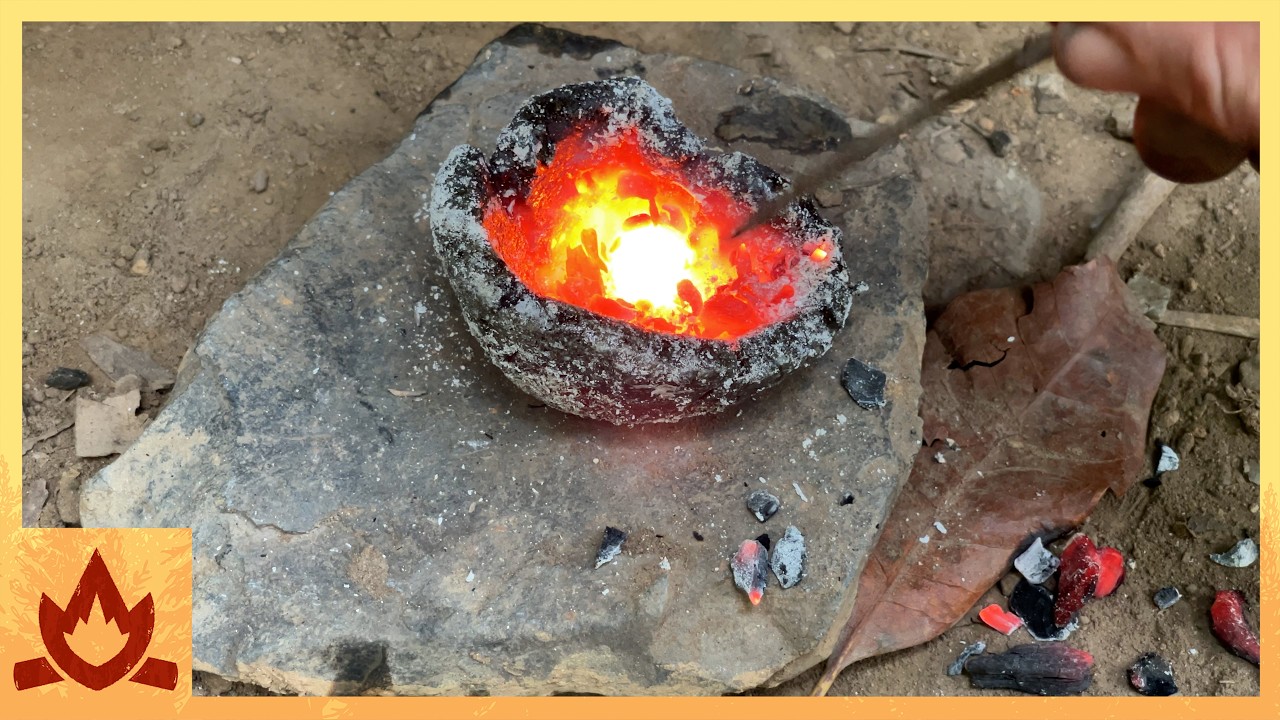
- Open forge crucibles are unstable: The first experiment used a crucible placed in an open forge. While the prills partially fused, the crucible tipped over and spilled the iron. Open forges lack the containment walls and consistent heat concentration needed for reliable consolidation.
- A dedicated furnace delivers better results: Building a small furnace and introducing iron through the top produced the best outcome. Two-thirds of the iron consolidated into a single mass, proving that furnace geometry and heat retention matter enormously compared to an open forge setup.
- Wood ash paste protects against oxidation: For the final method, remaining iron pieces were mixed into a wood ash paste before heating. Wood ash acts as a flux, creating a protective barrier that shields the metal surface from oxygen and promotes better welding between particles.
- Temperature control is everything: Iron must reach welding temperature (approximately 1,200 to 1,300 degrees Celsius) without burning. Too little heat and the particles will not bond. Too much and the iron oxidizes and degrades into useless slag.
- Multiple heat cycles are necessary: A single heating will not fully consolidate iron prills. The process requires repeated heating and compaction cycles to gradually weld the particles together into a dense, workable bloom that can then be forged into tools.
- Patience defines primitive metallurgy: Every successful method in the video required time, careful observation, and adaptability. There is no shortcut when your tools are made from clay, charcoal, and ingenuity. The willingness to fail and try again is what separates successful ironworkers from those who give up.
Why Primitive Ironworking Matters for Survival
Modern survival often focuses on short-term skills like fire starting and shelter building, but long-term self-reliance requires the ability to produce and maintain tools. Iron is the backbone of civilization: knives, axes, hinges, nails, and agricultural implements all depend on it. In a prolonged survival scenario where trade networks collapse and manufactured goods become scarce, the ability to smelt iron from local ore and forge it into useful tools becomes invaluable.
The techniques shown in this video are the same ones that launched humanity out of the Stone Age. Learning them is not just about replicating history. It is about possessing a skill that could sustain you and your community when modern supply chains fail. The transition from scattered iron prills to a consolidated, forgeable mass represents the fundamental leap from raw material to functional tool, and that leap is what survival metallurgy is all about.
Essential Gear for Primitive Forge Work
If you want to try primitive iron consolidation or simply build a better understanding of forge work, having the right equipment makes a significant difference. Here are the essentials for any aspiring blacksmith or primitive skills practitioner:
- A high-quality crucible for melting metal is essential for containing molten material safely.
- For building your own forge or furnace, refractory fire bricks provide the heat retention needed to reach welding temperatures.
- A reliable forge blower or bellows ensures you can deliver consistent airflow to maintain high heat.
- For safely handling hot metal, a pair of blacksmith forging tongs is indispensable.
- To get your fire started in any conditions, a ferrocerium rod fire starter is a must-have for any primitive skills kit.
As an Amazon Associate, we earn from qualifying purchases.
Conclusion
This video is a masterclass in the patience and problem-solving required for primitive ironworking. The transition from scattered iron prills to a consolidated, forgeable mass is not straightforward, and each failed attempt teaches something valuable about heat dynamics, material science, and furnace design. The small furnace approach stands out as the most effective method, but the wood ash paste technique demonstrates how even the simplest natural materials can solve complex metallurgical problems.
For anyone interested in self-reliance, primitive skills, or the history of metalworking, these experiments are both educational and deeply inspiring. The knowledge to turn earth into tools is the ultimate survival skill. When modern supply chains falter and manufactured goods disappear, the person who can smelt iron from ore and forge it into tools will never be dependent on anyone else.