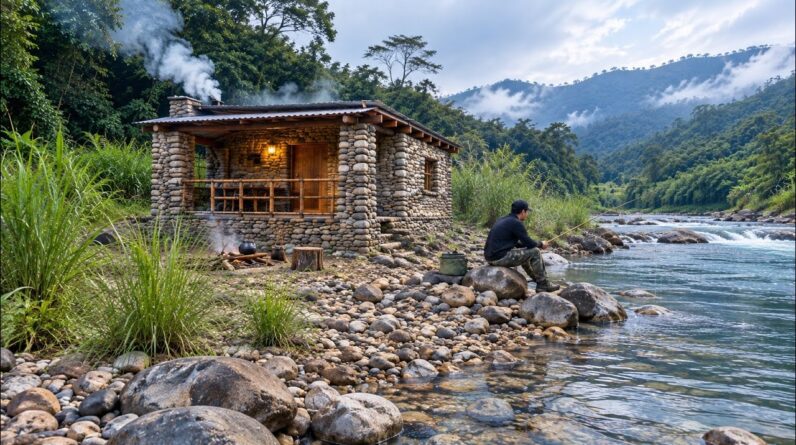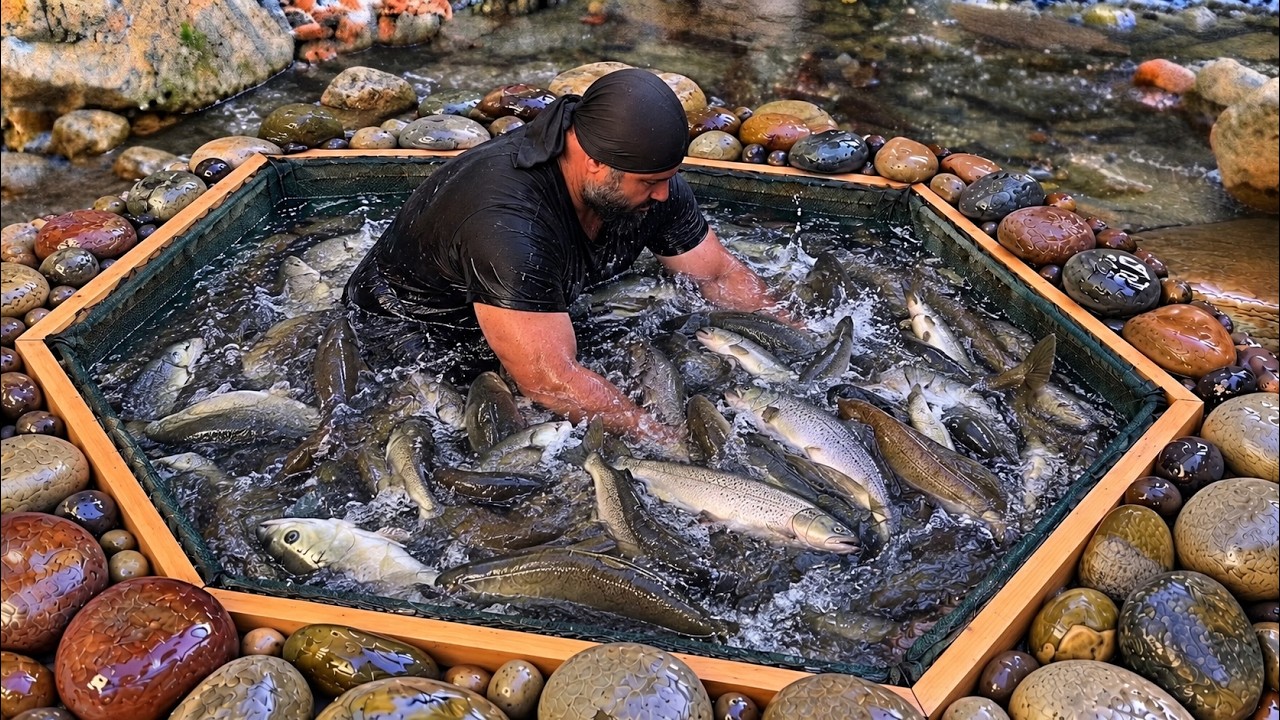
When you’re stranded near a river or stream, food procurement quickly becomes a top priority. While active fishing with a rod requires constant attention and energy expenditure, a well-built fishing trap works around the clock — even while you sleep. In this video, we watch as a survivalist builds an unusual fishing trap from natural materials found in the wild, places it in a flowing river, and returns each day to check the results. The outcome is remarkable: nearly every single day, the trap contains enough fish to fill an entire bag.
This guide breaks down the trap design, how the funnel entrance works, and the core survival principles behind passive fishing methods. Whether you’re honing your bushcraft skills, preparing for a wilderness emergency, or simply want to understand how primitive cultures harvested fish efficiently with minimal tools, this technique demonstrates how knowledge of animal behavior combined with simple engineering can keep you fed in the wild for days on end with almost no daily effort.
How the Trap Works
The concept behind this primitive fishing trap is deceptively simple but incredibly effective. The builder constructs a woven enclosure from sticks and natural cordage, shaped with a narrow funnel entrance that faces upstream. As fish follow the current, they are naturally guided into the wide opening of the trap. Once inside, the enclosure widens, and the fish cannot locate the narrow exit point they entered through.
The trap is secured in the riverbed using rocks and stakes, positioned in a spot where water flows naturally through the structure. This constant flow of water keeps the trapped fish alive and fresh, which is a crucial advantage over methods that kill the catch immediately. The builder returns each day, removes the accumulated fish, and resets the trap for the next cycle.
What makes this method particularly valuable for survival situations is its reliability. Unlike hook-and-line fishing, which depends on fish actively biting bait, a passive trap exploits the natural movement patterns of fish. As long as fish are present in the waterway, the trap has a chance of catching them.
Key Survival Takeaways
- Passive trapping conserves critical energy: Unlike active fishing that demands your full attention and physical effort, a trap works 24/7 without your presence. In a survival situation where every calorie matters, passive methods let you focus on shelter building, fire starting, and water purification while food comes to you.
- The funnel design is the core mechanism: The trap uses a funnel-shaped entrance that allows fish to swim in easily following the current, but makes it nearly impossible for them to find the narrow exit. This one-way entry principle is the foundation of nearly every effective fish trap ever built, from ancient woven basket traps to modern commercial minnow traps.
- Strategic placement multiplies success: The trap was positioned in a natural water channel where fish regularly travel. Choosing the right location near currents, narrow passages, or natural bottlenecks where fish are funneled through dramatically increases your catch rate compared to open water placement.
- Natural materials are surprisingly effective: The entire trap was constructed from sticks, branches, and natural cordage harvested from the surrounding environment, proving that manufactured gear is not necessary for successful food procurement in the wild.
- Daily checking prevents waste and builds a stockpile: By returning each day to collect trapped fish, the trapper accumulated a significant food supply over time. Regular checking also prevents caught fish from dying and spoiling, keeping your food fresh and edible.
- Understanding animal behavior is the real skill: The trap exploits the natural tendency of fish to follow water currents and seek shelter in structures. Knowing how your target animal moves and behaves in its environment is one of the most valuable survival skills you can develop.
- Multiple traps scale your food supply: Setting several traps in different locations along a waterway multiplies your catch potential without requiring additional daily effort, making trapping one of the most efficient survival food strategies available.
Gear & Equipment
While the trap in this video was built from natural materials, having the right gear can make survival fishing far more effective and reliable. A compact survival fishing kit gives you hooks, line, and lures in a pocket-sized package for active fishing alongside your traps. For passive trapping, a collapsible minnow trap is lightweight and easy to pack in any bug-out bag. A folding fishing net helps you land fish quickly and safely when checking your traps. For processing your catch, a folding fillet knife is an essential tool. Finally, a paracord survival rope can be used to construct and anchor traps in the field.
As an Amazon Associate, we earn from qualifying purchases.
Conclusion
A primitive fishing trap is one of the most efficient survival food procurement methods you can master. It works while you rest, requires no bait, and can be built from materials found in nearly any wilderness environment with a water source. The principles demonstrated in this video — funnel design, strategic placement, and understanding fish behavior — are timeless skills that have sustained humans for thousands of years. Add this technique to your survival toolkit, and you’ll never go hungry near a river or stream again.