



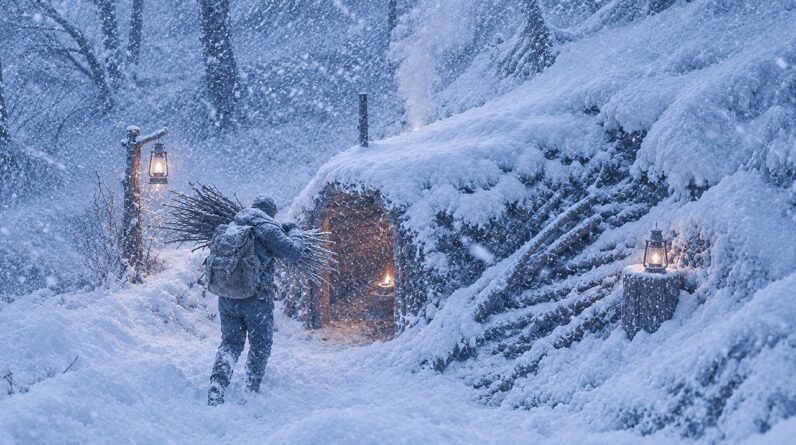
Deep within dense rainforest biomes, relentless high humidity, frequent downpours, and intense insect activity create challenging conditions for outdoor survivalists. While traditional above-ground tarps and lean-tos provide basic overhead shade, they often fail to insulate against fluctuating temperatures and heavy wind-blown storms. Constructing an underground bushcraft cave or dugout shelter offers superior ambient climate control, storm protection, and security when living off-grid.
In this comprehensive guide, we examine the precise step-by-step techniques required to construct an underground bushcraft shelter using manual excavation methods and natural materials. From subterranean wall stabilization and roof thatch waterproofing to fire pit ventilation and rainforest food procurement, discover how primitive engineering transforms raw earth into a safe, comfortable wilderness haven.
Key Survival Takeaways
- Subterranean Excavation Strategy: Dig into stable clay-rich hillsides to create earth walls that insulate naturally against heat and humidity.
- Structural Timber Shoring: Install rot-resistant hardwood posts and ridge beams to reinforce soil ceilings and prevent accidental cave-ins.
- Multi-Layer Roof Waterproofing: Cover timber roof frames with thick clay mud, banana leaves, and thatch to shed heavy rainforest downpours.
- Internal Chimney Ventilation: Cut angled ventilation shafts through rear earth walls to safely vent campfire smoke while retaining ambient warmth.
- Subterranean Drainage Basins: Carve interior sump pits near shelter entrances to collect stray moisture and prevent floor flooding.
- Humid Climate Food Storage: Suspend food reserves from elevated roof beams using smooth cordage to deter rainforest pests and scavengers.
Excavation Tactics and Soil Wall Stabilization
Building an underground shelter in a rainforest environment begins with selecting an appropriate geological site. Avoid flat basin floors where groundwater sits near the surface. Instead, search for elevated clay hillsides with natural slope gradients that allow rainwater to drain downhill naturally. Clay-heavy soil is ideal because it holds structural shape when excavated, creating firm vertical walls that resist crumbling under load.
Begin excavation by marking out a rectangular pit footprint roughly six feet wide by eight feet long. Use a sturdy digging stick or folding entrenching shovel to loosen soil, piling excavated earth around the perimeter to form raised protective ramparts. As you dig deeper—aiming for a depth of four to five feet—install heavy hardwood support posts at each corner. Notch thick cross-beams into these vertical posts to create a load-bearing skeleton capable of supporting heavy soil and timber roofing layers without shifting over time.
To prevent root intrusion and wall degradation from continuous moisture, line the interior earthen walls with split bamboo planks or woven palm mats held in place by sturdy timber stakes. This extra wall lining creates an air gap that reduces ambient dampness inside the cave habitat while stabilizing loose topsoil.
Subterranean Ventilation and Fireplace Construction
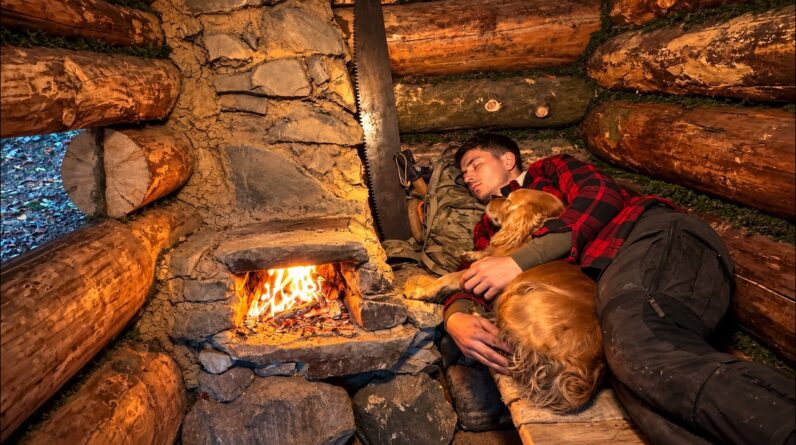
Maintaining a dry interior environment in an underground cave shelter requires a reliable heat source and proper air exchange. Building an indoor fire pit without adequate ventilation will rapidly fill subterranean quarters with lethal carbon monoxide and dense smoke. To engineer a safe fireplace, dig a recessed hearth pit into the rear clay wall of the shelter, cutting a diagonal flue channel upward through the earth to exit outside the shelter perimeter.
Line the hearth pit with river cobbles or baked clay to retain thermal heat. The rising heat from the fire creates a natural convection draft, drawing cool fresh air through the shelter doorway while expelling smoke up through the external chimney shaft. This continuous airflow lowers relative interior humidity, dries out damp clothing, and keeps biting insects at bay during humid tropical nights.
Always keep a small supply of dry kindling raised off the dirt floor on timber racks near the fire pit. In high-humidity jungle zones, green or damp wood produces excess smoke, making well-seasoned fuel storage essential for maintaining a clean, efficient hearth fire.
Rainforest Food Harvesting and Catch-and-Cook Methods
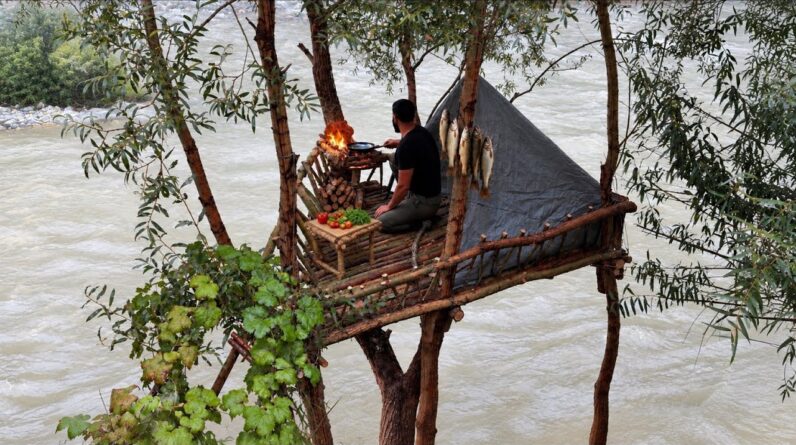
Surviving off-grid in a tropical jungle requires identifying sustainable food and water sources while maintaining camp sanitation. Rainforest streams yield wild river crabs, small fish, and edible freshwater mollusks. Setting passive dip nets or stone weir traps along shallow riffles provides a steady supply of fresh protein without expending excessive physical energy.
Always cook wild rainforest game thoroughly over your underground hearth to eliminate potential parasites. Pair protein catches with wild edible starchy roots or palm hearts gathered during daylight foraging trips. Boil all drinking water harvested from rainforest streams for at least ten minutes, or process through a portable water filter straw to prevent waterborne gastrointestinal illnesses in remote wilderness settings.
To prevent rainforest scavengers such as rodents and ants from invading your living space, construct an elevated food storage platform or hang supplies in sealed containers from the ceiling ridge beam using smooth cordage coated in wood ash.
Recommended Survival Gear & Equipment
To prepare for similar wilderness survival scenarios, having high-quality, dependable gear is essential. Here are top recommended survival tools:
- Folding Entrenching Survival Shovel
- Bushcraft Folding Hand Saw
- 550 Mil-Spec Paracord
- Portable Water Filter Straw
As an Amazon Associate, we earn from qualifying purchases.
Conclusion
Constructing an underground bushcraft cave demands significant physical effort and structural precision, but the reward is an indestructible, weatherproof rainforest homestead. With proper drainage, timber shoring, and ventilation, subterranean living provides unmatched comfort.


Thanks for watching this great video. Please take a second to like and subscribe to the channel.🎉🎉🎉🎉
ME WATCHING PHILIPPINES ……🐓💃🦃🦜 . . ….. TOMATO JUICE M VLOG
Hes all set now, as long as the Khmer Rouge dont find his hidout.
Not sure why old buddy doesnt have an AK47 in his hands with the tigers and other apex predators in that jungle that are currently stalking him…
Your good video😊😊
어디 개쓰레기 씨발 시멘트로 짓고 버리는 개쓰레기 유투버 집짓는새끼들보다 자연으로 짓는 이사람이 더 좋음 개병신새끼들 구독자 존나많던데 자연으로 돌아가지못하는 집을 쳐 지어서 그 구독자들은 다 병신인듯
Good job
It's really amazing and hard working 👍really love it😍watching from Northeast India 🇮🇳❤❤
이봐 친구 내가보니 친구가 작업하고있는곳 고인돌 인거같아 옛날 유적같은거야 그러니까 친구는 오래된 무덤을파서 작업하고있는거라고 나중에 전통주를 뿌려서 그곳에서 저주를 피하기 바랄께
얘들은 공구를 왜 저렇게 심하게 사용하지? 나무 자를 때 보면 너무 안 잘려서 속이 터진다. 유튜브 찍는다고 자연 훼손이 많네요.
amazing broooo….
How riski is it under a rock?
Nice video Thanks India
Wow kau memang sangat keren 🔥🔥
I'm always amazed to see these little shelters take shape using minimal tools. the only question I have is, "why didn't he do anything to alleviate/control water around the back of the cave?" not meant mean or anything, a serious question.
So precise and beautiful
and beautifully made! He is a true master craftsman!
I'm a woman and I have gotten drawn to Bushcraft, but I wonder why he chooses such tight spaces to build in.
Why not do something less destructive to the environment with so much destruction everywhere, you come and contribute more to the degradation of the environment
you are very good
It's really amazing, EXTERADINARY❤💐
Всё очень аккуратно, продуманно. Много труда вложено.
I can't imagine he stayed the night. Did you all see the ants crawling everywhere? 5 minutes to take in his surroundings and that could've been avoided.
menjadi konten kreator bushcraft survival bukan hal yang mudah, butuh banyak tenaga dan waktu untuk membangun semua itu. tetap semangat…
Persiapan yg sgt matang
Wow! 😮 that’s impressive!
Damn I didn’t know heating shale like that would make it even more brittle
You are too wasteful in using materials
super bravo
0:23 this is totally where I'd build. Damn I play too much Minecraft.
El magnífico bambú en manos hábiles y mente con conocimientos suficientes hacen prodigios. Excelente! Un saludo desde México…
Всё настолько отлично продумано, здорово получается.У вас ЗОЛОТЫЕ ручки и у вас прекрасное будущее.Хорошая работа.Спасибо за полученное удовольствие.Ждем новых видио.Большой при большой УДАЧИ
А что он ест😮😮😮
Real life minecraft survival 😎
Appreciate ❣️
liuok
Güzel macera. Birisinden de bir dağda veya çölde barınak yapıp yaşamasını bekliyorum..
Verdadeiro artista❤❤
the shelter is great
Escar…no thank you.
Não tem cobras nos sulcos das pedras ??
😣
👍🏋♂️
Brp hari hang nk siapkannya tu? Kencing la lu
중국이란 족소들 자연을 사랑하는 가치관도 ㅇㆍㅂㅅ고 자기 혼자만을 위한게 가치관의 전부인 쓰레기민족앴네요 하긴 우리처럼 한민족으로 구성된 국가아니고 다 민족이니까 그래도 이건 아니죠 그건 중국인들 태생 자체가 그런가봐요
apakah ada yang percaya ..dia melakukannya seorang diri??
Hallo salam kenal dari Indonesia …… 🙏🙏🙏🙏
Nice vedio. How many days you living there bro?
THIS IS THE very GREATHFULL VIDIO.
I LIKE IT SO MUCH BECAUSE YOU MAKE SOME SNACK FROM ADVENTURE.
Very good skills and a lot of struggle to make such a heavy Selter, extraordinary
❤❤❤❤