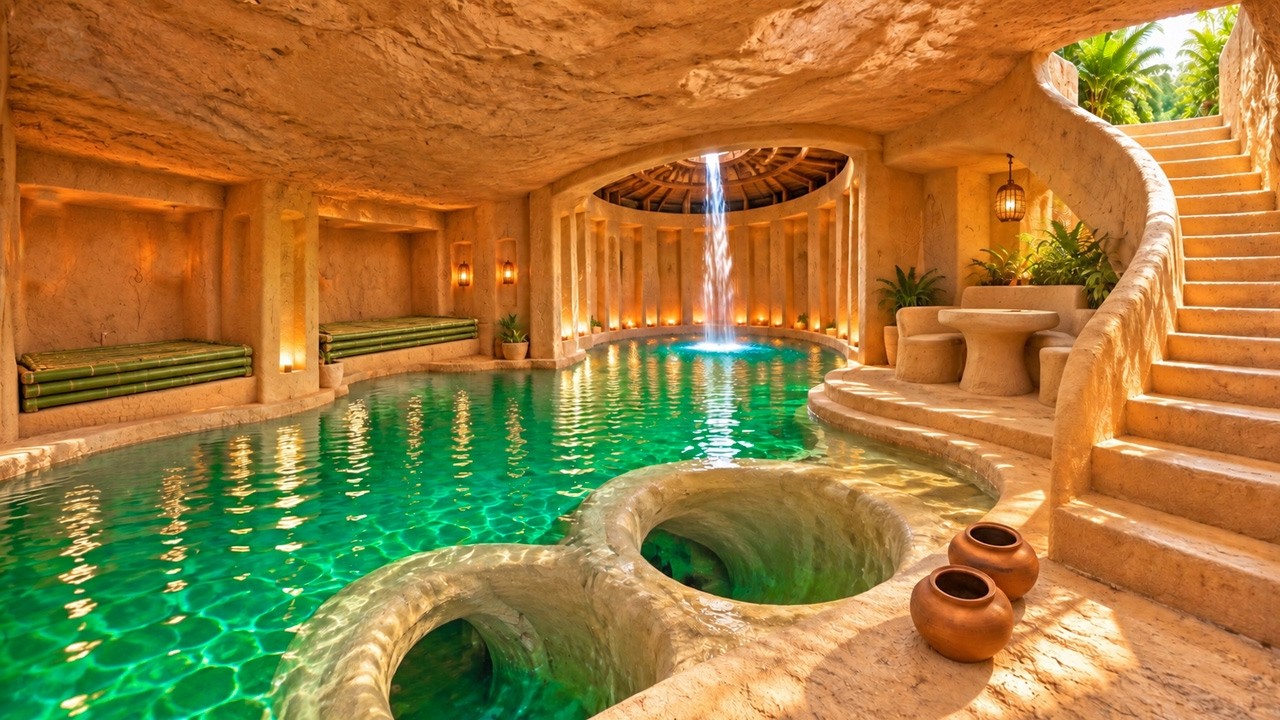
Some of the most impressive construction projects in the survival community come out of the primitive building world, and this jungle build is a perfect example. Using nothing but hand tools, the builder carves a hidden underground tunnel out of a jungle hillside, links it to a chain of connected tunnel pools, and finishes the project with twin water slides that turn the entire network into a working water system.
Beyond the entertainment value, this is a full-scale demonstration of underground construction technique. In this article, we break down what the build teaches about reading terrain before you dig, moving large volumes of soil with simple tools, shaping tunnel walls that will not collapse, and directing water through an excavated space. Those same skills apply directly to emergency shelters, root cellars, and hidden retreat spaces of your own.
Key Survival Takeaways
- Let the terrain do the design work. The tunnel, pools, and slides all follow the natural slope of the hillside, using gravity to move water instead of fighting the landscape. When you site a shelter, drainage ditch, or cache, work with the contour of the ground rather than against it.
- Hand tools can move serious earth. With a hoe, a shovel, and a basket, the builder removes hundreds of cubic feet of soil over the life of the project. Underground space is achievable with simple tools, patience, and consistent daily effort.
- Shape walls to prevent collapse. Tunnel walls are cut in smooth, curved profiles rather than flat vertical faces. Arched and sloped walls distribute soil pressure far better, which is the same reason dugout shelters and root cellars are built with rounded walls.
- Engineer water flow deliberately. Channels and pool basins are carved so water moves exactly where it is directed, from slide to pool to pool. Managed flow is the core principle behind keeping an excavated shelter dry and diverting runoff away from a camp.
- Keep the entrance concealed. The tunnel opening is masked by vegetation, and the finished build blends into the jungle floor. Concealment is a legitimate survival priority, whether you are hiding a cache, a shelter, or a food store.
- Compact and finish floors. The pool basins and tunnel floor are packed and smoothed so they hold water and resist erosion. A well-compacted floor reduces silt buildup, standing water, and structural decay in any below-ground space.
- Consistency beats intensity. The 4x speed footage compresses days of steady digging into minutes. Earthwork rewards sustained, methodical effort, not short bursts of energy, and that mindset matters in every long-term survival project.
Why Underground Structures Belong in Your Survival Planning
Underground structures are one of the most underused assets in preparedness planning. Soil is exceptional insulation: a few feet of earth keeps a below-ground space dramatically cooler than the surface in summer heat and far warmer than open air in freezing weather. That thermal mass is why dugout shelters, storm cellars, and root cellars have been used across cultures for thousands of years. An underground space also offers protection from wind, rain, flying debris, and weather extremes that would flatten a tent or damage an exposed cabin.
The trade-offs are moisture, ventilation, and structural integrity, and this build addresses all three in primitive fashion. Water is not fought; it is routed, through the slide channels and the pool chain. The curved tunnel profile keeps the walls stable in loose jungle soil. Openings at both ends of the tunnel create natural airflow through the space. Those three problems are exactly what any underground shelter project has to solve, whether you are digging a weekend dugout or a permanent retreat.
How the Build Unfolds: Reading Terrain, Digging, and Directing Water
The project starts with site selection and entrance work. The builder clears vegetation, establishes the tunnel line down the slope, and opens a dig face at the top of the hillside where the slides will begin. Digging into the side of a slope rather than straight down means every shovelful of soil exits the hole under gravity, which saves an enormous amount of energy over the life of a project.
From there, the work is sequential: the main tunnel spine is excavated first, then widened into the individual pool chambers, and then the slide channels are carved along the face of the slope and connected to the pools below. Each stage is shaped with hand tools, with constant refinement of curves, floors, and transitions. Waste soil is moved away from the dig face so it never blocks access or backfills finished sections.
The final phase is finishing and filling. The pools are compacted so they hold water, the slides are smoothed for a clean flow path, and the whole system is connected so water runs from top to bottom in one continuous journey. The result is a hidden water park that looks like untouched jungle until you are standing directly on top of it.
Turning a Jungle Pool Build Into Real Shelter Knowledge
Strip away the fun factor and the workflow is identical to building a survival dugout. Pick sloped ground, dig into the hillside rather than down, keep the entrance small and covered, arch the walls, and place drainage at the lowest point of the floor so water collects where you can manage it. Every one of those steps appears in serious shelter engineering, from military fighting positions to backcountry snow caves.
If you want to practice, a small backyard project is a safe way to build the skill. A three-foot test pit teaches you how your local soil behaves, how hard it digs, whether it collapses when dry or saturated, and how much water it absorbs after rain. That knowledge, not the water slides, is what you are really watching for in a build like this.
Gear & Equipment for Your Own Digging Projects
If this build makes you want to start an earthwork project of your own, whether a root cellar, a practice dugout, or a backyard pond, the right tools make the work faster and dramatically safer. A quality folding survival shovel is the most versatile digging tool you can own and belongs in every bug-out bag. For breaking hard-packed soil and roots, a pick mattock outperforms a shovel many times over. Protect your hands with heavy-duty leather work gloves rated for digging and demolition. Since tunnel work means limited light, a waterproof LED headlamp keeps both hands free underground. And before committing to a dig site, a steel digging bar lets you probe for rock and test soil density before you move a single shovelful.
As an Amazon Associate, we earn from qualifying purchases.
Frequently Asked Questions
How long does it take to dig a tunnel shelter by hand? It depends on your soil, your tools, and the hours you can put in per day. A small test pit takes an afternoon, a weekend dugout takes days of steady work, and a connected tunnel and pool system like this one represents weeks of daily digging. Start small and let the soil tell you what pace is realistic.
Is it safe to dig an underground tunnel without shoring? Only in stable, cohesive soil and only for shallow, short-term projects. The curved wall profiles in this build help distribute soil pressure, but any dig deeper than a few feet in loose, sandy, or wet soil needs proper shoring, ventilation, and a second person on the surface who knows exactly where you are working.
Where should I site an underground shelter or root cellar? Choose a slope with well-draining soil, dig into the side of the hill rather than straight down, keep the entrance small and covered with vegetation, and plan drainage at the lowest point of the floor. Avoid low spots that collect runoff and any area with a high water table.
Final Thoughts
Primitive builds like this one are more than spectacle. They are working demonstrations of terrain reading, hand-tool earthwork, structural shaping, and water management, done with zero machinery and total patience. Watch the full build with an eye on technique rather than the slides, and you will come away with a mental template you can apply the next time you need to dig in, stay hidden, and stay dry.