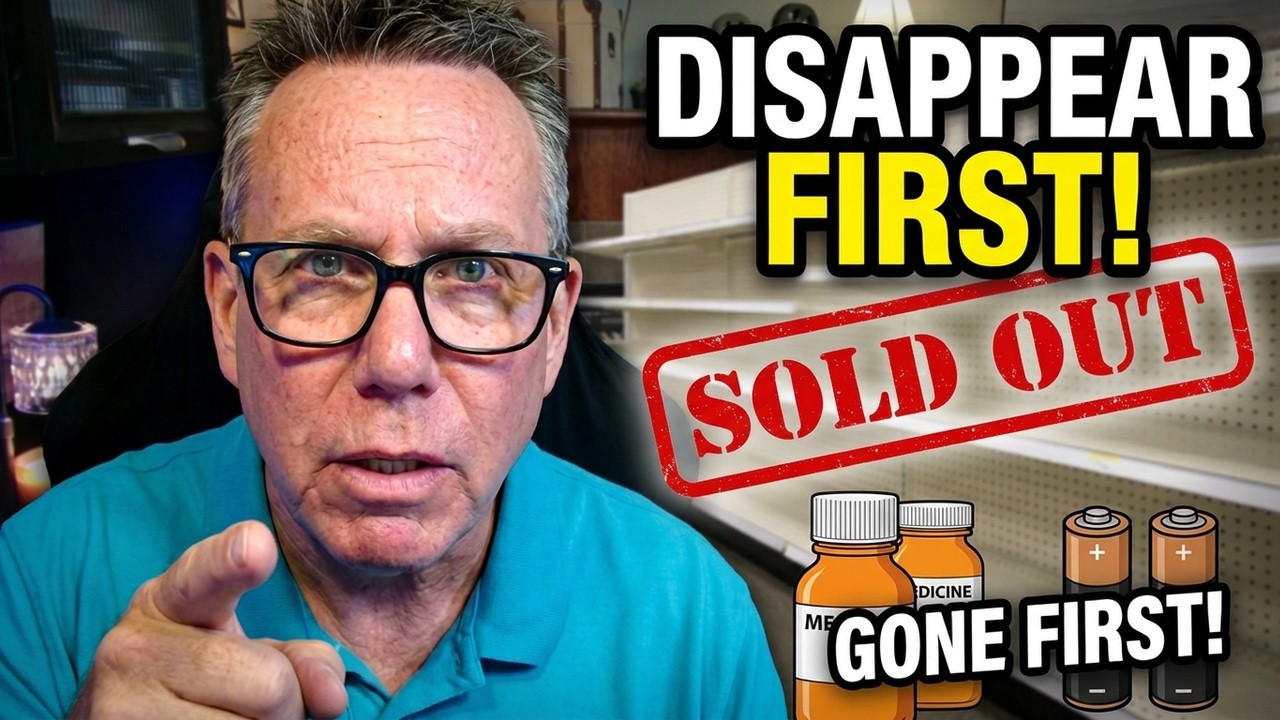
When a hurricane track shifts toward land or a winter storm warning drops the night before a weekend, grocery store shelves can be stripped bare in under three hours. Panic buying follows a predictable script, and the same handful of critical supplies vanish first every single time. In the video above, Goshen Prepping breaks down the nine items that disappear fastest when disaster looms, and explains why waiting until the official warning is issued always puts you at the back of the line.
In this article, we unpack each of those nine disappearing supplies and show you how to build a practical buffer for your household before the next crisis hits. You will learn why these particular items sell out first, how scarcity psychology drives the rush, and which affordable purchases you can make today so you never have to fight a crowd for bottled water, batteries, or medicine again.
Key Survival Takeaways
- Water always goes first. Bottled water vanishes within hours of a warning. Store at least one gallon per person per day for drinking and sanitation, with a two-week minimum, and add a filtration backup for when stored water runs out.
- Shelf-stable food empties fast. Canned protein, rice, and beans are the first aisles cleared after water. Stock what your family actually eats and rotate it so nothing expires.
- Medications are the biggest overlooked gap. Pharmacies cannot refill prescriptions during evacuations or power outages. Ask your doctor about 90-day supplies now.
- Batteries and lighting sell out before the storm arrives. Standard sizes and quality flashlights are grabbed first; cheap ones fail when you need them most.
- Generators and fuel trigger the biggest rush and the worst price gouging. Portable power stations are a quieter, apartment-friendly alternative.
- Panic buying is psychological, not logical. Images of empty shelves create scarcity panic. The only real defense is having your supplies before the crowd starts shopping.
- Buy incrementally. A few extra items on every grocery trip beats one desperate mega-run the day before landfall.
The 9 Supplies That Disappear First in Any Disaster
1. Bottled Water
Water is the universal first casualty. People need roughly one gallon per person per day, and stores rarely carry more than a day or two of local demand. Cases are gone within hours, then gallons, then anything liquid. Store a two-week supply per person and add a emergency water filtration straw so a creek or water heater becomes a backup source.
2. Canned and Shelf-Stable Food
Canned meat, beans, soup, rice, and pasta disappear right behind water. Panic shoppers grab anything that does not need refrigeration. The smart play is boring and effective: buy extra of what your family already eats and rotate it first in, first out. A emergency food supply bucket adds 25-year shelf-life insurance on top of your pantry.
3. Prescription Medications
This is the most overlooked item on the list and the hardest to improvise. Pharmacies run out, lose power, or close during evacuations, and insurers often block early refills. Ask your physician for a 90-day supply, use mail order, and keep a written list of every prescription, dose, and pharmacy in your go-bag.
4. First Aid Supplies and OTC Medicine
Bandages, gauze, antiseptic, pain relievers, and fever reducers clear out fast because storm cleanup produces a wave of cuts, burns, and injuries. A quality compact first aid kit is one of the cheapest insurance policies you can buy.
5. Batteries
Every flashlight, radio, and smoke detector needs them, and the standard sizes vanish first. Buy name-brand lithium AA and AAA cells in multi-packs before hurricane or blizzard season, not during it.
6. Flashlights and Lighting
When the grid goes down, lighting demand spikes instantly. A battery-powered LED emergency lantern lights a whole room safely, unlike candles, which cause fires after every major storm.
7. Generators and Fuel
Portable generators sell out in a day and get price gouged within two. Fuel lines stretch for blocks. A portable power station runs refrigerators and medical devices quietly indoors with no gasoline, no fumes, and no line to wait in.
8. Toilet Paper and Paper Products
2020 proved that scarcity panic hits paper products hard even when supply chains are fine. Paper towels, tissues, and hygiene supplies follow the same pattern. A modest buffer at home costs almost nothing and spares you the empty-shelf scramble.
9. Cash in Small Bills
When power and networks fail, card readers and ATMs go down with them. Cash-only becomes the rule, and many registers cannot make change for large bills. Keep a few hundred dollars in tens and twenties in your emergency kit.
Gear and Equipment to Buy Before the Rush
You do not need a bunker or a big budget to get ahead of panic buying. The links above point to the highest-value versions of the exact categories that vanish first: water filtration, shelf-stable food, first aid, lighting, and backup power. Buy one category at a time, in this order, and you will outrun the next rush before it starts.
As an Amazon Associate, we earn from qualifying purchases.
Final Thoughts
The lesson from every disaster, hurricane, blizzard, and supply scare is the same: the time to buy supplies is when shelves are full and nobody is worried. Pick one category from this list each week, add it to your regular shopping, and within two months your household will be ahead of the next panic cycle for good.