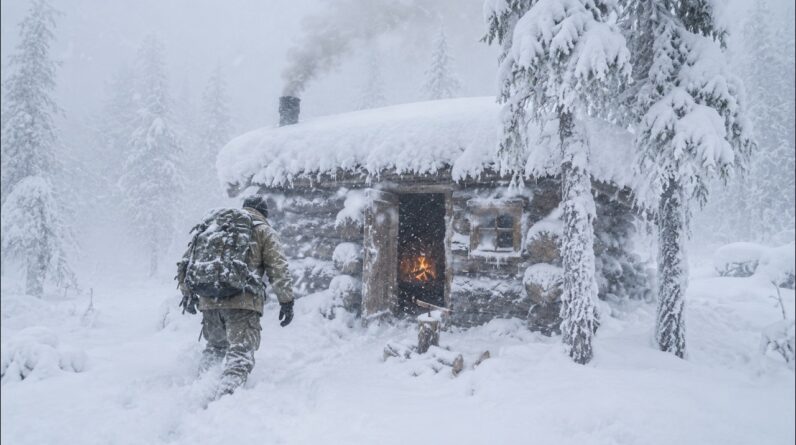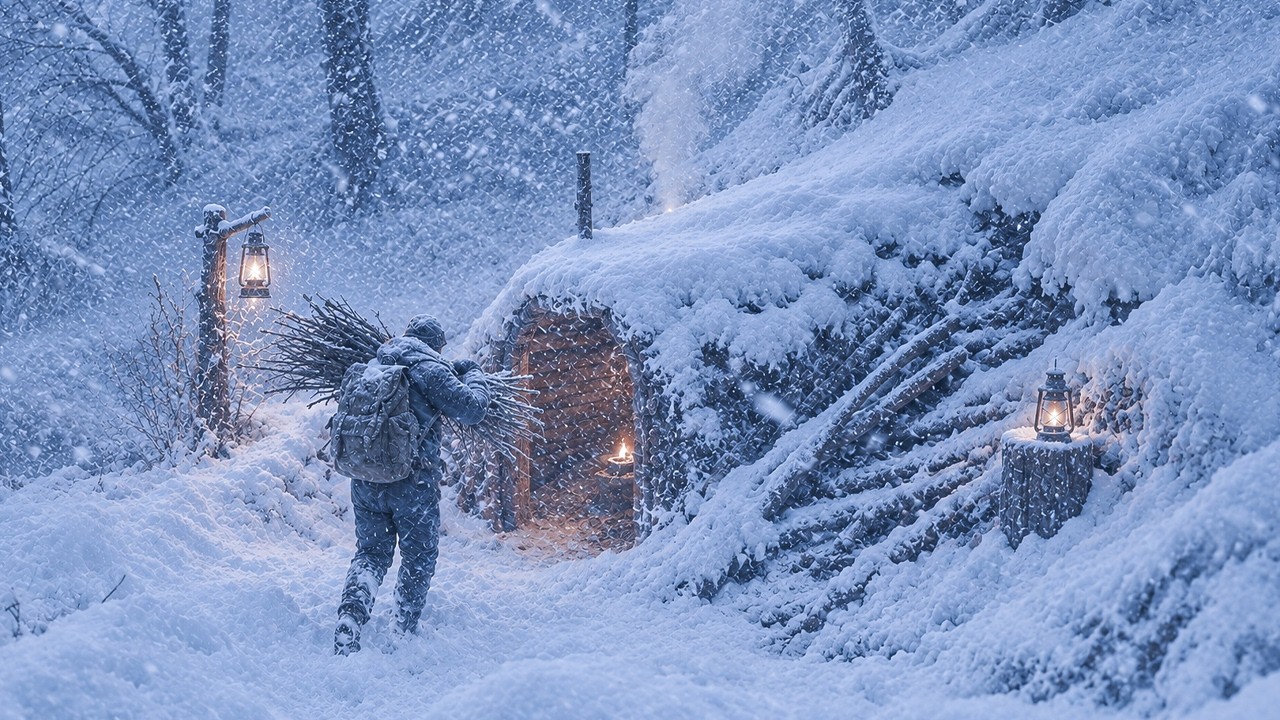
When the Storm Hits Before You Are Ready
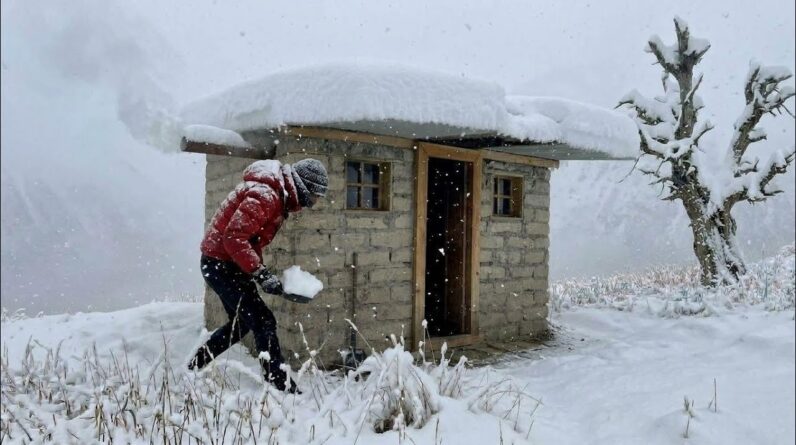
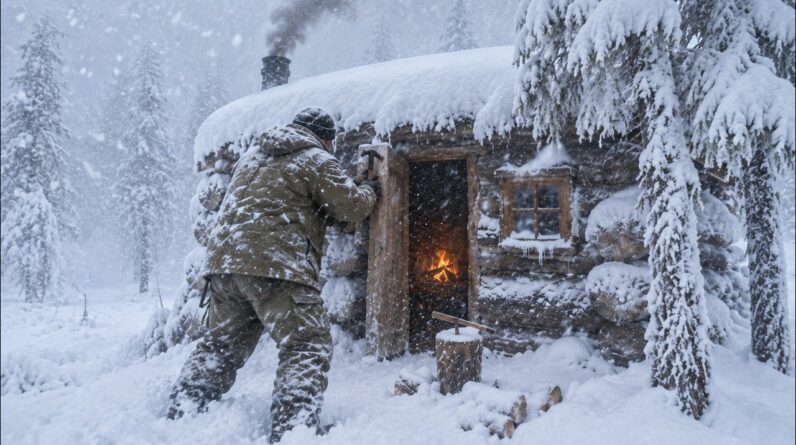
A snowstorm in the backcountry does not wait for you to finish your kit, pick the perfect campsite, or get a fire going. In this episode from Man of Wilderness, a solo survivor is caught in a brutal snowstorm with sub-zero temperatures, freezing winds, and heavy snow piling up by the hour. Instead of panicking or pushing deeper into the storm, he does what experienced bushcrafters do: he stops, reads the terrain, and starts building an emergency wilderness survival shelter from scratch using only basic tools and the natural resources around him.
Watching the full build, you will learn how to choose a sheltered position against a large tree, how to frame a structure that sheds wind and snow, and how to layer natural insulation so the shelter holds heat even when the temperature keeps dropping. The video is a practical, real-time demonstration of cold weather priorities, and this article breaks down the key survival lessons so you can apply them the next time winter weather turns against you in the field.
Key Survival Takeaways
- Shelter comes before fire in a blizzard. Wind and wind chill kill faster than cold air alone. Blocking the wind with walls of timber, snow, and debris stops convective heat loss before you ever strike a spark.
- Use a large tree as your anchor and windbreak. Building against the trunk of a mature evergreen gives you one ready-made wall, protects the shelter from the prevailing wind, and keeps falling snow off your roofline.
- Keep the interior small. A low, compact shelter traps body heat far better than a spacious one. Build just big enough to lie down and insulate, and your own metabolism becomes your furnace.
- Insulate yourself from the ground. Snow and frozen earth pull heat out of your body faster than the air. A thick bedding layer of boughs, leaves, and debris under you is as important as the roof above you.
- Work in layers and pace yourself. Sweating in sub-zero weather is dangerous, because damp clothing loses insulation value fast. The builder works steadily, sheds layers, and ventilates to stay dry while exerting.
- Bank snow around the base. Piled snow acts as extra insulation and wind-blocking, sealing drafts at the bottom of the shelter and adding thermal mass to the walls.
- Keep tools simple and reliable. An axe, a saw, a knife, and cordage handle nearly every task in this build. Fancy gear matters far less than knowing how to use a few basics under pressure.
The Build, Step by Step
The video shows the process in real time, and the sequence matters. First is site selection: a spot sheltered from the wind, near building materials, and away from dead standing trees that could drop limbs under snow load. Next comes the framework, a ridge pole and ribbing angled so snow slides off instead of accumulating. Then the walls get filled in with branches, bark, and debris, thicker on the windward side. Bedding goes down inside before the entrance is narrowed to a low doorway, and finally snow is shoveled and banked around the structure to seal gaps and add insulation. Each step is deliberately ordered so that at every stage, the shelter is more protective than it was an hour before, which is exactly how you should think about emergency shelter in deteriorating weather.
Gear and Equipment
You do not need much to reproduce this build, but a few proven tools make winter shelter work dramatically faster and safer. A full tang fixed blade bushcraft knife handles batoning, notching, and fine carving. A folding camp saw makes quick work of the hundreds of small poles a debris shelter demands. For warmth after the shelter is up, a ferrocerium rod fire starter reliably ignites tinder even in damp winter conditions. A cold weather rated sleeping bag or emergency bivvy dramatically increases your safety margin overnight, and a hank of 550 paracord speeds up lashing the frame together in freezing hands.
As an Amazon Associate, we earn from qualifying purchases.
Final Thoughts
This build is a strong reminder that survival in extreme cold is won through shelter, insulation, and pacing, not luck. The skills on display here are learnable, and winter is the best time to practice them, before your life depends on the outcome. Watch the full video, take notes, and then get outside and train. The storm you prepare for today is the one that will not beat you tomorrow.