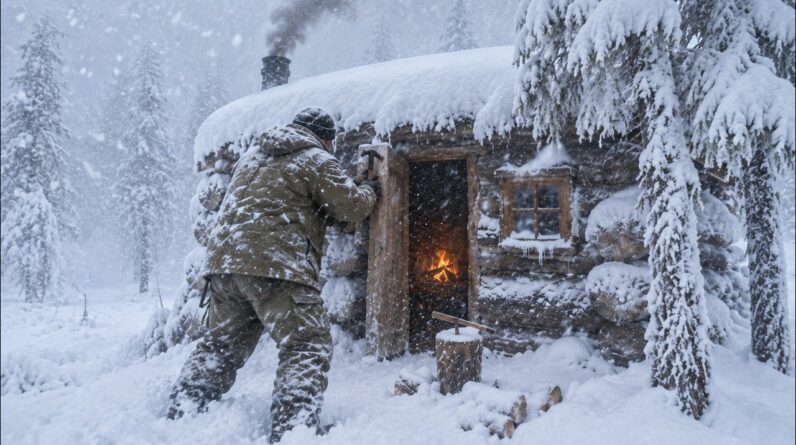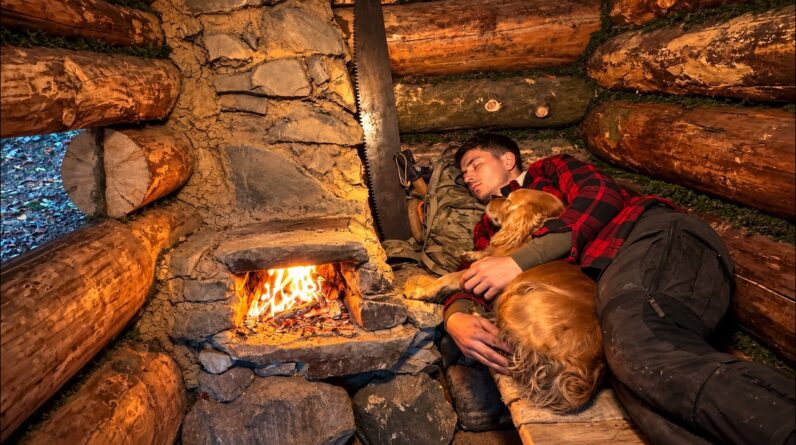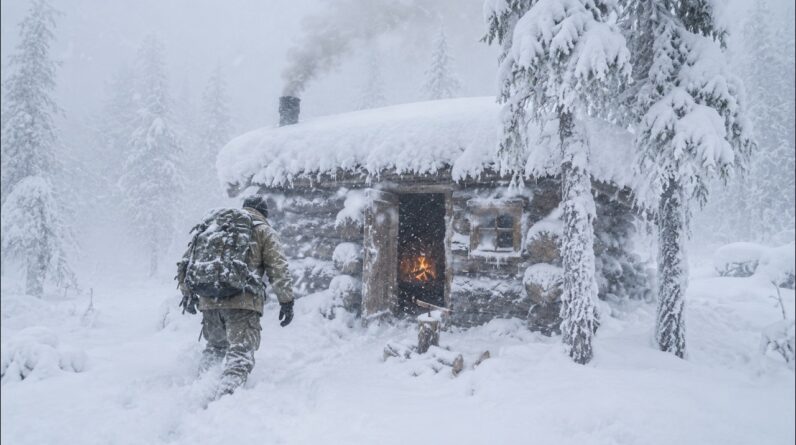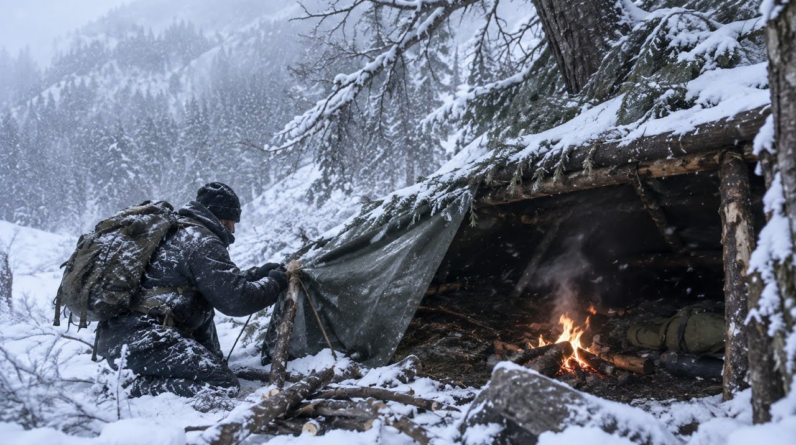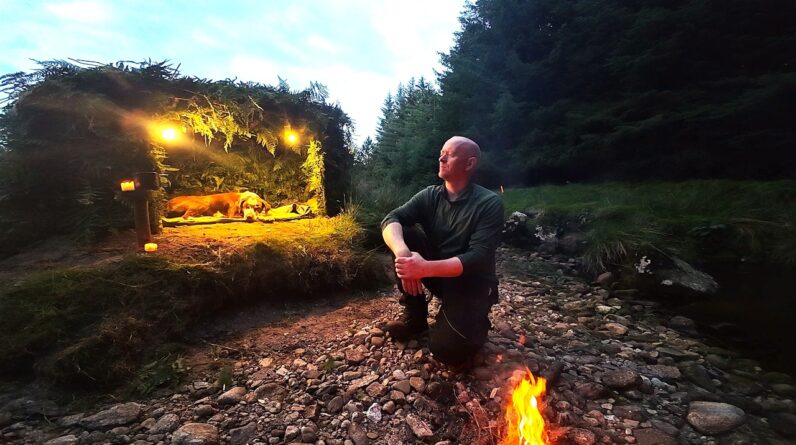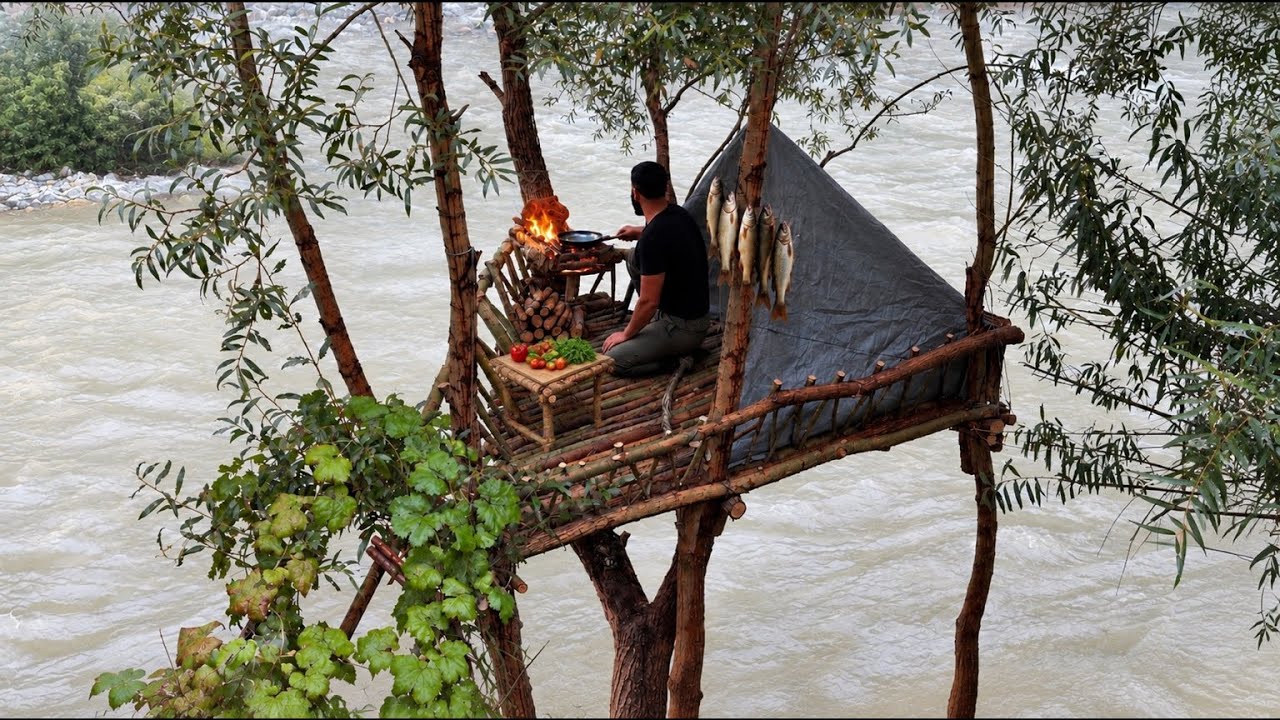
Building a shelter high above a rushing river is not just about a great view. It is a time-tested survival strategy that keeps you off cold, damp ground, away from crawling insects and snakes, and above flood-prone terrain. In this video, KANDO spends a full 24 hours constructing an elevated riverside treehouse shelter using only natural wood and simple hand tools, then sets up camp for an overnight stay in the wild.
You will watch the complete build from raw materials to finished platform, see how a primitive clay fireplace is formed and used to cook freshly caught fish, and pick up practical lessons on site selection, elevated platform construction, off-ground sleeping, and wilderness cooking. Whether you are a weekend bushcrafter or working toward longer off-grid self-reliance, the techniques demonstrated here translate directly to real-world survival shelter building.
The payoff goes beyond a single night outdoors. Elevated shelter construction is one of the most transferable skills in bushcraft, because it teaches you to read terrain, manage structural loads, and control fire safely all at once. Once you understand the platform-and-lashing method in this build, you can scale it to anything from a quick hunting camp to a Semi-permanent wilderness basecamp.
Why Build Your Shelter Elevated
Elevated shelters solve several survival problems at once. Cold ground saps body heat faster than cold air, so getting your sleeping surface even a few feet off the dirt dramatically improves warmth retention through the night. In river valleys and low-lying terrain, lifting your camp above the ground also protects against flash flooding, snakes, scorpions, and ground-dwelling insects that can turn a camp miserable or dangerous.
A sturdy wooden platform gives you a flat, dry workspace for cooking, gear storage, and fire management that a sloped or muddy forest floor simply cannot match. The trade-off is effort and engineering: an elevated shelter demands solid weight-bearing joints, properly braced legs, and an understanding of how to distribute load across multiple support points. The builder here tackles that challenge by lashing a rectangular platform frame to standing trees, then decking it with split logs, a technique that scales from a quick overnight camp to a semi-permanent wilderness basecamp.
Inside the Build: From Bare Trees to Overnight Camp
The build sequence follows a logical order that any shelter builder can copy. First, the site is cleared and anchor points are chosen between sturdy trees along the riverbank. Next comes the skeleton: horizontal beams are lashed level to the trunks well above the ground, creating a rectangle that will carry the entire floor. Legs and diagonal braces are added under the frame so the platform stands on its own rather than relying on lashings alone.
Once the frame is sound, the floor goes down pole by pole. Each piece is trimmed flat and fitted tightly against its neighbor until the deck has no dangerous gaps. With the platform complete, the sleeping area takes shape: a tent pitched on the level deck stays dry and stable no matter what the ground below is doing. Finally, the clay hearth is built a safe distance from the tent, the fire is brought to life, and dinner comes straight from the river. The result is a complete, livable camp where every element serves a clear purpose.
Key Survival Takeaways
Here are the most valuable survival lessons from the 24-hour river treehouse build:
- Site selection matters. The builder chose a spot between living trees with a natural flat area above the high-water mark. Always check for flood debris lines and avoid dry creek beds even in fair weather.
- Use standing trees as your frame. Lashing platform cross-beams to living trees gives you instant structural support without needing to sink posts into rocky riverbank soil.
- Split-log decking spreads load. Rather than relying on a few large planks, laying multiple split logs side by side distributes weight and prevents any single failure from collapsing the platform.
- Clay is a free fireproof material. Forming a hearth from riverbank clay creates a safe cooking surface that contains embers and protects the wooden platform beneath.
- Cook over coals, not flame. Letting hardwood burn down to coals before grilling fish gives even, controllable heat and far better results than an open flame.
- Pack a tarp for wind and rain. Even a well-built open platform shelter needs a weatherproof layer overhead; a simple tarp rigged above the tent keeps the sleeping area dry through the night.
- Test before you trust it. The builder loads the platform gradually and inspects every joint before committing full weight and gear, a habit that prevents catastrophic failures in the field.
Gear & Equipment
A handful of tools make elevated shelter building and riverside camping dramatically easier. A sharp bushcraft fixed-blade knife handles everything from cordage prep to food processing. A folding camp saw makes quick work of the logs needed for platform decking. For fire, a reliable ferrocerium rod fire starter works wet or dry. A heavy-duty camping tarp provides essential overhead protection against rain and wind. And since you are camped near a river, a Sawyer water filter ensures every drink is safe from contaminants.
As an Amazon Associate, we earn from qualifying purchases.
Frequently Asked Questions
How high should an elevated bushcraft shelter be? For a simple overnight platform, three to five feet off the ground is usually enough to escape ground chill, moisture, and crawling pests while keeping lashing and loading simple. Go higher only if flood risk demands it, and compensate with thicker legs and stronger diagonal bracing.
Is it safe to build a fire on a wooden platform? Only with a proper barrier between flames and decking. A thick clay hearth, a layer of flat stones, or a metal fire pan keeps embers from reaching the wood beneath. Keep the fire small, position it away from walls and bedding, and never leave it unattended.
What cordage works best for lashing a platform frame? Bank line and paracord are the two field favorites. Bank line grips knots tightly and holds lashings secure under load, while paracord offers more raw strength and can be unraveled into finer strands for detailed binding work.
Final Thoughts
The KANDO river treehouse build is a compact masterclass in elevated shelter construction, primitive firecraft, and wilderness cooking, all packed into a single overnight. The techniques shown translate directly to real survival situations where getting off the ground and managing fire safely can make the difference between a miserable night and a restorative one. Try adapting the platform-and-lashing method on your next bushcraft outing and see how elevation changes the way you camp.