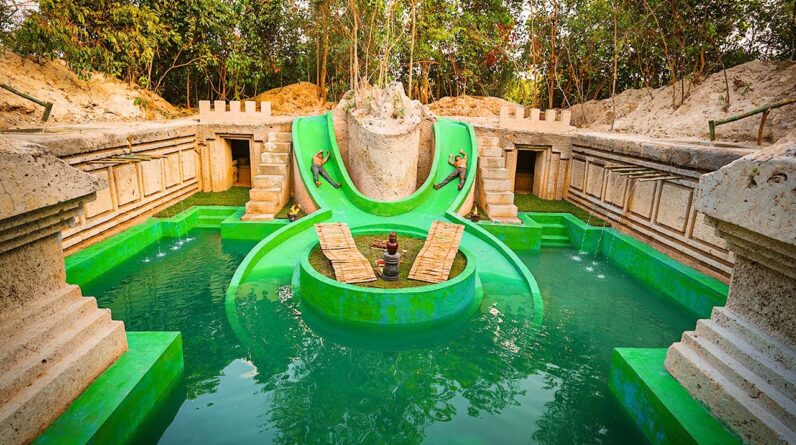
When most people think of survival shelters, they picture a quick debris hut or a temporary lean-to thrown together with branches. But what if you want something more permanent, something that can protect you from extreme weather and last for months? The video above demonstrates an impressive approach: building a luxury underground mud cave from scratch using nothing but natural materials found in the jungle.
In this build, a team works through every stage of constructing a livable underground shelter, from selecting the right location and excavating the cavity to mixing mud and clay for structural walls and finishing the interior. Along the way, they demonstrate practical techniques for working with natural building materials that any survivalist can learn from. Whether you are interested in primitive building, long-term survival shelters, or simply want to understand how our ancestors constructed durable homes from the earth itself, the skills shown here translate directly to real-world preparedness scenarios.
Key Survival Takeaways
- Site selection is critical: The builders chose a location where the soil was soft enough to dig but stable enough to hold its shape. Look for ground that has a natural depression or slope, which reduces the amount of excavation needed and provides natural drainage. Avoid low-lying areas prone to flooding, since an underground shelter will collect water if placed poorly.
- Mud and clay create strong walls: Mixing mud with clay produces a natural building material that hardens as it dries and provides significant structural integrity. Clay acts as a binder, similar to cement, holding the soil together. The ratio matters: too much sand and the walls crumble, too much clay and they crack as they dry.
- Underground structures regulate temperature naturally: By building below grade, the shelter takes advantage of the earth’s thermal mass, staying cool in hot weather and warm during cold nights. This passive temperature regulation is one of the strongest arguments for underground shelter construction in survival situations.
- Excavation tools can be improvised: The team used digging sticks and flat stones to carve out the shelter cavity. While a proper shovel makes the work faster, you can accomplish the same result with sharpened hardwood tools and flat rocks. The lesson is that tool limitations do not stop construction, they just change the timeline.
- Ventilation must be planned from the start: Any underground shelter needs at least two openings to create airflow. A single entrance creates a dead-air space where carbon dioxide can build up. Planning a ventilation shaft or secondary opening early in the build prevents a dangerous and uncomfortable interior environment.
- Natural waterproofing extends shelter life: Layering leaves, bark, or clay over the roof structure before backfilling with earth creates a barrier that keeps water from seeping through the ceiling. Without this step, the shelter’s interior will become damp and eventually degrade the walls from the inside.
Gear and Equipment for Underground Shelter Building
If you want to practice these techniques or build your own semi-permanent shelter, having the right tools makes an enormous difference. A sturdy folding survival shovel cuts excavation time dramatically compared to improvised digging sticks. For mixing and shaping mud walls, a set of masonry trowels gives you precision when applying and smoothing clay-based materials. Carrying a compact pickaxe helps break through hard-packed soil and rocky ground that a shovel alone cannot handle. For measuring depth and maintaining level walls during construction, a simple measuring tape is invaluable. Finally, protect your hands during long digging and mixing sessions with durable leather work gloves that stand up to abrasion from rough soil and clay.
As an Amazon Associate, we earn from qualifying purchases.
Conclusion
Building an underground mud cave is one of the most rewarding primitive skills you can learn. It combines excavation, natural materials science, and structural engineering into a single project that produces a shelter far more durable than any temporary build. The techniques shown in the video prove that with patience and the right knowledge, you can create a comfortable, weather-resistant home using nothing but what the land provides. Start small, practice your mud mixing ratios, and always plan ventilation before you dig.