Introduction
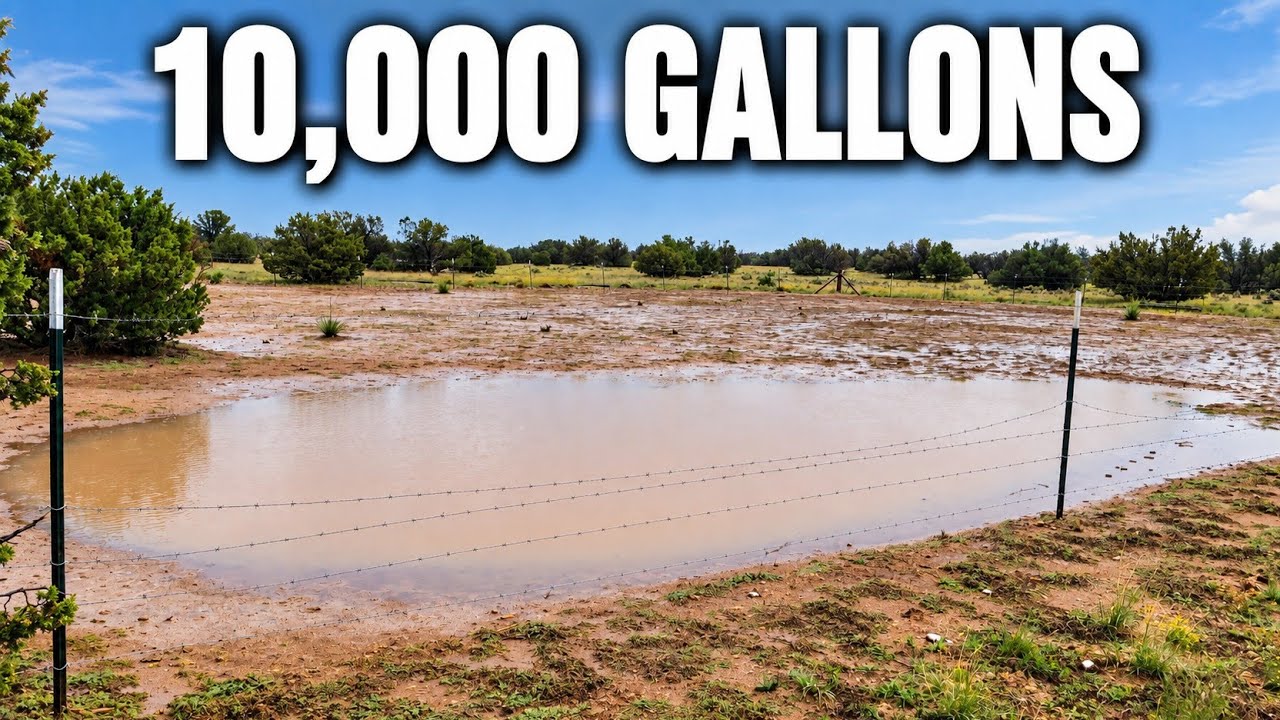
When you live off-grid, every drop of water matters. A single rainstorm can be the difference between abundance and scarcity. In this video from Frugal Off Grid, a high-desert homesteader turns a major rainstorm into over 10,000 gallons of harvested water. After accidentally losing hundreds of gallons from both a bog filter overflow and a cistern drain, quick thinking and strategic water management turned a potential disaster into an incredible yield. The main pond was filled, the agricultural pond was fuller than ever, and every storage container was put to use.
Whether you are planning a rainwater collection system for your own off-grid property or just want to understand how large-scale water harvesting works in practice, this video delivers real-world lessons you will not find in a textbook. You will learn about managing multiple water storage systems, the importance of emptying containers before a storm hits, and how to think strategically about water flow across your property. The results speak for themselves: over 10,000 gallons captured in a single weather event.
Water is the single most critical resource in any survival situation. While many preppers stockpile food and ammunition, sustainable water infrastructure is what truly sustains life off the grid. This homesteader’s multi-layered approach, integrating ponds, cisterns, bog filtration, and aquaponics, offers a scalable blueprint that anyone can adapt for their own property, whether you have acres of high desert or a suburban backyard.
What Happened
In the days before the storm, the homesteader experienced two significant water losses. First, the bog filter overflowed, which nearly drained the main pond. Bog filters use planted wetland cells to naturally purify water, but when they overflow, the water level in connected systems can drop dangerously low. Then, while topping off the aquaponics system, the homesteader accidentally drained another cistern. These mistakes could have been devastating in a drier climate or during a prolonged drought.
However, the approaching storm changed everything. Rather than panicking about the lost water, the homesteader used the empty containers as an opportunity. By moving remaining water around to create even more empty storage space, the stage was set for maximum capture. When the storm hit, every available container, pond, and cistern was ready to receive. The result was over 10,000 gallons harvested, refilling the main pond, filling the agricultural pond beyond its previous level, and topping off all storage systems across the property.
Key Survival Takeaways
- Pre-position empty storage before storms arrive: The homesteader moved water between containers to create empty capacity ahead of the rainstorm. If your tanks are already full when the rain comes, you lose thousands of gallons that could have been captured. Always create space before the weather hits.
- Multiple water storage systems provide redundancy: The setup includes a main pond, an agricultural pond, cisterns, a bog filter, and an aquaponics system. When one system fails or overflows, others can absorb the surplus. Never rely on a single water source for your homestead’s survival.
- Monitor water levels actively during storms: Active management during the storm prevented further losses. Overflowing systems can drain other tanks if they are interconnected, so understanding how your systems interact is essential to preventing catastrophic water loss.
- Gravity and terrain matter for water flow: The homestead uses natural elevation to move water between ponds and storage containers without pumps. Designing your water system to use gravity reduces energy costs and eliminates failure points that come with mechanical systems.
- Aquaponics systems double as water storage: The aquaponics setup holds significant water volume and provides food simultaneously. Integrating food production with water storage maximizes the utility of every gallon you harvest, making your system more resilient overall.
- Mistakes are learning opportunities: Losing hundreds of gallons twice in one day taught valuable lessons about system interconnectivity. Understanding how a bog filter overflow can drain a main pond is knowledge that prevents future catastrophic water loss on your property.
- Track weather and plan ahead: Knowing a major storm was coming allowed time to prepare storage capacity. Off-grid water management is as much about timing and preparation as it is about infrastructure. A weather radio and advance planning are essential tools for any homesteader.
Why Rainwater Harvesting Matters for Survival Preparedness
In a grid-down scenario, municipal water systems can fail within days. Wells require electricity for pumps, and even natural springs can dry up or become contaminated. Rainwater harvesting is one of the most reliable, low-tech ways to secure a sustainable water supply regardless of infrastructure. The principles demonstrated in this video, pre-positioning storage, building redundancy, and using gravity for distribution, translate directly to smaller-scale setups. Even a single 55-gallon barrel connected to a downspout can provide emergency drinking water for a family for over a week. The key is starting before you need it.
Gear & Equipment
Building a reliable rainwater harvesting system requires the right equipment. Whether you are starting small or scaling up to thousands of gallons, these essentials will help you capture and store water efficiently. Start with a durable rainwater collection barrel to capture runoff from your roof or other surfaces. For larger storage needs, consider a 275-gallon IBC water storage tank that can be connected in series for serious capacity. A rain diverter with downspout filter keeps debris out of your system while channeling water efficiently. For purification, a gravity-fed water filtration system ensures your harvested water is safe to drink. Finally, a 12V water transfer pump helps move water between containers when gravity alone is not enough.
As an Amazon Associate, we earn from qualifying purchases.
Conclusion
Harvesting 10,000 gallons from a single storm is not magic. It is the result of planning, infrastructure, and active water management. The lessons from this off-grid homestead apply whether you are collecting rainwater in a backyard barrel or managing a multi-pond system in the high desert. Pre-position your storage, understand how your systems connect, and always be ready for the next storm. In survival, water is not just a resource, it is the foundation everything else is built on. Every gallon you capture is one you do not have to pump, haul, or buy.