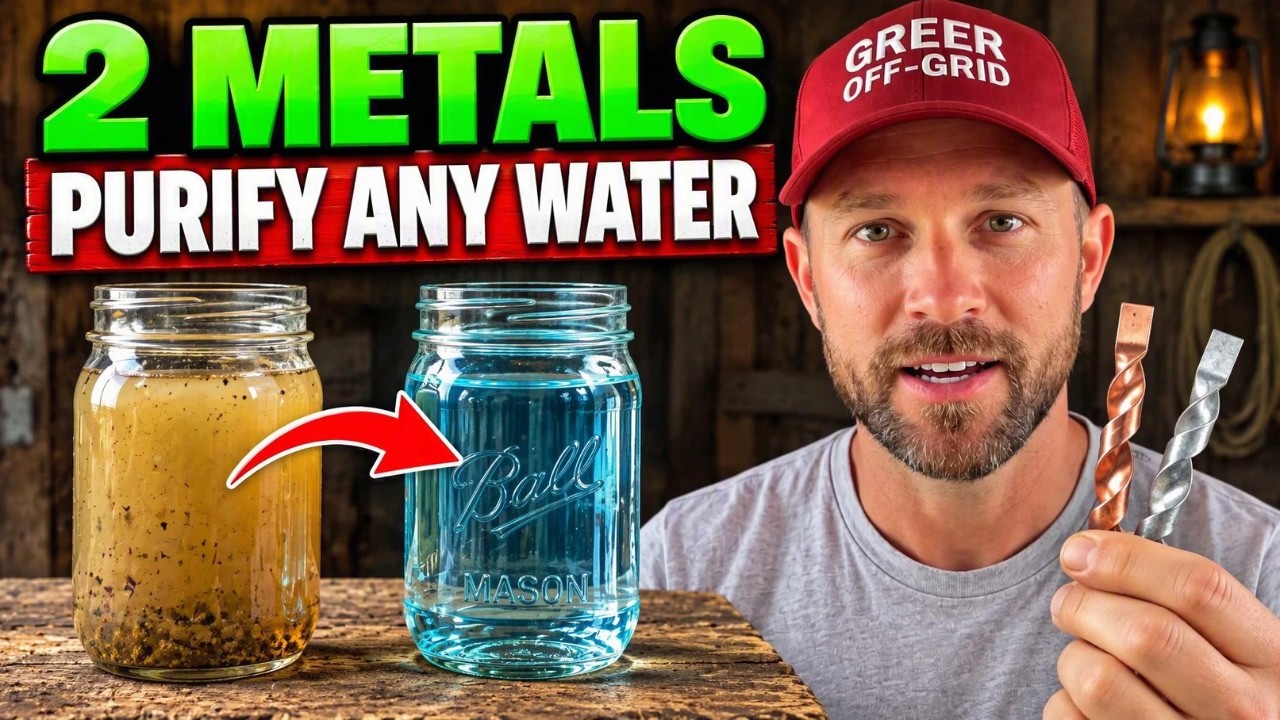
Access to clean drinking water is the single most critical factor in any survival scenario, yet most people rely on disposable filters or expensive purification systems that can fail when you need them most. In this guide, inspired by Caleb Greer’s hands-on demonstration, you will learn how two cheap metals from any hardware store can be twisted together to create a self-powered galvanic cell that kills bacteria, strips chlorine, and captures heavy metals from contaminated water.
Whether you are building an off-grid homestead, assembling a bug-out kit, or simply want a backup purifier that costs less than five dollars, this DIY approach requires no electricity, no replacement cartridges, and no specialized tools. The galvanic reaction between copper and zinc generates a small electrical current that disrupts bacterial cell membranes and causes dissolved metals to plate onto the metal surface, giving you a field-tested purification method you can build in minutes.
This article breaks down the science behind the copper-zinc galvanic purifier, walks through the build process step by step, and is honest about its limitations so you know exactly when to rely on it and when to layer in additional methods. By the end, you will have a practical understanding of one of the most accessible backup water purification techniques in the survival toolkit.
Key Survival Takeaways
- The galvanic cell principle: When copper and zinc are in contact and submerged in water, the difference in their electrochemical potentials creates a small current. This current disrupts bacterial cell walls and prevents reproduction, effectively sterilizing the water without chemicals or external power.
- Heavy metal removal: Dissolved metals like lead, copper, and iron are electroplated onto the zinc surface as the current flows. Over time, the zinc electrode accumulates these contaminants, physically pulling them out of your drinking water.
- Chlorine elimination: The galvanic reaction reduces free chlorine in treated water, which matters if you are reusing municipal tap water during an extended emergency or filtering chemically treated supplies.
- Cost and accessibility: A length of copper wire and a zinc strip from any hardware store cost under five dollars. No pump, no replacement filter, and no batteries are required, making it one of the most redundant backup purification methods you can build.
- Build technique matters: Twisting the two metals together tightly increases the contact area and current flow. More surface area means faster purification, so flat strips twisted in a helix pattern outperform loose coils.
- Limitations to respect: This system does not remove viruses, salt, or chemical dissolved compounds. It is a bacterial and heavy metal reducer, not a complete purifier. Always pair it with boiling or a carbon filter for worst-case scenarios.
- Field testing: Caleb’s demonstration shows real before-and-after results with dirty water. The metal surface visibly darkens as contaminants plate onto it, giving you a visual indicator of when it is time to clean or replace the metals.
Essential Gear for DIY Water Purification
Building the copper-zinc galvanic purifier requires only a few inexpensive items, but pairing it with the right backup gear creates a layered water security plan. Here are the essentials:
- Pure copper wire and zinc strips: Start with solid copper wire and zinc metal strips from the hardware store or online. Twist them tightly together for maximum contact area.
- Backup filtration: A Sawyer Mini water filter or similar hollow-fiber filter handles viruses and sediment the galvanic cell cannot address. Layer your methods for safety.
- Container and boiling option: A stainless steel canteen lets you boil water after galvanic treatment, killing any remaining viruses. Choose single-wall construction so it works over an open fire.
- Water testing: Keep water testing strips on hand to verify your system is working. Test for bacteria, lead, and chlorine after each batch.
As an Amazon Associate, we earn from qualifying purchases.
Frequently Asked Questions
Can a copper-zinc galvanic cell really purify water?
Yes, but with important limitations. The small electrical current generated by the galvanic reaction disrupts bacterial cell walls and electroplates dissolved heavy metals onto the zinc surface. The mechanism is well-documented in studies of galvanic and copper-silver ionization systems. However, it will not remove viruses, dissolved chemicals, or salt from the water.
How long does the copper-zinc purifier last?
The zinc electrode will eventually become saturated with plated contaminants and stop working effectively. Caleb’s demonstration shows the metal darkening visibly as it captures impurities, which is your cue to clean or replace it. With regular cleaning, the copper can last indefinitely, while the zinc strip may need replacement after several weeks of heavy use depending on water contamination levels.
Is this safe to use as my only water purification method?
No. The copper-zinc galvanic cell is best used as one layer in a multi-stage approach. It reduces bacteria and heavy metals but does not address viruses, chemical contaminants, or salinity. For complete protection, combine it with a mechanical filter for particulates and boiling for viral pathogens. A layered strategy is always the safest approach in a survival situation.
Where can I find zinc strips for this project?
Zinc strips are available at most hardware stores, often sold as flashing material or in the roofing section. You can also find them online by searching for zinc metal strips or zinc sheet stock. Pure zinc works best, though zinc-coated galvanized steel can work in a pinch with reduced efficiency.
Conclusion
The copper-zinc galvanic purifier is not a replacement for a quality water filter, but it is one of the cheapest, most accessible backup methods you can build from hardware store scraps. For under five dollars, you get a self-powered system that reduces bacteria and heavy metals without replacement cartridges or electricity. Pair it with a mechanical filter and a boiling setup, and you have a layered water plan that covers nearly any contamination scenario you might face in the field. Build one today, test it, and keep the materials in your kit.