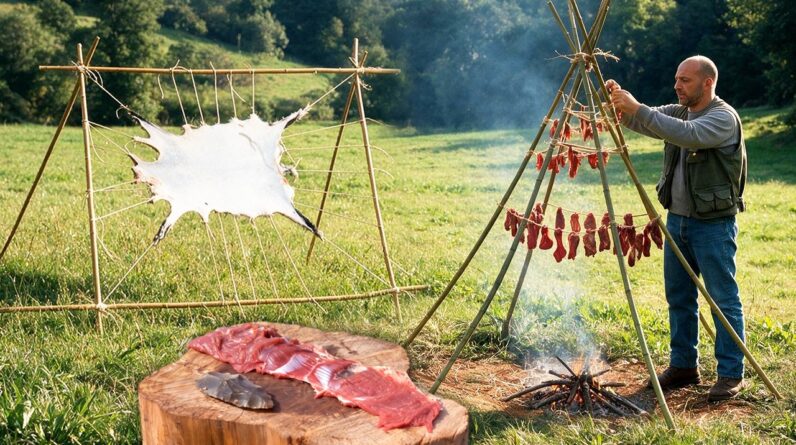
The jungle rewards competence and punishes guesswork. Thick canopy, relentless humidity, sudden downpours, and endless things that bite, sting, and scratch make tropical forest survival one of the ultimate tests of self-reliance. In this video from the Jungle Survival Skills channel, a single mom shows that you don’t need a warehouse of modern equipment to thrive in the wild. Using nothing but primitive technology, natural materials, and steady creativity, she builds, improvises, and problem-solves her way through the forest the way our ancestors did for thousands of years.
Over the course of the episode, you’ll watch how simple materials like bamboo, palm fronds, vines, and river stones are transformed into shelter, tools, and food-gathering systems. It’s a masterclass in doing more with less, and every technique shown has a direct application for hikers, campers, bushcrafters, and preppers who want skills that don’t depend on batteries, factories, or supply chains. Below, we break down the smart ideas worth stealing and the gear worth carrying.
Shelter First: Building With What the Forest Gives You
Exposure kills faster than thirst or hunger, and in the jungle the weather can flip from baking heat to torrential rain in minutes. The video’s shelter work follows a proven primitive pattern: use straight bamboo poles for a rigid frame, lash joints with natural vine or stripped bark cordage, and layer palm leaves like shingles so rain sheds downward instead of pooling. Raising the sleeping platform off the ground is the detail most beginners miss, and it matters more in the tropics than almost anywhere else.
An elevated floor keeps you away from saturated soil, crawling insects, snakes, and the cold dump of overnight rainwater. It also gives you storage space and a stable work surface. If you remember one thing from the entire build, make it this: in the jungle, the ground is not your friend. Every hour invested in a dry, raised bed pays for itself the first night the sky opens up.
Water, Fire, and Food: The Jungle Priority List
The jungle looks like a water paradise, and it is, but nearly every standing source carries bacteria, parasites, and agricultural runoff. Smart jungle survivors collect rainwater first, exploit fast-moving streams second, and treat everything before drinking, whether that means boiling over a fire, a filter, or chemical tablets. Fire is doubly important here: it purifies water, cooks food, dries damp clothing, and keeps the night-time forest at a comfortable distance from your ankles.
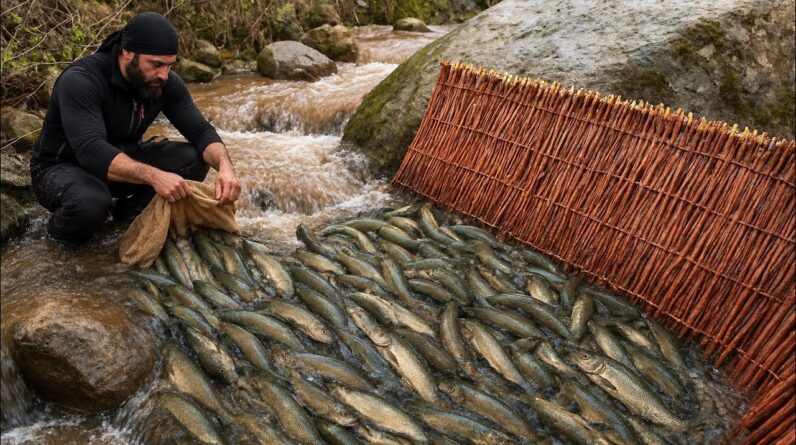
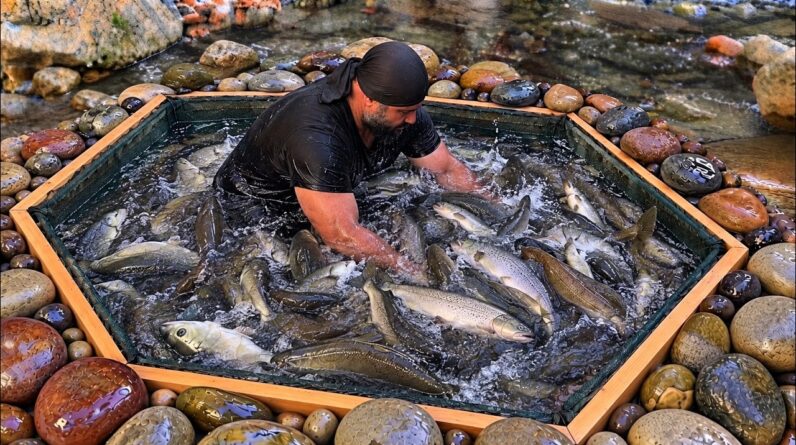
Food procurement in the video follows the patient, low-energy philosophy of primitive trapping rather than calorie-burning hunting. Basket-style fish traps woven from bamboo strips, baited lines left overnight, and simple snares all harvest calories while you sleep or work on camp. That’s the real lesson: sustainable food systems beat heroic effort, and calories saved are calories earned.
Key Survival Takeaways
- Elevate everything. Bamboo frames plus a raised platform keep you dry, bite-free, and insulated from cold, wet ground, which should be your first construction priority in any tropical environment.
- Palm thatch is your roofing system. Overlapping fronds shed rain like shingles; take the time to layer them correctly and even a monsoon downpour won’t reach your bedding.
- Let traps work for you. Woven fish traps and baited lines catch food around the clock while you handle shelter and fire, multiplying your survival output without extra energy spending.
- Treat every water source. Rain catchment is safest, and no jungle water should be drunk untreated, regardless of how clear and inviting it looks.
- Master vine cordage. Natural lashings replace rope, nails, and tape; knowing which vines flex and which snap is a core primitive skill worth practicing before you need it.
- Slow is smooth. The calm, methodical pace shown in the video is deliberate: panic burns calories, invites injury, and produces work that falls apart in the first storm.
Gear & Equipment
Primitive skills shine brightest when you have nothing, but a small modern kit makes jungle survival dramatically safer. A ferrocerium rod fire starter lights fires even after tropical downpours, where matches and lighters fail. A quality jungle machete handles everything from splitting bamboo to clearing a campsite in seconds. For water, a Sawyer Mini water filter turns questionable jungle streams into safe drinking water. One hundred feet of 550 paracord replaces hours of vine harvesting, and a compact waterproof survival tarp provides instant shelter insurance while your permanent build takes shape.
As an Amazon Associate, we earn from qualifying purchases.
Frequently Asked Questions
How do you build a survival shelter in the jungle?
Lash a rigid frame of straight bamboo poles together with vine or bark cordage, layer palm fronds over the roof like shingles so rain sheds downward, and build your sleeping platform on stilts to stay above wet ground, insects, and snakes.
How do you find safe drinking water in the jungle?
Collect rainwater first, draw from fast-moving streams second, and treat every drop by boiling, filtering, or using chemical tablets. Clear, inviting-looking jungle water still carries bacteria and parasites, so never drink it untreated.
How do you get food in the jungle without hunting?
Woven bamboo fish traps, baited lines left overnight, and simple snares harvest calories passively while you work on shelter and fire. Passive trapping spends far less energy than active hunting, which matters when calories are scarce.
What gear matters most for jungle survival?
A jungle machete, a ferrocerium rod fire starter, a compact water filter, 550 paracord, and a small waterproof tarp cover the gap between primitive skills and modern safety without weighing down your pack.
Final Thoughts
This episode is a reminder that survival is a knowledge game before it is a gear game. Watch how the forest provides for someone who understands its materials and works patiently, then ask yourself which of these skills you could replicate today. Pick one, whether it is knot lashing, trap weaving, or fire starting, and practice it before your next trip. Confidence in the wild isn’t bought; it’s built, one technique at a time.