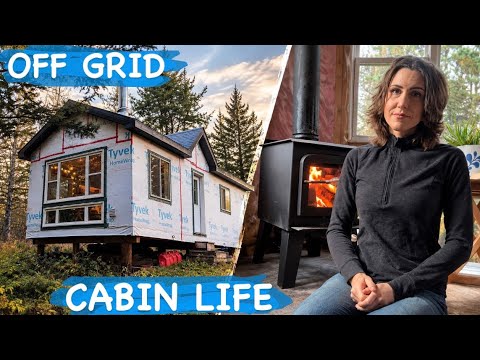
When your cabin has no electricity and no running water, winter does not arrive as a season. It arrives as a deadline. In this video, Rebecca Outdoors walks us through a real working day at her off-grid homestead in the Alberta woods, and it is a masterclass in how much quiet labor stands between a comfortable winter and a miserable one. With the cold months closing in, every chore she does, from splitting and stacking firewood to checking the trail camera, is timed against the calendar.
Whether you homestead full time, homestead on weekends, or simply want to harden your own home against emergencies, this video shows what daily self-reliance actually looks like. You will see how much wood a cold-climate winter demands, how daily chores are structured without power tools or running water, and how a cheap trail camera doubles as both a wildlife census and an early-warning system around a remote property.
A Day of Winter Prep at an Off-Grid Cabin
The video follows Rebecca through the rhythm of a single autumn day as winter looms. She has no grid power, no well with pressurized plumbing, and no convenience store down the road. That means heat, light, food storage, and security all depend on preparation done weeks before the first hard freeze.
The centerpiece of the day is firewood. In a northern climate, an off-grid cabin can burn three to five cords of wood across a single heating season, and that wood has to be split, carried, and stacked before snow makes the job miserable. Rebecca stacks her wood in the classic off-grid pattern: ends exposed to the breeze, rows loose enough for air to move through, and the stack positioned close enough to the door that refueling the stove never becomes a midnight expedition through deep snow.
Between chores, she pulls the SD card from her trail camera to see what has been circling the cabin after dark. This is one of the most underappreciated habits in remote living. Knowing that a moose, coyotes, lynx, or an unwelcome two-legged visitor passes by at 2 a.m. informs where you store food, how you secure outbuildings, and whether the dog comes inside before dusk. The daytime footage of game trails is also practical intelligence: where animals move, hunters and foragers follow.
Key Survival Takeaways
- Start winter prep a full season early. Firewood needs to be split and stacked months ahead so it seasons properly; green wood smokes, creosotes up your chimney, and throws far less heat when you need it most.
- Stack firewood for airflow, not looks. Loose rows with exposed ends and a covered top shed rain while letting wind dry the wood from the sides; solid, tight walls of wood trap moisture and invite rot.
- Keep the woodpile close to the door. A short, well-lit path to the stove-length pile is a safety feature; hauling fuel across a snowy yard in the dark is how people get hurt.
- Water discipline never stops. Without running water, every drinking, cooking, and cleaning task is a carried task; filling containers before freeze-up and keeping a generous reserve inside the heated space is a daily habit, not an afterthought.
- A trail camera is cheap insurance. It documents wildlife patterns, reveals problem animals before they become a real threat to food stores, and lets a remote dweller know whether anything unusual is visiting the property at night.
- Structure your day around daylight. Off-grid without electricity, outdoor chores go fastest and safest in natural light; productive homesteaders front-load heavy work into morning and early afternoon.
- Cook and fuel for heat, not ambiance. In winter mode, every system in the cabin gets judged by one standard — does it keep the core warm when it is minus thirty outside?
Gear & Equipment
Rebecca’s routine runs on a handful of simple, hardworking tools. A quality 36-inch splitting maul turns the season’s biggest chore into a manageable daily workout instead of a weekend of misery. A sturdy firewood storage rack with a weather cover keeps your seasoned stack dry and orderly right beside the door. A cellular trail camera sends photos of nocturnal visitors straight to your phone, no mid-winter card pulls required. For light without grid power, a solar camping lantern with a USB charger covers evening chores and device top-ups in one unit. And a set of stackable water storage containers makes building a freeze-proof indoor water reserve simple at any cabin.
As an Amazon Associate, we earn from qualifying purchases.
Final Thoughts
Off-grid winter prep is not a single dramatic weekend project; it is a hundred small, unglamorous tasks done steadily before the snow flies. Rebecca’s day shows the pattern clearly: heat first, water always, eyes on the perimeter, and heavy work finished while the sun is still up. Watch the video, then walk your own property and ask one simple question for every system you rely on — how does this work at minus thirty?