



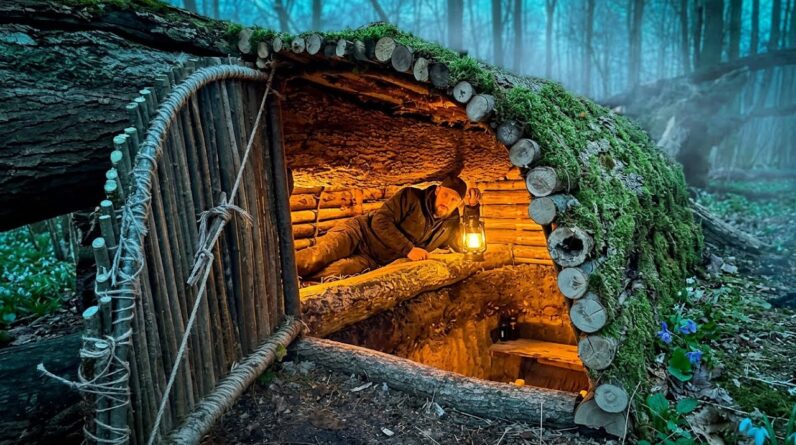
Building a permanent long-term subterranean home deep within a remote forest requiring 130 days of intensive manual labor is the ultimate test of wilderness endurance and primitive engineering skill. When isolated from modern construction machinery and synthetic builders supplies, survival practitioners must rely entirely on native raw materials, hand-forged tools, and acute observation of soil dynamics. Constructing a fully functional underground living complex with hand-carved earthen furniture, integrated water channels, and subterranean resting areas requires methodical planning and precise execution.
Throughout this comprehensive 130-day build, the construction team demonstrates how primitive human ingenuity can overcome harsh environmental conditions. By carving directly into compact forest clay, reinforcing load-bearing soil walls with organic binders, and creating natural ventilation shafts, builders create a comfortable, climate-regulated habitat. This project offers vital survival lessons in structural soil stabilization, moisture barrier crafting, and long-term wilderness shelter design for serious survivalists and off-grid builders.
Site Evaluation and Geotechnical Soil Analysis
Before launching a multi-month subterranean excavation, evaluating local soil composition and site geography is critical for long-term safety. Forest floors vary significantly in soil horizons, ranging from soft organic duff down to dense silt, gravel, or compact clay. Primitive builders search for locations featuring high clay content subsoil, as clay particles bind tightly when compacted, offering superior shear strength necessary for unsupported vertical earthen cuts.
Topographical elevation plays an equally crucial role in preventing water inundation. Establishing a underground dwelling on elevated ground or gentle ridge slopes allows natural gravity drainage, preventing heavy surface runoff from pooling in front of shelter entrances. Builders excavate deep perimeter interceptor ditches uphill from the project perimeter, diverting rain runoff around the main excavation pit into natural drainage ravines before ground breaking begins.
Hand-Carved Earthen Furniture and Integrated Living Chambers
One of the most remarkable features of extended subterranean construction is sculpting living furniture directly out of the standing earth substrate. Rather than hauling heavy timber inside or assembling external wooden frames, builders carve beds, seating sofas, dining tables, and storage niches directly into the native clay walls. Sculpting monolithically from solid ground preserves structural integrity while eliminating structural joints that could fail under stress.
Once carved into shape, earthen furniture surfaces are burnished with smooth river stones to compact surface clay pores. Applying a mixture of plant extracts, wood ash, and fine river sand seals the clay, preventing dust formation and flaking over time. Burning small hearth fires near carved furniture accelerates curing, baking the outer clay layer into a semi-vitrified earthenware finish that resists ambient moisture and wear.
Water Filtration Basins and Subterranean Pools
Integrating aquatic features into subterranean shelters serves both aesthetic and survival functions. A subterranean pool acts as an emergency fresh water reserve, a cooling heat sink, and a micro-climate temperature stabilizer. Constructing an underground pool requires digging a recessed basin below main floor elevation and lining it with compacted clay mortar to prevent water loss into porous lower soil strata.
Water purification in primitive pools relies on multi-stage bio-sand filtration channels. Raw water collected from forest streams passes through successive layers of coarse gravel, fine sand, crushed charcoal, and river pebbles before flowing into the main pool basin. Charcoal removes organic odors and toxins, while sand layers strain suspended solids. Regular manual flushing via lower drain plugs keeps water fresh and clean for long-term wilderness occupation.
Roof Deck Systems and Overhead Load Distribution
Ensuring overhead safety above large subterranean living rooms requires robust roof framing. Primitive builders employ interlocking post-and-beam timber frameworks constructed from dense hardwoods like oak or bamboo. Primary ridge logs are seated deeply into excavated wall notches, distributing heavy vertical loads evenly onto solid earth pillars rather than loose fill.
A secondary layer of woven bamboo poles or split saplings covers the primary log joists, creating a dense ceiling mesh. Over this mesh, builders lay broad palm fronds or waterproof wild banana leaves in overlapping shingle patterns. The roof is finalized with a 20-centimeter cap of packed clay topsoil. This earth-sheltered roof blends seamlessly with surrounding forest floor while providing thermal insulation and weather protection.
Key Survival Takeaways
- Interceptor Ditches Divert Surface Runoff: Digging perimeter channels uphill from subterranean sites prevents heavy forest rain from flooding underground living spaces.
- Monolithic Clay Carving Enhances Durability: Sculpting furniture directly out of undisturbed earthen walls creates strong, seamless interior features without weak joints.
- Heat Curing Hardens Earthen Surfaces: Burning small fires inside carved clay chambers bakes surface clay into durable, dust-free earthenware plaster.
- Bio-Sand Filtration Purifies Stored Water: Routing water through gravel, sand, and charcoal layers cleans natural water sources before storage in primitive basins.
- Interlocking Post-and-Beam Frames Support Roofs: Seating heavy timber joists into notched clay wall recesses ensures safe overhead load distribution for earth-covered roofs.
- High Clay Subsoil Provides Superior Shear Strength: Selecting sites with compact clay subsoil ensures stable wall cuts that resist cave-ins during extended stays.
Gear & Equipment
Executing large-scale primitive shelter projects requires dependable wilderness gear that can withstand weeks of heavy digging, chopping, and wood working. Equipping your bushcraft kit with quality tools ensures safety and high efficiency in deep forest environments:
Bushcraft Hand Auger Wood Drill – Precision steel auger for drilling clean structural mortise holes and pegs in timber shelter construction.
Full-Tang Survival Knife – Ultra-durable fixed blade knife for fine wood carving, cordage prepping, and tough wilderness utility tasks.
550 Heavy-Duty Paracord – High tensile strength nylon parachute cord essential for lashing timber joists, securing tarps, and rigging gear.
Rechargeable LED Tactical Headlamp – Powerful hands-free lighting solution indispensable for subterranean excavation and night survival chores.
As an Amazon Associate, we earn from qualifying purchases.
Developing expertise in long-term primitive construction transforms simple survival skills into sustainable wilderness living capabilities. By understanding soil dynamics, natural water filtration, and timber framing techniques, survivalists can build secure subterranean homes capable of enduring severe wilderness conditions for months on end.



Reminds me of my village of how we build our homes purely using bush material, first and mostly collect the wood for the house in advance,
Clear the bush for the house and start building it even our women will build the home too
Bien echo
А почему ночью петухи кукарекают?🐓🐓🐓
А мне нравится смотреть, как люди работают! 👍👍👍
Scam
Fake ass mofos
Liars liars I don't want clips from liars Don't use anything primitive Liars we want primitive A little you liars😡😡😡😡🤬🤬🤬🤬🤬🤬
IT IS A FAKE WORK !!!
Beautiful home 🤍👍🏽
Beautiful ❤️