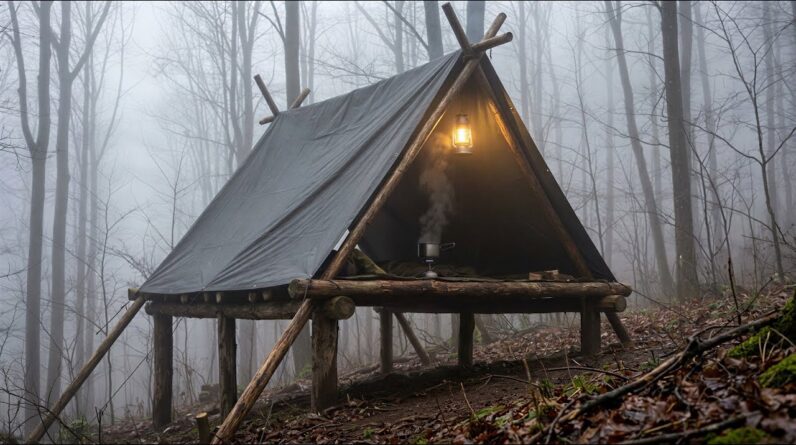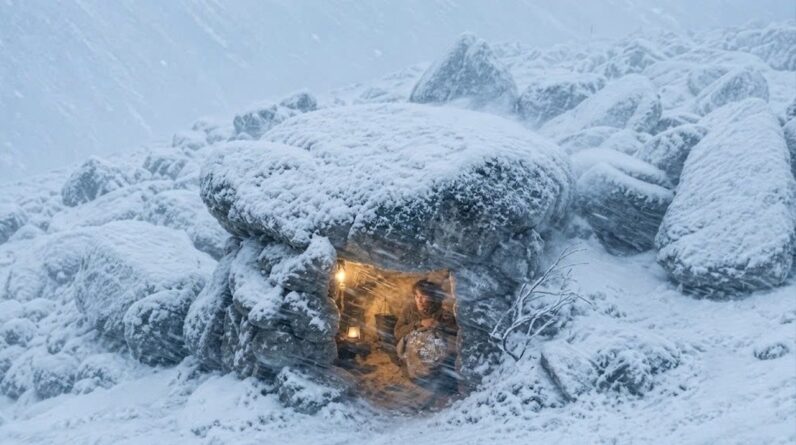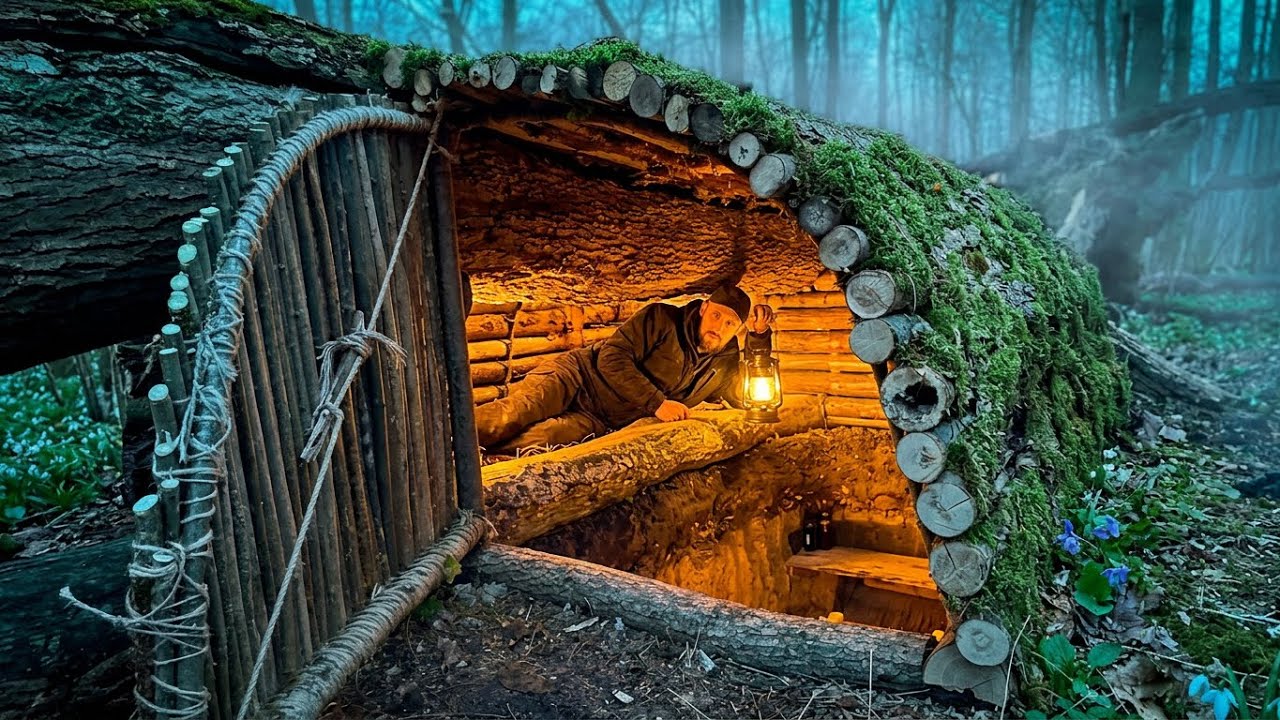
There is a massive difference between building a shelter in your backyard on a sunny afternoon and building one when the sky opens up and rain is already soaking your gear. That difference is exactly what makes this video from Armin Bushcraft so valuable — he does not get the luxury of perfect conditions. Instead, a heavy rainstorm rolls in mid-build, turning what could have been a tidy tutorial into a raw, real-time test of whether his debris shelter can actually keep him dry.
What you get here is the full cycle of wilderness shelter construction using only natural materials — no tarps, no paracord, no modern hardware. Armin walks through every critical decision: where to build, how to structure the ridgepole, how thick to layer the debris, and how to insulate from the ground up. The incoming rain becomes an unexpected diagnostic tool, exposing weak points in real time and forcing the kind of adaptive problem-solving that separates a shelter that works from one that collapses.
For anyone serious about bushcraft or wilderness survival, this is the type of content that bridges the gap between theory and practice. Reading about shelter construction is useful, but watching someone build one under pressure — and then sleeping in it through a storm — is where the real learning happens. Here is what to take away from this build.
Key Survival Takeaways
- Site Selection Is Everything: Armin carefully evaluates the terrain before breaking ground, choosing a spot with natural drainage, proximity to building materials, and protection from prevailing wind. A poorly placed shelter will flood or collapse regardless of how well you build it.
- The Ridgepole Is Your Backbone: A sturdy ridgepole anchored between two support points forms the spine of the shelter. Select a pole that is thick, straight, and long enough to give you adequate headroom and a sleeping area that fits your body with room for insulation.
- Layer Debris Thick and Steep: The key to shedding rain is a steep roof angle — 45 degrees or more — with layers of branches, leaves, moss, and earth piled deep. Water runs off rather than soaking through. Multiple thin layers of debris outperform a single thick layer because they create overlapping barriers.
- Test Early and Often: Rather than waiting until the shelter is fully complete to discover leaks, Armin uses the incoming rain as a real-time diagnostic tool, identifying weak points and reinforcing them before the storm peaks. This is a practical habit every shelter builder should adopt.
- Insulate From the Ground Up: A surprising amount of body heat is lost to the ground, not the air. Armin builds a deep bed of dry leaves and branches inside the shelter to create an insulating layer between his body and the cold earth — a step many beginners overlook.
- Work With What Is Available: No tarps, no cordage, no modern hardware. The entire shelter is built from what the forest provides — deadfall branches, leaf litter, moss, and soil. This forces adaptability and teaches you to read the landscape for resources rather than relying on a packed kit.
- Build Smaller Than You Think: A smaller shelter is faster to build, easier to heat with body warmth, and requires less material. Armin’s shelter is sized to his body with minimal extra space, which is the correct approach for a short-term survival shelter.
Gear & Equipment
While this build relies entirely on natural materials, having a few key tools dramatically improves your speed and effectiveness. A solid bushcraft fixed blade knife is essential for processing sticks, notching joints, and trimming branches. A folding camp saw makes quick work of cutting larger ridgepoles and structural supports without exhausting yourself. For wet-weather insurance, keeping an emergency survival tarp in your pack gives you an instant waterproof layer when natural materials fall short. An emergency bivy sack adds critical ground insulation and waterproofing for your sleeping setup. Finally, a coil of 550 paracord lets you lash structural joints quickly and securely, saving valuable time and energy.
As an Amazon Associate, we earn from qualifying purchases.
Conclusion
Armin Bushcraft’s rain-soaked shelter build is a compelling reminder that survival skills are not theoretical — they are tested by the elements. The combination of smart site selection, proper ridgepole construction, thick debris layering, and real-time problem solving demonstrates the complete cycle of building a shelter that actually works when conditions deteriorate.
The most important lesson: practice these techniques in fair weather so they become second nature when you truly need them. Your future self, caught in a storm miles from nowhere, will be glad you did.