



Embarking on a 30-day solo survival challenge in a tropical jungle along a flowing mountain stream tests every aspect of a woodsman’s bushcraft proficiency. Waterways are the lifelines of the forest, offering abundant aquatic life, clean fresh water, and versatile building materials like bamboo and rattan. However, proximity to water also introduces high humidity, sudden rise in water levels during flash storms, and persistent insect activity that requires strategic camp setup.
In this detailed bushcraft survival guide, based on long-term stream-side survival tactics, we explore how to survive and thrive with minimal modern tools. By relying primarily on a traditional heavy forest knife or machete, you can split bamboo, construct effective fish traps, build a waterproof lean-to shelter, and harvest nutrient-dense wild bamboo shoots. Read on to master the essential skills for solo stream survival.
Key Survival Takeaways
- Strategic Stream-Side Camp Selection: Positioning camp shelters on elevated terraces at least fifteen feet above current stream levels prevents catastrophic flooding during sudden upstream storms.
- Woven Bamboo Fish Traps: Fashioning cone-and-funnel basket traps from green bamboo strips allows passive, non-stop catching of river fish and crayfish.
- Wild Bamboo Shoot Harvesting: Identifying and properly boiling young bamboo shoots removes bitter tannins and provides crucial dietary carbohydrates and dietary fiber.
- Traditional Forest Knife Mastery: A single, well-maintained high-carbon forest knife can perform felling, splitting, carving, and fine cordage prep without needing additional heavy tools.
- Natural Stream Water Purification: Utilizing boiling containers fashioned from fresh green bamboo tubes provides safe drinking water without carrying metal cookware.
- A-Frame Bamboo Roof Thatching: Layering broad jungle palm fronds or wild banana leaves upside down over a sloped bamboo lattice ensures total rain runoff.
Building a Waterproof Stream-Side Bamboo Lean-To Shelter
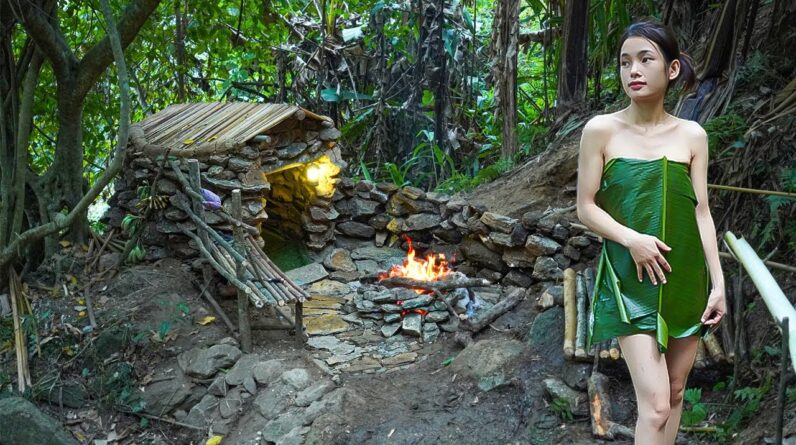
Shelter construction is your highest priority when establishing a 30-day stream-side camp. Green bamboo is the ideal structural material in tropical regions because of its strength, light weight, and natural resistance to bending. Select thick, mature bamboo culms for main load-bearing posts and ridgelines.
Begin by driving four heavy corner posts deep into the ground, notching the tops to securely cradle horizontal support beams. Construct a steep pitch roof angled at least 45 degrees to encourage rapid rainwater shed. For thatching, gather large palm leaves or wild banana fronds. Lay the fronds starting from the bottom roof edge and work upward in overlapping shingle layers. Secure the thatching with thin split bamboo strips. Elevate the interior sleeping platform off the moist soil to allow airflow and keep crawling insects away.
Crafting Traditional Bamboo Fish Traps for Passive Catching
Hunting and active fishing expend significant calories that solo survivalists cannot afford to lose over a 30-day stint. Passive fish trapping is far more energy-efficient. Bamboo is easily split into flexible, resilient strips perfect for weaving funnel traps.
To weave a traditional funnel trap, split a green bamboo section into two dozen thin, uniform slats, keeping them attached at one base node. Flare the open ends outward and weave rattan or natural vine cordage horizontally across the ribs to form a sturdy cylinder. Create an inverted cone funnel at the entry point that allows fish to swim inward toward bait but prevents them from swimming back out. Place the trap in narrow stream channels or near submerged root structures where fish naturally seek shelter, weighing it down with heavy river rocks.
Foraging Wild Bamboo Shoots and Cooking in Green Bamboo Containers
Wild bamboo shoots emerging from the forest floor are exceptional survival food sources. Harvest shoots that are less than twelve inches high by cutting them flush with the soil using your forest knife. Peel away the tough outer sheath to reveal the tender white inner core. Always slice and boil bamboo shoots in water for at least twenty minutes to break down cyanogenic glycosides and bitter compounds.
When cookware is unavailable, fresh green bamboo serves as an outstanding natural cooking vessel. Cut a mature bamboo section just above one node and several inches above the next node to create a sealed wooden pot. Fill the chamber with water, sliced bamboo shoots, and fresh fish. Place the green bamboo pot directly over campfire coals. The green wood’s natural moisture prevents it from burning through before the food inside boils completely.
Gear & Equipment
Equipping yourself with time-tested bushcraft tools enhances safety and field efficiency during month-long wilderness stays. Having dependable survival gear on hand ensures you can overcome challenging jungle weather. Below are top-rated tools for stream and jungle survival:
Collapsible Survival Fish Trap Net
Stainless Steel Bushcraft Camping Pot
As an Amazon Associate, we earn from qualifying purchases.
Conclusion
A 30-day solo survival stint along a jungle stream rewards those who respect nature and master primitive bushcraft techniques. By constructing raised bamboo shelters, deploying passive woven traps, and utilizing natural bamboo cookware, you can live comfortably off the land. Hone these fundamental skills on shorter trips to build true self-reliance in the wild.



Please watch more interesting videos via the link:
https://youtube.com/playlist?list=PL5aBNyfJ5ytC9xxwFppfzuvpxpw_CnNaS&si=irb5QG5je_4KT9T8
Nice
Konten sangat bagus lanjutkan ❤
God bless you with lots of love and happiness.
You are a True Adventurer👍❤.tq 4 sharing from INDONESIA
Waching from Philippines
🛌🛌🛌🛌🛌🛌🛌🛌🛌🛌🛌🛌🛌🛌🛌🛌🛌
Quá tuyệt vời 🎉🎉🎉🎉🎉🎉🎉
Semangat bang, keren banget rumah rakitnya
Super bro..😮 salam dari kami di Jayapura papua..,🎉
ما شاء الله روعه تسلم الايادي
Very creative and nice video..done subscribe Like Share. @phillslatz
I'm cambodai❤❤❤khmer🇰🇭
quem que acha que as pessoas querem ver propaganda,,,,,credo,,,,so enche o saco
good stuff and great views, im jealous… keep it up!
YOU GOOD
Nên mang theo Vitamin, khoáng chất tổng hợp theo để dùng. Để cơ thể hoạt động bình thường trong chế độ ăn không đầy đủ.
Haha… See cute 1:19:34
So natural and peaceful ❤it
Wow … 👍
RẤT OK
How about electricity?
Semangat
Salam dari Indonesia
cuộc sống bình yên trong rừng
that la tuyet voi
Which place is this?🥰😂❤️😍🙏🤣🤣?
I'm watching from India😅😊🎉😂❤.
He is the king of survival head off to him.
When i watch your video I feel so peace literally…water sound 💚
The. Structure ready happy.yhis structure just look attain get very to pasific.
his a good experience i'm watching from Sarangani Province Mindanao Philippines
Kepiting sawah sungai kecil biasa di kasih buat bebek gitu emang rsa nya enak bisa di makan🙄🤔🤔
Bom dia, acho muito lindo essas floresta, também gosto muito da natureza, parabéns pelos seus vídeos, são ótimos, um abraço.
Deve ser muito bom viver perto da natureza, claro que tem muito trabalho duro mas no fim valer a pena <3
You are Gamzrdela babu? i know you
No cc.I can't see.😢May You be happyiness.❤
bro forget his own housh
❤
Wow keren ..saya suka ❤
Ola amigo tudo bem, gosto muito os seus vídeos, tambem pratico o bushcraft. Parabens pela iniciativa.
Tetap hati-hati bro❤ sukses terus ya
Tutorial ini
Very good but the crabs were already dead.😢
Thích video như này cực, dựng chỗ ở kiếm ăn đồ như vầy quá chân thật, mà thiệt mình muốn bạn mang theo 1 bì muối ớt với 1 hộp ớt xiêm ngâm mắm theo. Để nấu ăn hoặc để chấm. Ít gì cua hay đồ rừng gì bắt được nấu hay nướng chấm tí muối dầm ớt cho đỡ nhạt nhẽo và có chất
this a good video because it ain't fake.