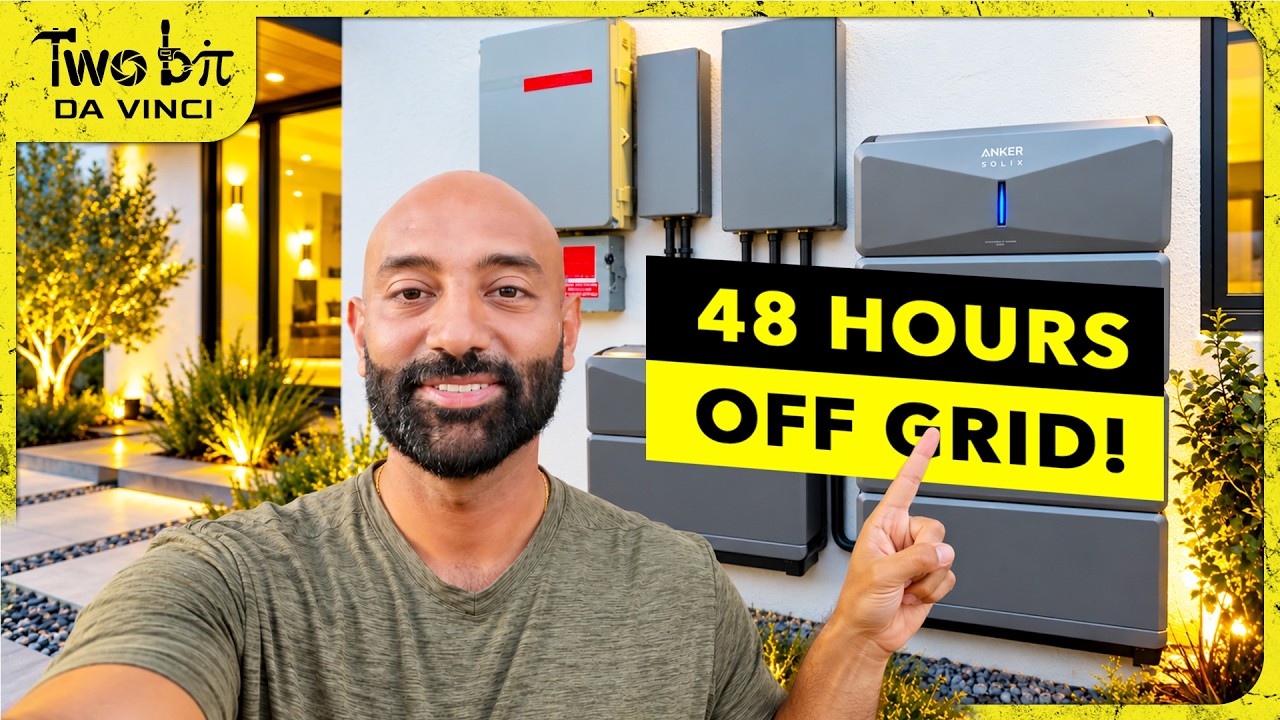
What happens when you cut the cord and rely entirely on battery power and solar? One family found out by disconnecting from the electrical grid for 48 straight hours, running everything from their refrigerator to their HVAC system on a single portable power station. No simulated loads, no backup grid connection — just real life on backup power, with solar panels working to keep the batteries charged during daylight hours.
In this article, we break down the key lessons from their off-grid experiment, from managing energy consumption to understanding what really drains a battery system fastest. Whether you’re preparing for extended power outages, building an emergency backup plan, or planning a full off-grid lifestyle, these real-world insights will help you size your system correctly and avoid the costly pitfalls that catch first-timers off guard.
Key Survival Takeaways
- Refrigeration is your biggest continuous draw: The refrigerator ran 24/7 and consumed more battery capacity than any other appliance in the house. If you’re planning off-grid power, size your system with refrigeration as your baseline — a typical modern fridge needs 1.5–2 kWh per day to maintain safe food temperatures.
- HVAC is the battery killer: Heating and cooling systems draw massive surge currents and sustained wattage. The family found that running HVAC even for short periods caused significant battery drain. For off-grid living, prioritize passive cooling, proper insulation, and alternative heat sources like wood stoves.
- Solar input matters more than battery size: During daylight hours, solar panels offset consumption and extended the runtime dramatically. A modest 400W panel array can add 2–3 kWh per sunny day, effectively doubling your usable capacity and stretching a 48-hour test into something sustainable.
- Computers and LED lights are surprisingly efficient: Modern LED lighting and laptops draw minimal power compared to major appliances. A full day of household lighting and computer use might consume less than 0.5 kWh combined, making them low-priority concerns when managing your energy budget.
- Know your wattage before going off-grid: The experiment highlighted how critical it is to measure each appliance’s actual power draw in advance. A Kill-A-Watt meter or built-in battery monitoring app lets you build a realistic energy budget instead of guessing and hoping for the best.
- Surge power versus running power: Appliances with compressors and motors — refrigerators, HVAC units, well pumps — draw 3–5x their running wattage on startup. Your inverter must handle these surge spikes or you’ll trip the system and potentially damage sensitive electronics connected downstream.
- Two days is the real minimum test: A single day doesn’t account for overnight battery drain, morning routines that spike demand, or weather changes that reduce solar input. A 48-hour test reveals your system’s true limits and exposes weaknesses that shorter tests completely miss.
Gear & Equipment
When the grid goes down, having the right power backup gear makes all the difference. A portable power station (1000Wh+) forms the backbone of any off-grid setup, providing clean sine-wave power for sensitive electronics and appliances. Pair it with a 100W portable solar panel to keep it charged during daylight hours and extend your runtime indefinitely. A Kill-A-Watt electricity usage monitor helps you measure exactly how much each appliance draws so you can build an accurate energy budget before an emergency hits. For longer outages or permanent off-grid setups, consider a solar generator kit with panels included that combines battery storage and solar generation in one integrated package. And don’t forget LED emergency lights as a low-power backup for when you need to conserve your main battery reserves.
As an Amazon Associate, we earn from qualifying purchases.
Final Thoughts
Going off-grid for 48 hours teaches you more about your real energy needs than any spreadsheet or online calculator ever could. The biggest takeaway? Know your loads before you size your system, invest in solar to extend your runtime, and prioritize critical loads when battery capacity runs low. Whether you’re preparing for the next grid outage or building toward full energy independence, this kind of hands-on testing is the only way to know if your setup will actually hold up when the power goes out for real.