Building an off-grid workshop from a shipping container is one thing — keeping it livable in freezing winters and sweltering summers is another challenge entirely. In this video, a DIY couple working deep in the woods tackles the critical problem of temperature regulation in their container shop. Without access to grid power for conventional HVAC, they rely on a combination of passive design, insulation strategies, and creative ventilation to maintain a workable interior environment year-round.
Whether you are building an off-grid homestead, a bug-out shelter, or a remote workshop, temperature control is a survival issue disguised as a comfort problem. Extreme heat causes dehydration and heat exhaustion within hours. Extreme cold impairs fine motor skills and judgment, making even simple tasks dangerous. The techniques demonstrated here — from spray foam insulation to strategic airflow management — translate directly to any off-grid structure, from cabins to container homes to underground shelters.
Key Survival Takeaways
- Insulation is your first line of defense. Shipping containers are steel boxes that conduct heat and cold rapidly. The couple uses closed-cell spray foam insulation, which not only provides an R-value of around 6-7 per inch but also acts as a vapor barrier, preventing condensation that leads to rust and mold inside the container.
- Create a thermal break between the container and the ground. Steel containers sitting directly on ground or concrete lose heat rapidly through conduction. Elevating the container on footings or using a rigid foam board underneath breaks this thermal bridge and can reduce heating needs by 20-30%.
- Use passive ventilation for summer cooling. Strategic placement of vents high and low creates natural convection currents — hot air rises and exits through high vents, pulling cooler air in through low vents. This passive system requires zero electricity and can drop interior temperatures by 15-20 degrees Fahrenheit.
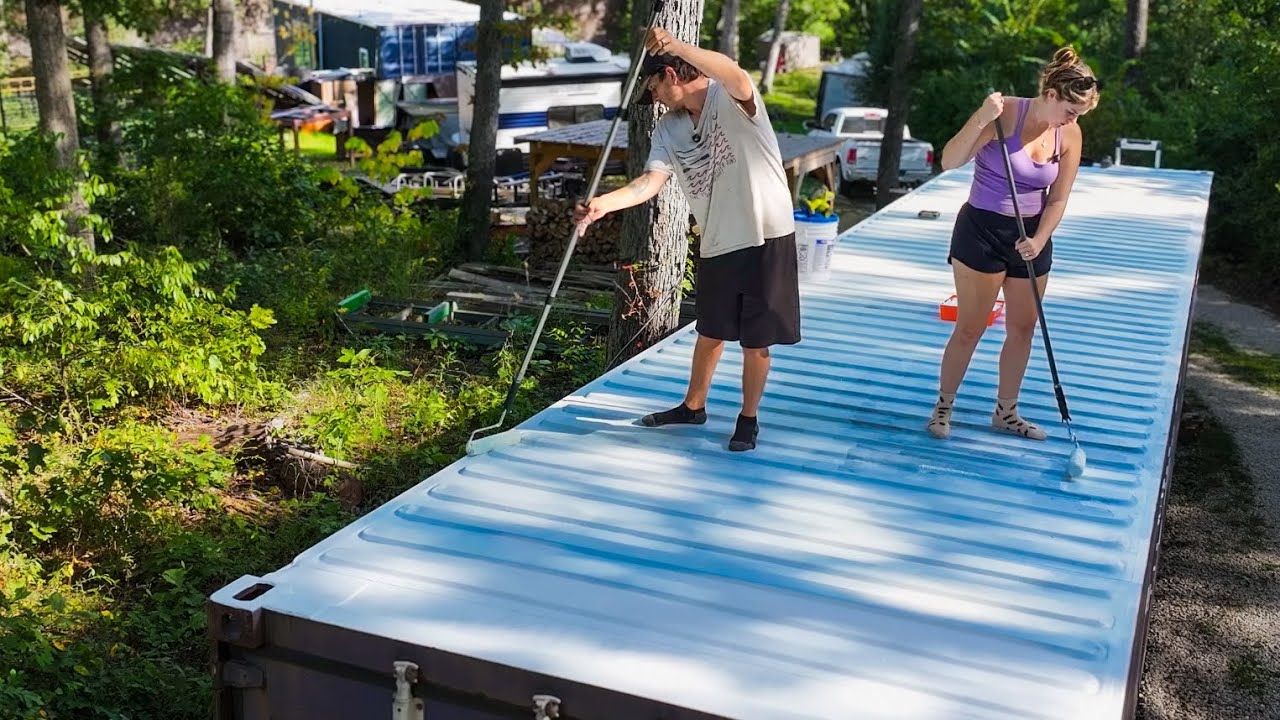
- Reflective barriers and paint reduce solar heat gain. A simple coat of white or reflective elastomeric paint on the container exterior can reduce surface temperatures by 30-40 degrees, dramatically cutting the heat that penetrates the steel walls during summer months.
- Wood stoves provide reliable off-grid heat. A small wood stove with proper clearance and a stainless steel chimney through the roof provides dependable heat without fuel costs or electrical dependency. The couple demonstrates safe installation with heat shielding behind the stove to protect the container walls.
- Zone your space for efficiency. Instead of heating or cooling the entire container, partition smaller work areas. A insulated divider wall lets you maintain comfortable temperatures in a fraction of the space, reducing energy demand and fuel consumption.
- Monitor humidity alongside temperature. Off-grid spaces are prone to condensation, especially in winter. A simple hygrometer helps track moisture levels, and passive ventilation or a small solar-powered exhaust fan prevents the mold and corrosion that destroy off-grid structures over time.
Gear & Equipment
Building an off-grid structure with proper temperature control requires the right materials and tools. Here are some essential products for anyone tackling a similar project:
A DIY spray foam kit lets you insulate steel walls and ceilings with an air-tight, moisture-blocking layer. Closed-cell foam delivers the highest R-value per inch and doubles as a vapor barrier — critical for preventing container condensation.
A white elastomeric coating applied to the container exterior reflects up to 90% of solar radiation, reducing interior temperatures dramatically. It also seals and protects the steel roof from corrosion and leaks.
A compact wood stove provides reliable off-grid heat without electricity or fuel costs. Look for models with a flat top for cooking and a stainless steel chimney pipe rated for through-roof installation.
A roof-mounted solar exhaust fan runs on free sunlight, pulling hot air out of the container during summer and reducing humidity year-round. No wiring or batteries required — it activates automatically when the sun hits the panel.
For insulating container floors or creating a thermal break underneath, rigid XPS foam boards offer moisture-resistant insulation that will not degrade or absorb water. Cut to size and layer under flooring for a warmer, drier interior.
As an Amazon Associate, we earn from qualifying purchases.
Conclusion
Temperature control is the make-or-break challenge for any off-grid structure. A shipping container that bakes in summer and freezes in winter is useless as a workshop, shelter, or living space. The key lessons from this build — insulate thoroughly, break thermal bridges, use passive ventilation, reflect solar heat, and heat with wood — apply to cabins, earth shelters, and any structure you are working to make self-reliant. Start with insulation, add ventilation, and only then consider active heating or cooling systems. Build it right, and your off-grid structure stays comfortable and functional no matter what the weather throws at it.