



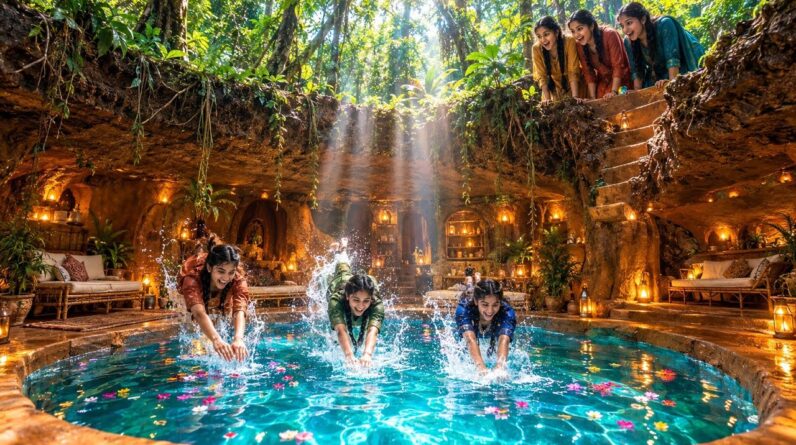
Subterranean survival architecture showcases the extraordinary potential of primitive tools when paired with sound engineering principles. Designing and constructing an underground water slide park villa demonstrates how raw wilderness materials can be transformed into complex, highly functional living environments. Beyond the novelty of subterranean recreational features, the fundamental skills involved—excavation, hydraulic routing, wall reinforcement, and clay sealing—are essential skills for long-term survival shelter construction, emergency preparedness, and off-grid homesteading.
In extreme climate conditions, underground structures offer vital thermal insulation against scorching summer heat and freezing winter temperatures. However, building stable underground chambers requires a thorough understanding of soil mechanics, structural load distribution, and water management. In this article, we break down the step-by-step primitive techniques required to construct an underground villa featuring water slide channels, secure subterranean vaults, and self-contained aquatic features using hand tools and natural forest resources.
Key Survival Takeaways
- Hand excavation requires systematic soil removal using angled trenching methods to maintain wall structural stability.
- Water slide channels must be lined with compacted river clay and polished smooth to reduce friction and eliminate water seepage.
- Subsurface hydraulic systems rely on gravity-fed water channels diverted from natural elevated streams or rainwater collection basins.
- Heavy roof loads require cross-braced timber framing supported by stone footings to prevent soil settlement and structural failure.
- Subterranean living spaces require moisture-proofing layers consisting of charcoal, ash, and dry leaf litter behind clay walls.
- Natural lighting can be piped into underground chambers using angled light shafts lined with reflective burnished clay or foil.
Earth Shoring and Subsurface Structural Stability
Excavating deep subterranean chambers presents constant soil collapse risks if proper shoring techniques are neglected. When digging deep trenches for underground villas, survivalists must employ step-benched walls rather than sheer vertical cuts. Step-benching relieves lateral soil pressure and creates natural structural ledges. For deeper main chambers, vertical timber shoring posts made from hardwood saplings must be wedged firmly against side walls and braced across the ceiling with cross-beams. Compacting the earthen floor with heavy wooden rammers further consolidates subsoil particles, establishing a rock-solid foundation that resists ground movement and moisture heave. Adding diagonal braces across corner joints prevents lateral shifting during heavy soil saturation caused by seasonal tropical rains. Proper timber selection ensures that load-bearing posts withstand wet conditions without premature softening.
Water Channeling and Hydraulic Engineering with Primitive Tools
Constructing an underground water slide and pool system requires precise elevation grading to achieve continuous gravity water flow. Primitive builders must slope water channels at a consistent decline of two to three degrees. Water channels carved directly into subsoil must be sealed against rapid water loss. Applying a thick paste of fine river silt, wood ash, and sticky clay seals micro-pores in the dirt wall. Once dried, fire-curing the clay surface with torches or charcoal beds hardens the slide liner into a smooth, durable ceramic-like chute that facilitates rapid water movement while preserving structural integrity. Ensuring continuous water movement prevents silt accumulation and unwanted algae growth inside the subterranean channel network. Proper water inlet baffling controls water speed and reduces erosion along curved slide sections.
Soil Compaction and Moisture Control in Underground Cavities
Managing humidity and water seepage is crucial when inhabiting underground spaces. Groundwater migration through soil walls can lead to dampness, mold, and structural weakening. To mitigate subterranean humidity, builders construct double-walled earth barriers lined with crushed charcoal and coarse sand. Charcoal absorbs organic odors and excess airborne moisture, while sand channels subsurface water runoff into sump pits dug below the living area floor. These drainage pits can be emptied using primitive bucket levers or gravity drain conduits, ensuring the main living quarters remain dry, sanitary, and comfortable. Regular inspection of wall seals prevents damp pockets from compromising internal air quality over extended stays. Maintaining dry subfloors protects timber posts from premature rot.
Subterranean Drainage Management and Spillway Safety
High-volume water features like slides and pools require failsafe drainage mechanisms to prevent flooding the main shelter during heavy rain. Builders must construct a primary spillway that channels excess water directly into an underground French drain system. The French drain consists of a deep pit filled with coarse gravel, river pebbles, and charcoal layers that filter water into deeper subsoil strata. Maintaining clear spillway channels ensures that water continues to circulate smoothly without compromising structural walls or flooding sleeping quarters. Incorporating secondary overflow outlets guarantees safety during unseasonable tropical rainstorms, safeguarding both the infrastructure and residents. Periodic clearing of drain grates ensures unrestricted water passage during sudden downpours.
Gear & Equipment
Building complex underground aquatic structures demands durable digging tools and reliable field gear. The following essential items will support your primitive excavation, structural timbering, and water management efforts during wilderness projects:
- Tactical Mattock and Pickaxe
- Full Tang Bushcraft Machete
- Heavy Duty Leather Work Gloves
- Portable Outdoor Water Filtration System
As an Amazon Associate, we earn from qualifying purchases.
Conclusion
Building an underground water slide villa pushes primitive bushcraft to its absolute limits. Mastering soil mechanics, gravity hydraulics, subterranean moisture control, and drainage management equips survivalists with the knowledge needed to thrive off-grid. Use these architectural principles to elevate your primitive survival projects.


Who is watching 8080???🎉
How Piramids were built
Alvin and the chimp monks type scream💀
When they fell 😂😂😂😂😂😂😂😂 2:04
Even if they didn't actually make it all by themselves and had an excavation group, they still did a bit of hard work for the camera.
I’m in the topics just stop hating they try their best to impress people with building stuff but they use excavation teams to build it
You guys are so creative and talented keep it up
5 minutes craft be like:
Yk your using machinery teams?
Fakery
aē
ABCČĆDDž
I first 6:06
The thumbnail is photo shopped because that the other guy is floating about the water and the shadow is on the water not the bottom of the sandstone
The thumbnail is photo shopped because that the other guy is floating about the water and the shadow is on the water not the bottom of the sandstone
lol how did we not notice the machine noises in the background this entire time is hilarious but I still love watching these 😂
❤
Bro is playing Minecraft in real life
Never new excavators wear green screens and have silencers
Wait i remember that there is no wifi in the jungle because they are recording it right in the jungle there is none
3:06 the cat right😂😂😂
So guys, if they didn’t know these two guys was building playing grounds so they make a fun place so many workers need to to build in the underground wood
buen video, me gusta
I think if they just straight up showed how it's actually made, it would make for an even more entertaining video. It can't possibly be easy to make all that on a youtube video budget. It's a waste that instead of enjoying some madlads excavating the shit out this with some powertools we have to be here and pretend that we somehow don't realize that the timelapse just shows the very start and very end of the holes.
People say magic stops being fun once you know the trick, but if you just make the audience care for the engeneering behind the trick, it can feel even more impressive than magic. Show me the unabridged version, give me director commentary, record some voiceover from the conatruction crew, put up the actual schematics, take us location scouting.
What every guy wants to do at a beach
I know There are machinery It's impossible to make this Fraud
Your a lie
WHERE THE GALVANIZED STEEL AT??
If rain fall😅?
Was that a monke😂😂😂
Please give full details about the building…if you give we will know..,.
Some random idiots thinkign they're in 1600s