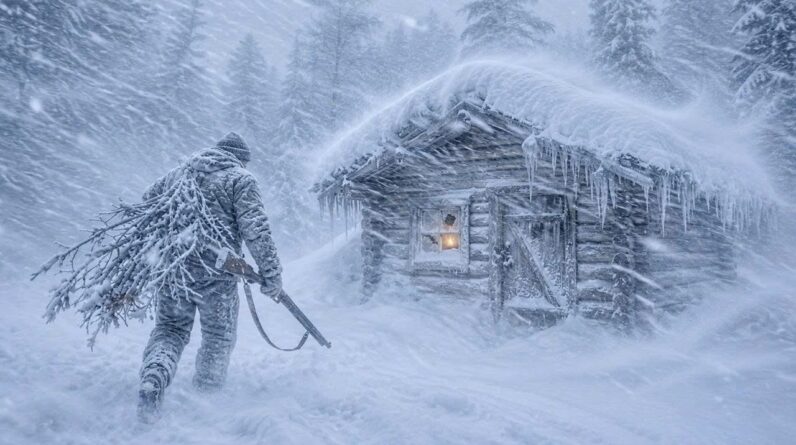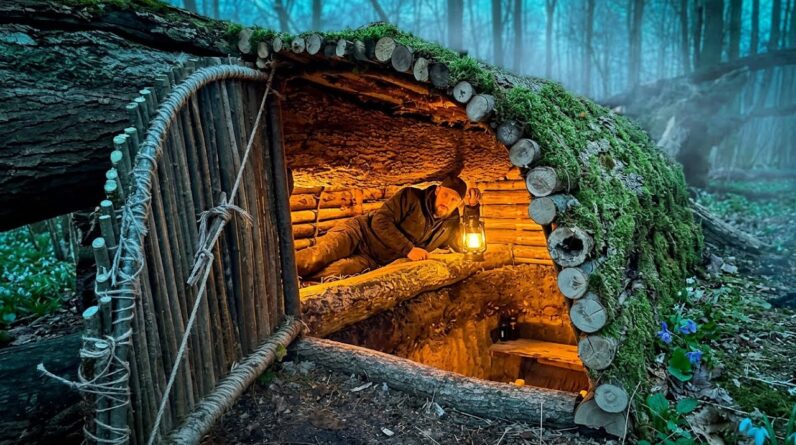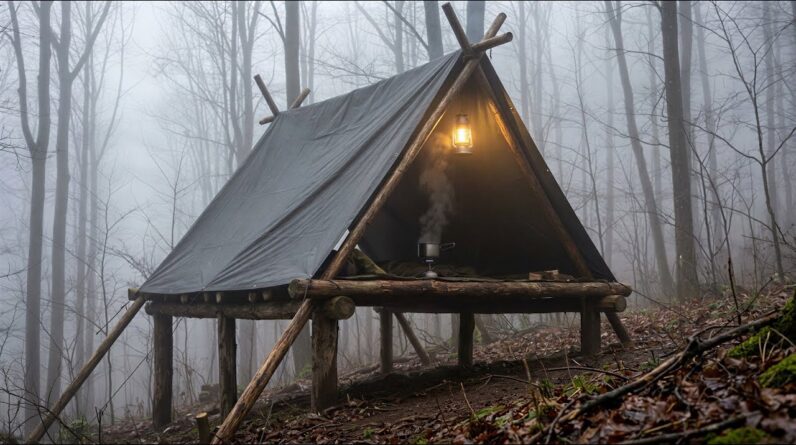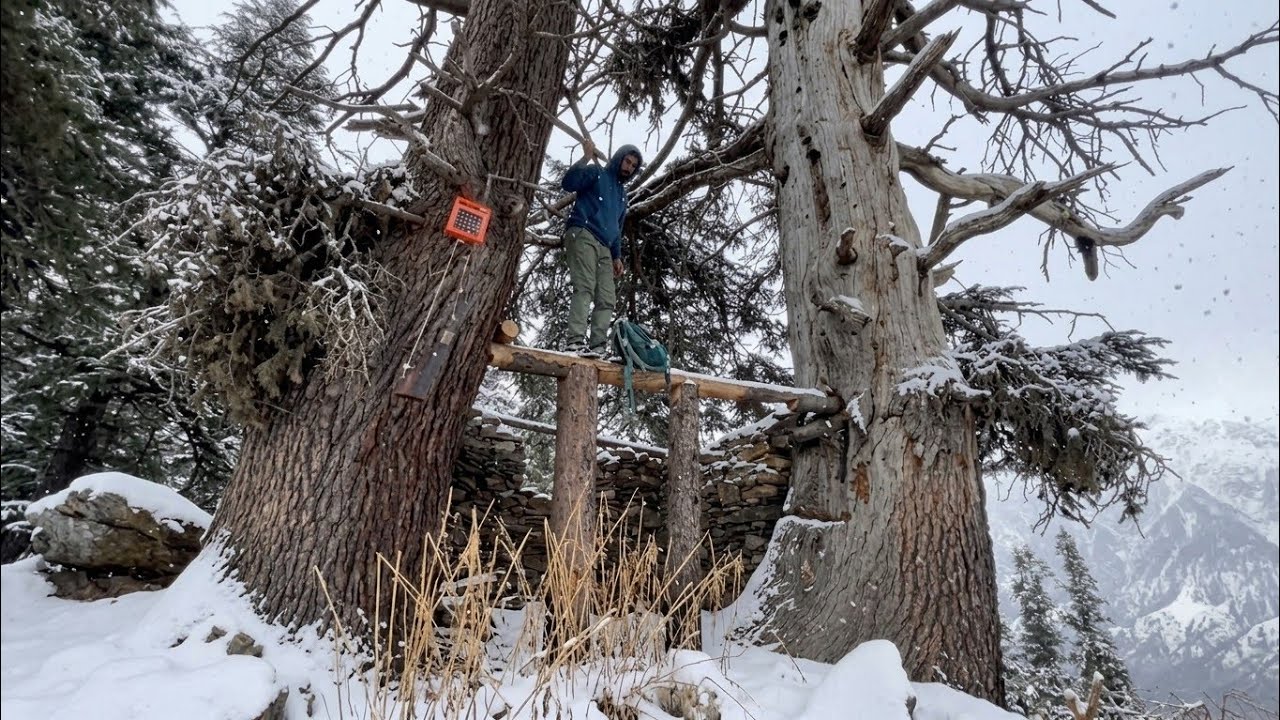
Building a shelter from scratch in the wilderness is one of the most fundamental survival skills you can master. When exposure can kill you faster than dehydration or starvation, knowing how to construct a protective structure from whatever nature provides could be the difference between life and death. In the video above, the builder constructs a complete primitive survival shelter using only natural stone and logs gathered from the surrounding forest, working from daylight into the night to demonstrate the stamina and problem-solving required to create a weatherproof structure without modern tools or hardware.
What makes this build especially valuable is the use of raw materials that anyone could source in a wilderness setting. Stones form the base walls, logs provide structural framing, and every wall, entrance, and roof element is fashioned by hand. The techniques shown translate directly to real survival scenarios where you may have nothing but what the land offers. The builder’s willingness to work through the night adds a layer of realism that most survival tutorials lack.
Whether you are a bushcraft enthusiast looking to refine your shelter-building skills or a prepper planning for off-grid scenarios, this step-by-step construction offers practical lessons in site selection, material gathering, wall construction, entrance design, and roof assembly. The combination of stone thermal mass and log framing creates a structure that can withstand weather and retain warmth even without modern materials, making this one of the most valuable primitive building demonstrations available.
Key Survival Takeaways
- Site selection matters: The builder chooses a location with ready access to stones and logs, reducing the energy spent transporting heavy materials. Look for areas near dry creek beds or rock outcroppings where building supplies are abundant. Proximity to materials is proximity to survival.
- Stone walls as thermal mass: Stacking stones creates walls that absorb heat during the day and release it slowly at night, helping regulate temperature inside the shelter without a dedicated heating system. This passive temperature regulation can keep the interior survivable even when outside temperatures plummet.
- Log framing for structural integrity: Logs are used as load-bearing elements to support the roof and reinforce the stone walls. Cross-laying logs at corners increases stability against wind and settling. A structure is only as strong as its frame.
- Working into the night: Survival does not wait for ideal lighting. The builder demonstrates how to continue construction after dark, a critical skill when weather is closing in or temperatures are dropping. Having a headlamp and the determination to push through fatigue are essential.
- Entrance design: A narrow, low entrance helps retain interior heat and blocks wind. The orientation should face away from prevailing wind direction to maximize comfort and protection. A well-designed entrance can be the difference between a warm night and a cold one.
- Roof construction with natural materials: The roof uses layered logs and stone to create a weather-resistant barrier. Overlapping materials from bottom to top ensures water sheds away from the interior, mimicking the principle behind shingles and thatch.
- Hand-tool techniques: Even without power tools, basic hand skills like levering stones, notching logs, and dry-stacking allow you to build a sturdy structure. Practice these techniques before you need them, because under stress, fine motor skills deteriorate rapidly.
Step-by-Step Shelter Building Process
- Scout the location: Find a site with abundant stones and logs nearby. Check for natural windbreaks and avoid low-lying areas where cold air settles.
- Gather materials: Collect stones of varying sizes for walls and logs for framing. Sort them by size as you gather to streamline construction.
- Lay the stone foundation: Start with larger stones at the base, building up walls with progressively smaller stones. Dry-stack with care to ensure stability.
- Frame with logs: Place logs vertically and horizontally to create the structural skeleton. Notch logs at corners for a tighter fit and greater wind resistance.
- Construct the entrance: Build a narrow, low opening facing away from prevailing winds. Keep it small enough to retain heat but large enough to enter and exit safely.
- Layer the roof: Start from the bottom and work upward, overlapping logs and stones so water sheds naturally. Fill gaps with smaller stones or debris for insulation.
- Test and refine: Check for gaps, stability, and weather resistance. Reinforce weak points before relying on the shelter overnight.
Gear and Equipment
While the shelter in this video is built entirely from natural materials, having the right tools dramatically speeds up construction and improves structural quality. A heavy-duty bushcraft axe is essential for felling and shaping logs efficiently. A folding camp saw handles smaller branches and notching work with precision. For moving and positioning stones, a pair of reinforced tactical work gloves protects your hands from cuts and blisters during long work sessions. A reliable rechargeable headlamp is critical for continuing construction after dark, as shown in the video. Finally, a 550 paracord spool can lash logs together for added stability where dry-stacking alone is insufficient.
As an Amazon Associate, we earn from qualifying purchases.
Shelter Building Quick Checklist
- Choose a site near abundant stones and logs
- Look for natural windbreaks and avoid cold-air pockets
- Build stone walls with larger stones at the base
- Use logs for framing and cross-lay at corners
- Keep the entrance narrow, low, and facing away from wind
- Overlap roof materials from bottom to top for water shedding
- Have a headlamp ready for nighttime construction
- Test stability and seal gaps before relying on the shelter overnight
Conclusion
Building a primitive shelter from stone and logs is a test of patience, endurance, and resourcefulness. The video above proves that with determination and the right techniques, you can create a durable wilderness shelter using only what the forest provides. The combination of stone thermal mass and log framing creates a structure that can withstand weather and retain warmth, even without modern materials. Practice these methods in a controlled setting before your life depends on them, because under real survival conditions, you will not have the luxury of trial and error. The skills you develop will serve you in everything from weekend bushcraft trips to genuine survival emergencies.