Potassium Iodide in a Nuclear Emergency: What the Tablets Really Do
Potassium iodide is the most misunderstood nuclear prep: what the tablets really protect, who should take them, when they do nothing, how to store it.

Nuclear preparedness has a medicine cabinet aisle all its own, and the most argued-about bottle on the shelf is potassium iodide. Some preppers treat the little white tablets as a must-stock item; others dismiss them as theater. The honest answer sits between those poles, and it matters because taking KI at the wrong time, or for the wrong reason, gives you nothing except a false sense of security.
This guide breaks down what potassium iodide actually does inside the body, what it does not do, who should be cautious with it, and where it belongs in a realistic nuclear preparedness plan. The guidance below follows FDA and CDC public health direction - in a real event, your local officials' instructions override anything you read here.
How Potassium Iodide Actually Works
Your thyroid gland is a sponge for iodine. Every iodine molecule you breathe, eat or drink can end up there, and the thyroid cannot tell the difference between stable iodine from your salt shaker and radioactive iodine-131 from fallout.
Potassium iodide works by thyroid blocking: saturate the gland with stable iodine before the radioactive kind arrives, and the thyroid essentially fills up, leaving little room to absorb I-131. The FDA notes that a single dose can protect the thyroid for about 24 hours, which is why the tablets are a short bridge, not a long shield.
What KI Protects - and What It Does Not
It protects one organ from one isotope. Potassium iodide reduces the risk of thyroid cancer from radioactive iodine exposure. That is the entire job. If fallout also contains cesium-137, strontium-90 or other isotopes - and real fallout usually does - KI offers no protection against them.
It does nothing for external exposure. If you are standing in a field of gamma radiation, potassium iodide does not shield you. Distance, sheltering and time are your protection there. KI also does not treat radiation sickness after damage is done. It is a pre-exposure block, not a cure.
Contamination is not irradiation. KI addresses the internal contamination pathway only. Washing skin, changing clothes and avoiding contaminated food and milk remain the broader defenses in any fallout scenario.
Who Should Take It - and Who Should Not
Public health agencies prioritize KI for children, adolescents, pregnant and breastfeeding women, and adults under 40, because the young thyroid is both more sensitive to I-131 and has the most years ahead for radiation-induced cancer to develop. Adults over 40 face far lower risk and are generally advised against taking it unless officials estimate a very large dose.
The FDA's standard adult dose is 130 mg, with lower doses for children based on age and weight. Anyone with a known iodine allergy or existing thyroid disease such as Graves' disease or Hashimoto's should talk to a doctor in advance and never dose themselves in a panic.
The timing rule is unforgiving: KI works best taken shortly before or within hours of exposure to radioactive iodine. Take it a day early and the protection has largely faded before the plume arrives; take it after the thyroid has already absorbed I-131 and there is little point. This is exactly why public health officials announce when to take it - that announcement is part of the protection.
Where KI Fits in a Realistic Nuclear Plan
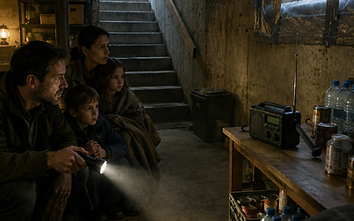
The preps that actually drive survival outcomes are unglamorous. Sheltering in a basement or the center of a sturdy building for the first 24-48 hours, having sealed food and water so you do not need to forage in the worst window, and a working radio for official guidance all outrank a bottle of tablets.
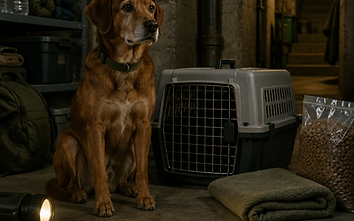
Potassium iodide is the last layer, not the first. A reasonable order of operations: know your shelter spot, store two weeks of food and water, keep a radiation survey meter if you are serious about the scenario, and only then keep enough KI on hand for each family member - stored sealed, at room temperature, and checked against the expiration date.
Key Survival Takeaways
- KI blocks one pathway only: radioactive iodine uptake by the thyroid. It is not a general radiation shield.
- Timing is everything: best taken just before or within hours of exposure; one dose protects roughly 24 hours.
- Children and pregnant women first: the young thyroid is the highest-risk organ in the room. Adults over 40 usually should not take it.
- Do not self-medicate blindly: iodine allergy and thyroid disease are real exclusions; follow officials' dosing directions.
- Shelter beats supplements: distance, shielding and stored supplies drive outcomes; KI supplements those, never replaces them.
Related Gear and Emergency Supplies
Potassium iodide tablets have a long shelf life when stored sealed, but check expiration dates yearly and replace any bottle past its date. A radiation survey meter pairs well with KI: a meter tells you whether there is a problem at all, and officials' guidance tells you when the tablets are worth taking.
- IOSAT Potassium Iodide Tablets (130 mg) - the standard FDA-approved thyroid blocker
- ThyroSafe Potassium Iodide Tablets - scored tablets, easier dosing for children
- Radiation Survey Meter (Geiger counter) - act on data, not fear
- Emergency Water Storage Containers - sealed water is your first-line defense
Disclosure: As an Amazon Associate, Survival Video Hacks earns from qualifying purchases made through the links on this page. We link to products we judge relevant to the scenario, not the most expensive ones.
Preparedness Partner Picks
Disclosure: As an affiliate, we may earn commissions from qualifying purchases through partner links on this page.
Frequently Asked Questions
Should I take potassium iodide every day as a precaution?
No. KI is an emergency intervention taken when public health officials announce radioactive iodine exposure, not a daily supplement. Taking it without exposure carries thyroid risk with zero benefit.
Does potassium iodide protect against a dirty bomb?
It depends on the isotope. If the device disperses radioactive iodine, KI helps the thyroid; if it disperses cesium or americium, it does nothing. Officials will identify the isotope and advise accordingly.
How many tablets should a family keep?
One standard course per person, plus a spare - the FDA-recommended single adult dose is 130 mg, and multi-day dosing follows official instruction. Store sealed at room temperature and replace after expiration.
Is liquid KI or tablet form better?
Tablets dominate the consumer market because of shelf stability and dosing consistency. Liquid solution exists but is harder to dose accurately for children - follow the product's age-based dosing table.
The Bottom Line
Potassium iodide is a smart, cheap addition to a nuclear preparedness kit - for the people it suits, taken when directed. It is not a magic pill, and treating it like one crowds out the preps that matter more. Buy the bottle, store it next to your sealed water and your shelter plan, and hope it expires unused. For the broader picture, our long-term blackout guide covers the shelter-and-supplies side, and the bug-out bag builder quiz helps you decide where specialty items like KI belong in your kit.
More from the nuclear preparedness cluster
Get the next breakdown
New video articles, gear notes from the field and tool updates — one email a week.
No spam. Unsubscribe any time. We never sell subscriber data.