7 Fallout Shelter Mistakes Preppers Make
Most fallout plans fail on simple mistakes: no pre-picked shelter, leaving too early, open water, no working radio. Seven fixes, based on FEMA shelter guidance.
FEMA's fallout guidance compresses into nine words: get inside, stay inside, stay tuned. Almost every fatal error in a radiological emergency is a violation of one of those three rules. The gear matters far less than the sequence of decisions, and the decisions are simple enough to make in advance.
These are the seven shelter mistakes that show up again and again in preparedness plans - each one fixable this week, most of them for free.
Mistake 1: Not Picking Your Shelter Before You Need It
The worst time to evaluate buildings is while fallout is descending. Decide now: which room in your home, which room at your workplace, and which spot on your regular routes gives you the most protection. Write it down, tell your household, and rehearse the walk once. Cold War civil defense planning used protection factors to rate buildings - the same logic still applies, and it costs nothing to apply it.
Mistake 2: Sheltering Next to a Window
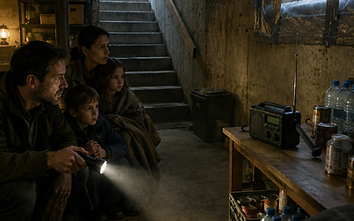
A room with a view is the wrong room. The goal is to put mass and distance between you and the outside: a basement is best, the center of a large concrete or brick building is next, and any room with windows is a compromise. Distance matters more than most people intuit - even moving from the wall to the center of the building meaningfully cuts your exposure.
Mistake 3: Leaving Before the Dose Rate Drops
Radiation from fallout decays fastest in the first hours. Rough planning figures put the outside dose rate at a small fraction of its initial level within 48 hours, which is why every public agency repeats the same numbers: plan to shelter 24 to 72 hours, minimum, unless authorities say otherwise. The people who die in fallout scenarios are disproportionately the ones who step outside on day one to look, to drive, or to fetch supplies. Stay inside until a meter, a broadcast, or both tell you it is safe.
Mistake 4: Open Water and Exposed Food
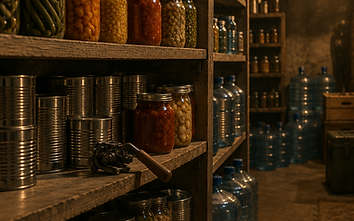
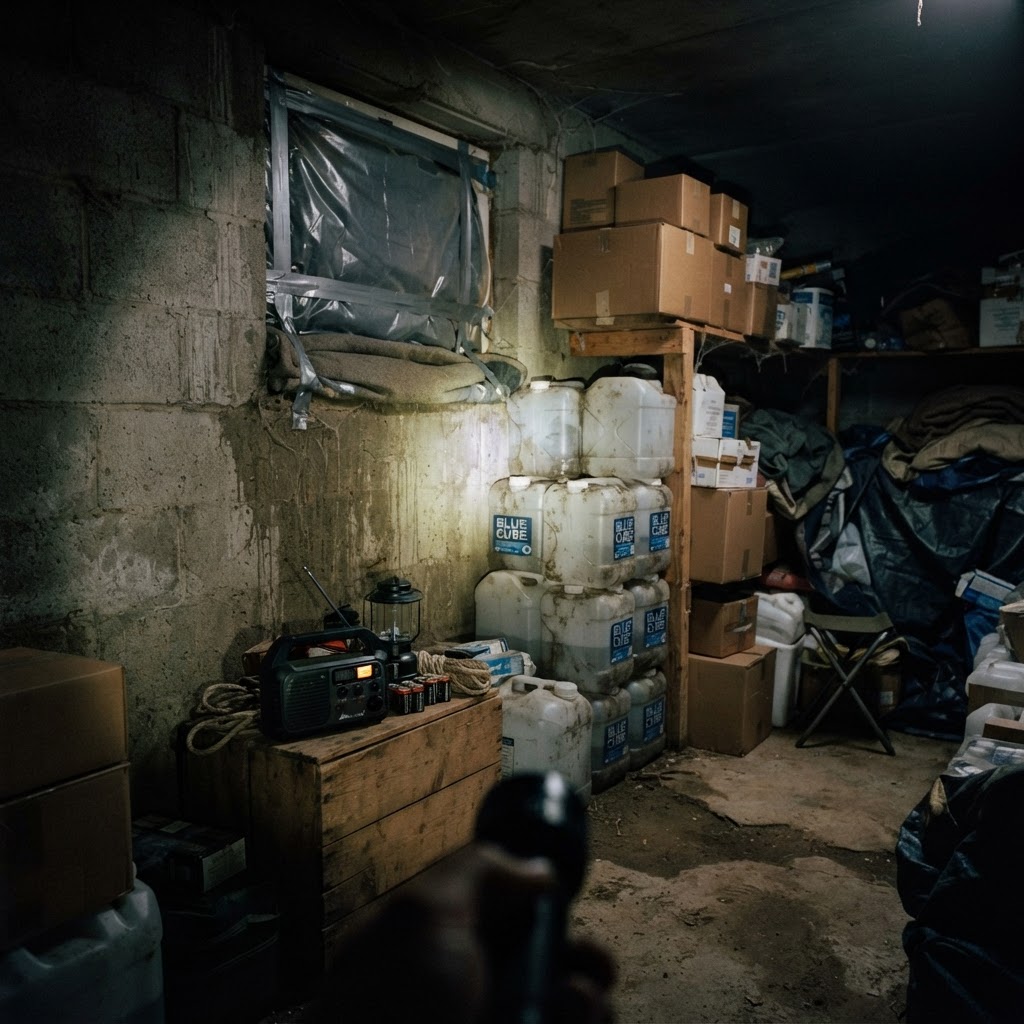
Fallout is dust, and dust settles on everything left open. Store drinking water sealed - filled containers, original bottles, a covered drum - and keep food in closed packaging or closed cabinets. A two-week sealed reserve for each person covers the realistic shelter window with margin to spare. This is the cheapest mistake on the list to fix and one of the most expensive to make.
Mistake 5: No Way to Hear Official Guidance
"Stay tuned" is one of the three rules for a reason: the all-clear, evacuation instructions, and shelter-in-place updates all arrive by broadcast. A hand-crank or battery NOAA weather radio, kept in the shelter room with spare batteries, is the single highest-value item in the entire plan. Without it, you are guessing about the outside world at exactly the moment guessing kills.
Mistake 6: No Decontamination Routine at the Door
If anyone comes inside after the dust starts falling, they bring the dust with them. Set a routine now: remove outer clothing at the entry, bag it, wipe down exposed skin, and only then enter the shelter room. Disposable coveralls and a box of wipes by the door turn a contamination event into a five-minute procedure instead of a household exposure.
Mistake 7: Planning for 72 Hours When You Should Plan for Two Weeks
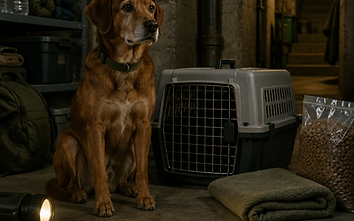
The generic survival rule of 72 hours assumes rescue and restored services. A radiological emergency assumes neither: you may be sealed in for days and cautious for weeks. Stock shelter supplies to the two-week standard - water, food, medications, sanitation, lighting - and rotate them like any other prep. The overlap with our long-term blackout guide is almost total, which is convenient: one stockpile covers both scenarios.
Key Survival Takeaways
- Pick the room now. Basement or building center, never next to a window.
- The first 48 hours decide the outcome. Outside dose rates fall fast - stay in while they do.
- Sealed water and closed food. Fallout is dust; keep it off what you consume.
- A radio is not optional. Official guidance is your only real all-clear.
- Two weeks of supplies, not 72 hours. Radiological events do not come with a rescue clock.
Related Gear and Emergency Supplies
The shelter kit is short, boring, and decisive. Everything below lives in the shelter room, not scattered around the house.
- Hand-Crank NOAA Weather Radio - your line to the all-clear
- Sealed Water Storage Containers - dust-proof drinking water
- Plastic Sheeting and Duct Tape - seal the room, patch the drafts
- Radiation Survey Meter - know when it is actually safe to leave
- Two-Week Emergency Food Supply - closed packaging, long shelf life
Disclosure: As an Amazon Associate, Survival Video Hacks earns from qualifying purchases made through the links on this page. We link to categories we judge relevant to the scenario, not the most expensive items.
Preparedness Partner Picks: Shelter & Cooking
Disclosure: As an affiliate, we may earn commissions from qualifying purchases through partner links on this page.
Frequently Asked Questions
How long do I really need to stay inside?
Plan for 24 to 72 hours as the critical window, with two weeks of supplies as the buffer. Fallout decays quickly at first - most of the danger burns off in the first two days - but only officials with monitoring data can tell you when your specific area is clear.
Is a car a shelter?
A poor one. Vehicles have almost no mass between you and the sky. If you are driving when it happens, get into a substantial building fast; do not shelter in the vehicle except as a last resort.
Do I need a bunker?
No. A basement, or the center of a masonry building, puts you on the right side of the dose curve. Deep shelters are better but not required to survive the sheltering window.
Should I take potassium iodide while sheltering?
Only if public health officials announce it. KI covers one pathway - radioactive iodine to the thyroid - and is not a general radiation shield. See our potassium iodide guide for dosing, exclusions, and timing.
The Bottom Line
Shelter survival is decided by the boring things: the right room, sealed supplies, a working radio, and the discipline to stay put for two days. Fix the seven mistakes above and your plan is already ahead of most. Then run your household kit through the bug-out bag builder quiz to see how it scores against a radiological scenario.
Get the next breakdown
New video articles, gear notes from the field and tool updates — one email a week.
No spam. Unsubscribe any time. We never sell subscriber data.