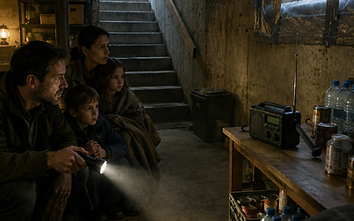
What's Safe to Eat After a Nuclear Blast: A Fallout Food Guide
The blast ends the argument in seconds. What drags the emergency out for weeks is a quieter question: what's safe to put on your plate? A nuclear detonation scatters fine radioactive dust across everything left in the open — fields, rooftops, ponds, uncovered grain — and some of that dust ends up in food if you let it. The good news is the safety rules are short, strict, and easy to follow. Here they are.
How Fallout Actually Contaminates Food
Fallout isn't a mystical fog; it's dust. It contaminates food two ways: by settling onto it (surface contamination on exposed produce, uncovered containers, open water) and by being consumed by things you eat — cows grazing dusty pasture, fish in affected lakes, game animals browsing contaminated brush. Surface contamination is a wiping problem. Uptake into the food chain is a waiting problem.
Three isotopes do most of the damage, and knowing why gives you the rules for free:
- Iodine-131 concentrates in the thyroid and in milk — it half-decays in about 8 days, so it's a nasty early threat that fades relatively fast.
- Cesium-137 mimics potassium and spreads into muscle tissue. Its roughly 30-year half-life is why contaminated farmland stays restricted for years.
- Strontium-90 mimics calcium and deposits in bone — a long-term hazard that makes exposed dairy and leafy produce the last things you want to trust.
Contaminated food doesn't glow, smell, or taste different. The danger is invisible, which is why the rules below are about exposure paths, not inspection.
The Sealed-Container Rule: Your First and Best Line
If fallout never touched it, it's food, not hazard. That's the whole rule. Anything that was sealed before the event and stored indoors — intact cans, jars, vacuum pouches, mylar-bucket kits, the water heater, sealed bottled water — is safe. Food safety authorities, including the FDA, consistently advise that food in sealed packaging is safe; the dust that lands on the outside of packaging is the only thing you're handling.
So treat any can or jar that sat near an open window or outside like this:
- Wipe or rinse the exterior with a damp cloth before opening.
- Keep wiped packaging away from clean surfaces, and toss the cloth afterward.
- Open carefully — the contents were sealed and clean; your job is not to bridge the gap between a dusty lid and the food inside.
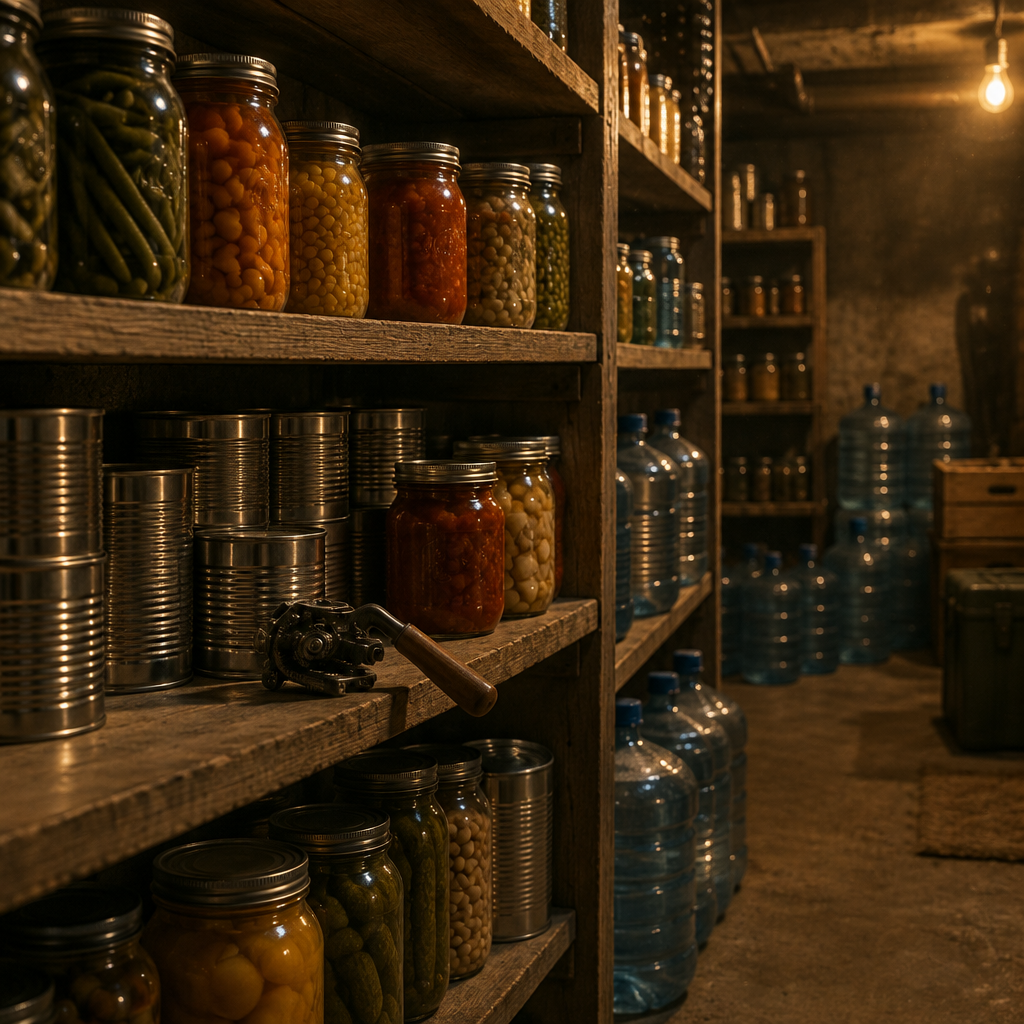
An intact factory seal is why a stocked pantry is genuinely a nuclear prep. A case of canned food and a sealed water supply are what you eat on while the short-lived isotopes do most of their decaying. Your first-24-hours plan should assume that's the entire menu for at least the first days.
What to Stock Before Anything Happens
- Canned goods — vegetables, fruit, beans, meat, soup. Sealed, cheap, and immune to dust.
- Freeze-dried meals in sealed buckets — years of shelf life, minimal prep.
- Dry grains and legumes in airtight containers — rice, pasta, oats, lentils.
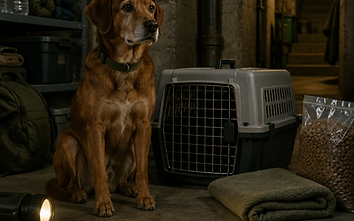
- Sealed bottled water — count on one gallon per person per day, plus a margin for pets and cooking.
- A manual can opener — a sealed warehouse of cans is a paperweight without one.
Garden Produce, Hunted Game, and Everything Outdoors
Here's the blunt part: after fallout, everything that grew in the open is off the menu until authorities clear it. The dust settles directly onto leaves, fruit, and roots, and the longer-lived isotopes are taken up from the soil into the plant. Rinsing helps; it does not fix uptake. Leafy greens and berries are the worst offenders because they present the most surface per bite.
Game is in the same category: animals eat contaminated forage and drink from open water, so their meat can carry what they've been eating. Milk from outdoor cows is the classic pathway — iodine-131 moves from pasture to milk within days, which is exactly why authorities historically dumped milk from affected regions' cows. If the government response to a detonation tells you not to consume local milk, produce, or game, believe them on day one.
Water Rules After Fallout
Water is where people take the biggest chances, so be strict:
- Sealed bottled water first. Always.
- Water already in your home second — the water heater tank and the toilet tank (not the bowl) are clean, sealed sources.
- Don't trust open rainwater collection. Rain after fallout is the delivery mechanism — that roof and barrel are catching the contaminant on purpose. Rainwater harvesting is a great prep in normal weather; see our storm-harvest guide for how it works and when it's safe to use.
- Boiling does not remove radioactivity. It kills germs; it does nothing to isotopes. Standard camp filters aren't rated for radionuclides either. Reserve questionable water for washing and decontamination, not drinking.
Authorities will test and report on municipal supplies after an event. Until there's an all-clear for your area, treat every open source as contaminated.
Key Survival Takeaways
- Sealed before the event and indoors = safe. Wipe dusty exteriors before opening.
- Iodine-131 is the fast threat — it concentrates in milk and fades in weeks; cesium and strontium are the slow ones that outlast the emergency.
- No open-air produce or game until officials clear your area. Washing helps, uptake doesn't wash off.
- Boiling water kills germs, not isotopes. Sealed and indoor sources only.
- Build the pantry now: sealed calories and a manual opener are the cheapest nuclear insurance you'll ever buy.
Related Gear and Emergency Supplies
The food-prep short list — everything sealed, everything storable indoors:
- Long-Shelf-Life Canned Emergency Food - sealed calories no fallout can reach
- Freeze-Dried Emergency Food Buckets - lightweight, sealed, multi-year storage
- Food-Grade Storage Buckets with Gamma Seal Lids - keep grains and staples airtight
- Bulk Bottled Water Cases - the one water source that needs no testing
- Heavy-Duty Manual Can Openers - the unglamorous item that unlocks the whole pantry
Disclosure: As an Amazon Associate, Survival Video Hacks earns from qualifying purchases made through the links on this page. We link to gear categories we judge relevant to the scenario, not the most expensive items.
Frequently Asked Questions
Is the food in my refrigerator and freezer safe after fallout?
If the appliance stayed closed and indoors, the sealed contents are safe to eat — the same sealed-container rule applies. If the power is out, work the fridge and freezer in order and keep them shut; a closed freezer holds safe temps for about two full days.
Does cooking destroy radioactivity?
No. Radiation isn't a germ or a toxin — heat, boiling, and microwaves do nothing to radioactive particles. Cooking is still fine for sealed food you'd cook anyway; it just doesn't make contaminated food safe.
How do I clean dusty cans and jars?
A damp cloth wipe of the exterior, done away from your clean prep surface, then discard the cloth. You're removing dust before it can reach the contents at opening. Rinse water should be from your clean supply, not an outdoor source.
When is my garden safe again?
There's no honest universal answer — it depends on the deposition in your area, what was growing, and which isotopes dominate. Authorities sample soil and produce after a radiological event and issue clearance; local produce historically stays restricted from weeks (mainly iodine-131 areas) to years (heavy cesium deposition). Until then, the sealed pantry does the eating.
The Bottom Line
After a nuclear blast, your food safety plan is almost boring: sealed, dry, indoors. The isotopes make themselves obvious once you stop inspecting food and start controlling exposure paths — sealed packaging in, open-air produce out, questionable water for washing only. Fill the shelves with factory seals while the world is calm, and the scariest part of a fallout menu is never on your table.
Get the next breakdown
New video articles, gear notes from the field and tool updates — one email a week.
No spam. Unsubscribe any time. We never sell subscriber data.