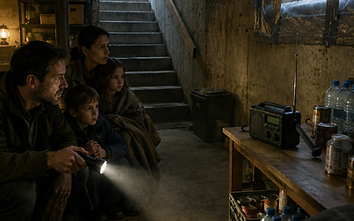
Pets in a Nuclear Emergency: Hard Truths and a Real Survival Plan
Every survival plan ends the same way: it only matters if you act on it. Except one family member can't act on any of it. Your dog can't read a FEMA pamphlet and your cat won't shelter in place out of discipline. In a nuclear emergency, your pet's survival plan is entirely your job — so here's the honest version: what radiation does to animals, what actually protects them, and what to pack before anything happens.
Why Pets Take More Radiation Than You Do
Radiation doesn't discriminate by species, but behavior does. Pets are usually the most exposed members of a household for reasons that don't apply to you:
- They're low to the ground. Fallout settles as dust onto every surface an animal's nose, paws, and belly live at.
- They groom. Licking dust off fur is ingestion. Whatever lands on a cat's coat eventually enters a cat.
- They spend time outdoors. The yard your dog uses after dinner is the same yard collecting fallout after a detonation.
- They're small. The same particle burden a human body dilutes is a much larger internal dose for a 20-pound dog.
Acute radiation exposure in animals looks much like it does in people: vomiting, diarrhea, lethargy, and — at high doses — a rapid decline over days. Young, elderly, and chronically ill animals are hit hardest, and smaller metabolisms generally tolerate less.
First Rule: Your Shelter Is Their Shelter
The single best thing you can do for a pet is the same thing you'd do for yourself — get inside, stay inside, and let the 7:10 rule run down the clock. Radiation decays aggressively in the first days, so whatever keeps your family's dose low keeps theirs low too.
The pet-specific jobs start at the door. Any animal that was outside after fallout began should be treated as contaminated:
- Wipe them down before they come deep inside. A damp towel over the coat, paws, and face strips a surprising share of surface dust. Disposable gloves if you have them.
- Brush the coat outdoors or at the threshold, away from where people sleep and eat.
- Bag the towel, change their blanket and anything cloth they had contact with.
- Don't shave or bathe aggressively. A calm damp wipe is effective; cuts and raw skin are entry points for contamination.
Keep potty breaks short, on a covered porch if possible, on the schedule rather than the dog's enthusiasm. Every minute outdoors during peak fallout is a dose you and the animal take together.
Potassium Iodide and Pets: The Hard Truth
Here's where the internet gives terrible advice. You'll see people claim you can just split a human KI tablet for your dog. Don't do that. The facts:
- KI for animals is off-label. The FDA has approved potassium iodide for human thyroid blocking after a radioactive iodine release. There is no pet-approved dosing standard, and species metabolize it differently.
- It only protects the thyroid, only against radioactive iodine, and only if given before or very shortly after intake of the radioiodine. It does nothing about gamma exposure or other isotopes like cesium-137.
- Wrong doses cause real harm — vomiting, hypersensitivity reactions, and thyroid dysfunction. The window where it helps an animal is narrow and dose error is easy.
If a radiological release is announced and you're weighing KI for your pet, the correct source of a dose is a veterinarian or veterinary poison control line — not a Facebook prepper group. For how the tablets work in humans, see our plain-language potassium iodide breakdown; the chemistry clears up a lot of the myth.
Build the Pet Kit Before the Emergency
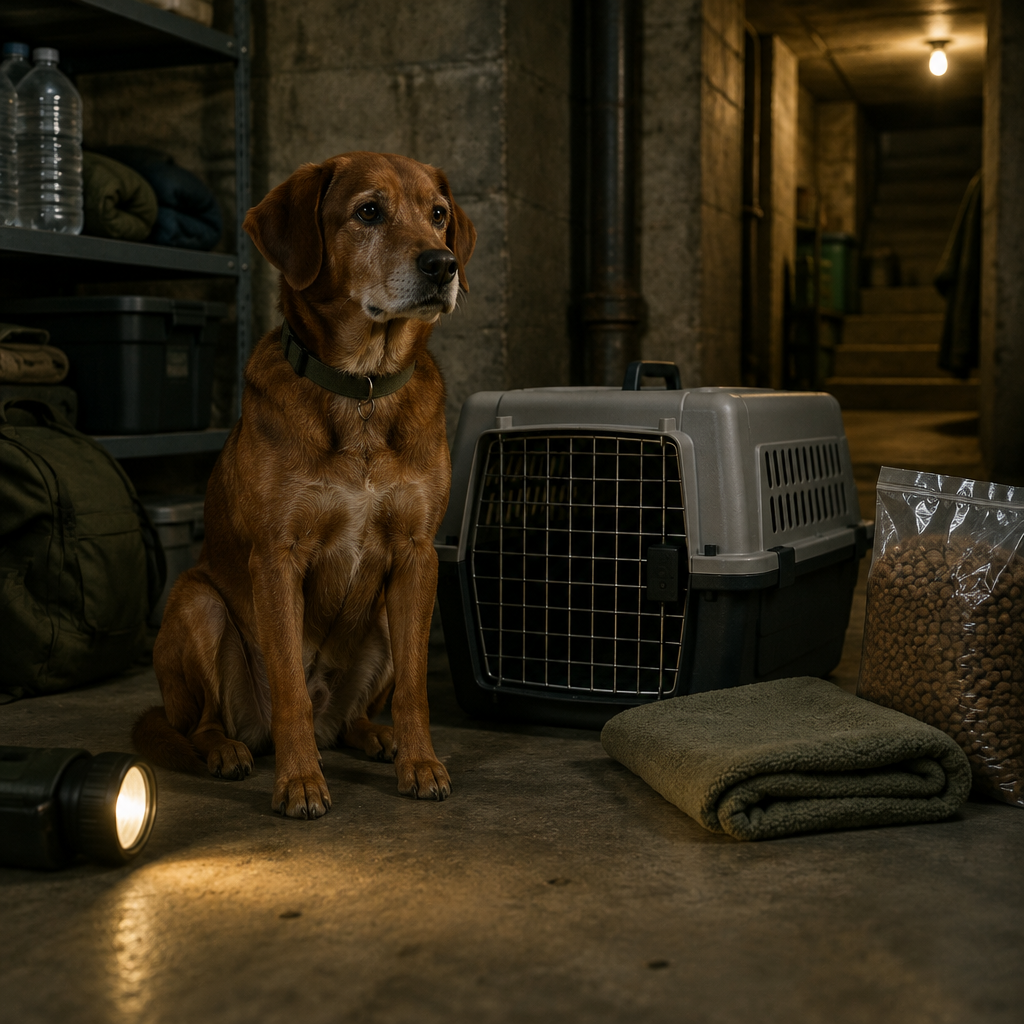
Sheltering with animals is just logistics, and logistics are best solved in peacetime. Your pet kit should mirror your family bug-out bag logic — food, water, meds, records — with species-specific additions:
- Covered, familiar carrier for each small pet — ideally one they've slept in before, because a new carrier is a fight precisely when you don't have time for one.
- Two weeks of sealed food and any daily medications, rotated with your own supplies.
- Copies of vaccination records and a recent photo of you with the animal — most emergency shelters that accept pets will demand proof of vaccination.
- Collar with current tags, plus microchip registered to a phone number that will still work. Fear makes animals run; ID is how they come back.
- Muzzle, leash, and harness — even for the gentlest animal, a panicked, disoriented dog behaves like a different dog.
- Litter, pads, and bags — sanitation inside the shelter can't be improvised.
Evacuating With Animals
If officials call for evacuation, your window for pets is the same as yours — leave early or don't count on leaving. Load carriers before the family, keep the pet's kit with the carrier, and keep windows up and carriers restrained in the vehicle. Emergency facilities have limited pet-friendly spots, first-come. Roads, routes, and family timing are covered in our first-24-hours timeline.
Survival Odds: What the History Actually Says
Straight answer: hard numbers barely exist. The Hiroshima and Nagasaki record is anecdotal, but the pattern matches the physics — animals that were indoors survived at far higher rates than animals caught outside, young, old, and sick animals died at higher rates, and the survivors were the ones whose owners had food, water, and restraint in the weeks after.
That's the honest takeaway — there's no gadget that shields a pet from radiation. There's a familiar family, a sealed room, a bag of kibble, and an owner who decided all of that in advance.
Key Survival Takeaways
- Pets take more fallout than people — ground level, grooming, outdoor time, and small body mass all stack the dose.
- Your shelter is their shelter. Get them inside and keep potty breaks short during peak fallout.
- Wipe, brush, bag. Damp-towel decontamination at the threshold takes most surface dust off the coat.
- Never split human KI for a pet. Off-label dosing causes harm; a vet or vet poison line is the only source of a dose.
- Carriers, records, meds, ID. The pet kit is just your kit with paws, packed in advance.
Related Gear and Emergency Supplies
Gear that earns its spot in a pet emergency kit:
- Sturdy Escape-Proof Pet Carriers - the single most important pet prep you can buy
- Pet First Aid Kit - bandages and basics sized for animals
- Airtight Pet Food Storage Bins - keep the kibble supply sealed and rotated
- Collapsible Travel Bowls - water and food service in a packed carrier
- Dog Harness and Vehicle Restraints - keep carriers and animals secure in a moving evacuation
Disclosure: As an Amazon Associate, Survival Video Hacks earns from qualifying purchases made through the links on this page. We link to gear categories we judge relevant to the scenario, not the most expensive items.
Frequently Asked Questions
Can I give my pet my potassium iodide tablets?
Not without a veterinarian or veterinary poison control guiding the dose. KI is FDA-approved for human thyroid blocking only; pet use is off-label, dose errors cause vomiting and thyroid problems, and it only helps against radioactive iodine — nothing else. Call before you dose.
How do I know if my pet got a dangerous radiation dose?
Early signs are GI: vomiting, diarrhea, refusing food, and unusual tiredness, usually within hours of a serious exposure. Those symptoms can also come from stress and bad food, so don't panic-diagnose — reduce exposure, keep the animal clean and hydrated, and get veterinary help when the situation allows.
Is it safe to keep the pet in the shelter with my family?
Yes, and it's the correct move — decontaminate at the door with a damp wipe-down and keep their blanket changed. The dose risk from a clean, wiped indoor animal is far lower than the risk of an outdoor pet during peak fallout days.
What about livestock or backyard animals?
Same principles, less control. Get them under cover if at all possible, store their feed sealed, and don't graze them during peak fallout. Assume milk and eggs from outdoor animals are contaminated until officials say otherwise — outdoor animals eat fallout with every bite.
The Bottom Line
Your pet doesn't need a radiation plan; they need yours. One familiar carrier, two weeks of sealed food, current tags, and a family that treats the animal as part of the shelter plan — that's the whole program. Decide it now, because in a nuclear emergency, they can't make a single one of those decisions for themselves.
Get the next breakdown
New video articles, gear notes from the field and tool updates — one email a week.
No spam. Unsubscribe any time. We never sell subscriber data.