Publication // About
A field manual, not a fear feed
Survival Video Hacks exists because most preparedness content is either recycled listicles or gear advertisements. We publish the test, the quantities and the reasoning — and we show the failures.
What this site is
A working library for households that want to be ready for the ordinary emergencies — storms, outages, boil-water notices, supply interruptions — and for the less ordinary ones. Everything is written to be used: quantities, drills, containers, checklists.
How we test
Testing follows a fixed protocol rather than a vibe. First, the item is bought at retail. Second, it is used for the task it claims to do, at least three separate sessions, ideally in bad weather. Third, results are documented — capacity measured, time recorded, failures photographed. Fourth, the article states what we would not carry and why.
Where a claim cannot be tested safely — water treatment chemistry, medical interventions, electrical work — we rely on published guidance and say so explicitly rather than dressing up an opinion as a test.
What we refuse to publish
- Fear-driven content that inflates risk to sell a product.
- Medical advice presented as instruction. We point to training, not replacements.
- Sponsored reviews. Advertising and affiliate links never buy coverage.
- Fabricated experience. If we did not run it, we say we did not.
Editorial responsibility
Corrections are welcome and get published. Our full standards — sourcing, review cadence and corrections — live on the editorial standards page, and our commercial relationships are spelled out in the affiliate disclosure.
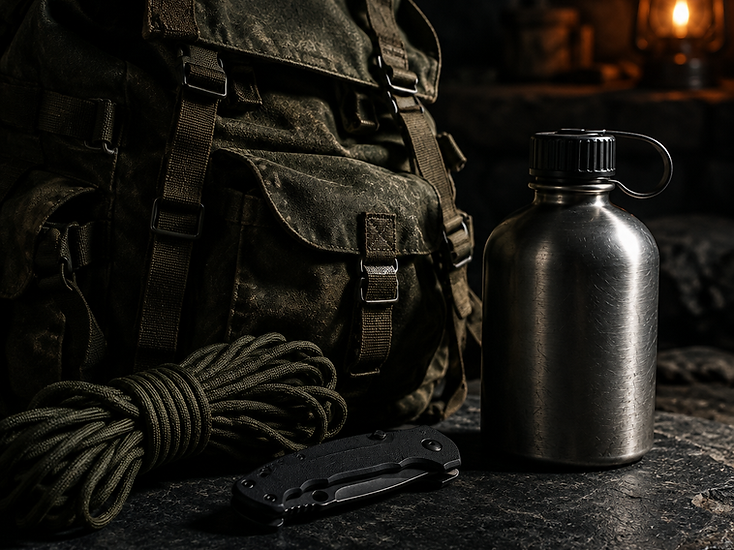
Field kit, water and shelter testing session
Operating principles
Buy it at retail
Gear is purchased with our own money. No manufacturer sends a review unit, so no review depends on keeping a supplier happy.
Test it, then write it
Every article starts as a video test — a filter run on a creek, a shelter pitched in rain, a pack carried up a hill. If it failed the test, the failure is published too.
Cite the baseline
Quantities and health guidance trace back to CDC, FEMA, ANSI or manufacturer documentation, named in the article rather than implied.
Revise on evidence
Gear changes and methods improve. Articles carry a review date and get updated when the field evidence changes, not when traffic dips.
The desk
Field Editor
Two decades of rural living, backcountry travel and storm-season outages. Runs the water, shelter and power testing and writes the cornerstone guides.
Gear Desk
Sources, buys and runs the knife, pack, filter and lighting tests. Documents failures with measured results rather than impressions.
Medical Reviewer
Reviews first aid and trauma content against current Stop the Bleed and wilderness first aid practice before publication.
Find us
survivalvideohacks.com
Corrections and tips: contact the desk
Start here
The five cornerstone guides cover water, food, first aid, power and home defense.
Plan it
Interactive tools turn the reading into container counts and a packing list.
Newsletter // article
The Weekly Field Brief
One email a week: a new video breakdown, a gear note from testing, and one thing worth practicing before Sunday.
No spam. Unsubscribe any time. We never sell subscriber data.