How to Heat Your Home During a Power Outage: The Complete Guide
The Cold Math: How Fast Your House Loses Heat
Most homes are not built to hold warmth without power. They are built to shed it. Insulation slows heat loss; it does not stop it. When the furnace quits on a 20°F night, an average house drops from 68°F into the low 50s within four to six hours, and by morning it may sit only 15 to 20 degrees above the outdoor temperature. FEMA's winter storm guidance is blunt: cold indoor temperatures become a life-safety risk within a day or two for infants, adults over 65, and anyone on medications that affect temperature regulation. Hypothermia does not require a blizzard. It happens every winter in ordinary living rooms.
You are not trying to heat a 2,000-square-foot house with emergency equipment. You are trying to keep one or two people warm, in one small room, for the duration. Do that well and a multi-day blackout is an inconvenience instead of a medical emergency.
Safety First: The Non-Negotiable Rules
Before any discussion of heat sources: the safety rules, because every winter outage kills people who skipped them.
Carbon Monoxide: The Invisible Killer
Carbon monoxide (CO) is odorless, colorless, and produced by nearly every flame and combustion engine. CDC data show deaths cluster during power outages, when people bring outdoor equipment inside. The rules are absolute:
- Never run a generator, camp stove, charcoal or gas grill inside the house, garage, basement, or crawlspace, even with doors and windows open.
- Only heaters explicitly rated and labeled for indoor use belong indoors, and even those require ventilation and a working CO alarm.
- Battery-powered CO alarms are not optional gear. Outage deaths happen at night, while people sleep. An alarm with a battery backup keeps working when the grid does not.
- If anyone feels CO symptoms (headache, dizziness, nausea, confusion), extinguish the heat source, open windows, and get outside.
What Never Goes Indoors
Never heat your home with generators of any size, charcoal briquettes, camp stoves or barbecues, a gas oven run open as a space heater, or any heater not explicitly certified for indoor use. These shortcuts cause the majority of outage fatalities, and they are not risks worth debating.
Step 1: Heat the Person, Not the House
Cheapest heat you own is already in your closet. Keeping a human warm requires a tiny fraction of the energy needed to warm a building. Before you touch a single heat source, dress for it:
- Wear a hat indoors. Uncovered heads lose a surprising share of body heat.
- Layer loose, dry clothing. Our cold-weather clothing layering guide covers the base-layer, insulation, shell system in detail; the same rules apply on your couch as on a winter trail.
- Keep feet in dry, thick socks and slippers. Cold floors drain heat fast.
- Put everyone in the same room and share warmth. Bodies are honest radiators.
Food and water are part of heating. Calories are furnace fuel, so keep eating regular meals and drink warm fluids. Do not ration water to avoid cold bathroom trips; dehydration speeds heat loss. If anyone starts shivering uncontrollably, slurring speech, or getting drowsy and confused, treat it as hypothermia: warm the core, add layers, and seek medical help.
Step 2: Build One Warm Room
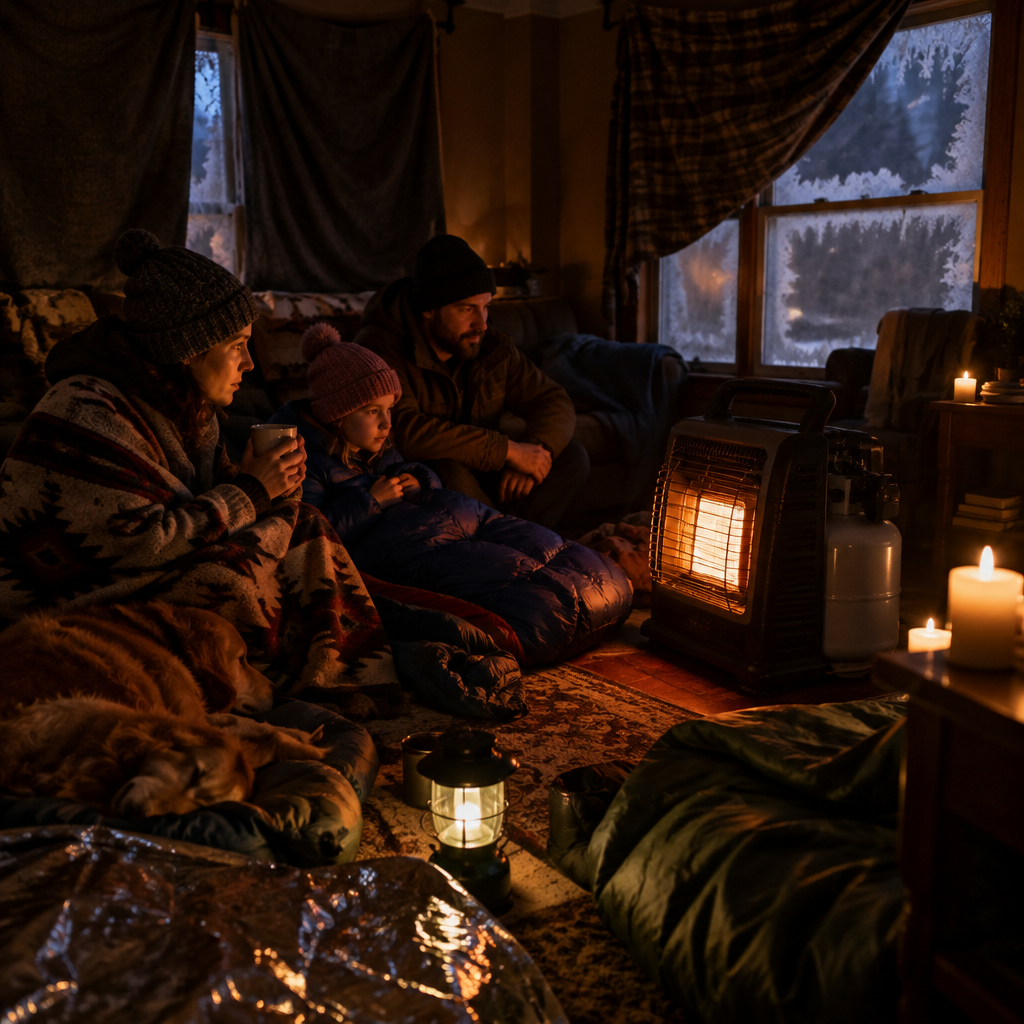
Pick a heat zone before the outage forces the choice: a small room with few windows and one door, ideally south-facing and upstairs, since heat rises and ground contact is cold. Then make it hold heat:
- Seal the windows. Drape blankets over curtains at night; insulation film over the glass traps a dead-air layer that measurably cuts loss.
- Block the door. A rolled towel or purpose-built draft stopper under the door, and weatherstrip around the frame, keeps the warm air where you are.
- Build a fort. It sounds like a joke and it is not. A blanket or mattress draped over a table creates a microclimate where body heat alone can hold conditions 15 to 20 degrees above the room. Survival instructors call it a "warming huddle," and families with young kids can make it an adventure instead of an emergency.
- Insulate the floor. Rugs, cardboard, or spare mattress pads under the sleeping area; you lose real heat to cold floors.
Then concentrate every heat source, person, and blanket inside that room. A candle can meaningfully warm a blanket fort; it cannot touch a living room.
Step 3: Choose Your Heat Source
Fireplace or Wood Stove
A fireplace is a real asset, with a caveat: open masonry fireplaces radiate heat in front of them while pulling warm room air up the flue, so they can cool the far corners of a house. Close the damper only after the fire is fully cold, never while embers live, and never burn pressure-treated wood, particle board, or glossy paper indoors. A wood stove is far more efficient, radiating steady heat for hours; keep at least a quarter cord of seasoned hardwood and a fire extinguisher ready. Seasoned wood stored before winter is the difference between a heating plan and a pile of frozen logs.
Indoor-Rated Propane Heaters
Portable radiant propane heaters in the 4,000 to 9,000 BTU class are the most common purpose-built emergency answer for one room. The key phrase on the label is indoor-safe: low-oxygen shutoff sensors and clean-burning radiant tiles. Follow the manual, allow the ventilation it specifies, keep three feet of clearance from bedding and curtains, and never sleep with an unvented flame heater running. A 20-pound propane tank fuels weeks of short heating cycles, and propane stores indefinitely.
Kerosene Heaters
Kerosene convection heaters produce serious heat, and models certified for indoor use remain common in cold-climate emergency planning. Tradeoffs are real: faint smell, the need for clear K-1 kerosene (never gasoline or diesel), wick maintenance, and the same ventilation and CO-alarm discipline as any flame indoors. Buy it and its fuel now, and practice lighting it before the first outage, not during it.
The Flowerpot Candle Heater: An Honest Assessment
The viral version: tea candles under an overturned terracotta pot. The honest physics: a tea candle produces roughly 50 to 80 watts, most of which the pot absorbs and re-radiates slowly. A cluster of four candles warms the pot and the two feet of air around it. It does not heat a room. It can take a genuine edge off the air inside a small sealed space like a blanket fort. As a primary heating plan it fails; as a microclimate supplement it beats nothing. Keep candles in sturdy holders, away from flammables, and never leave them burning while you sleep.
Passive Tactics That Add Real Degrees
- Sunlight is a heater. On clear winter days, open south-facing curtains and let the sun pour in. Close everything the moment the sun drops; those windows become net heat losers after dark.
- Reset expectations. A comfortable outage room is 55 to 60°F, not 70°F. Aim for "safe and layered."
- Sleep in layers, together. Two people under one pile of blankets in one bed outperform four people in four rooms every time.
- Hot water bottles. Water heated on any safe remaining stove, poured into Nalgene-style bottles and wrapped in towels, keeps a bed warm for hours. This is the cheapest "heater" in the house.
- Humidify gently. Moist air feels warmer at the same temperature; a pan of water near a safe heat source helps.
Protect the House While You Wait
Pipes freeze and burst when indoor temperatures drop, so open cabinet doors under sinks, let faucets drip while pressure remains, and know where the main shutoff is. If the outage will clearly outlast the house's warmth, shut off the water main and drain pressure at the lowest faucet before pipes freeze. Remember pets too: short-haired breeds need the warm room as much as the humans do. And if the outage runs long, relocating to a warming center or a friend's home is a sensible decision, not a failure, when the alternative is hypothermia risk.
Practice before you need it. Run the drill we recommend in our 48-hour power outage test: pick a weekend, break out the heater and blankets, and learn where your plan leaks. Your vehicle is part of the plan too; our winter car survival kit guide covers the stranded-driver side.
Key Takeaways
- You cannot heat a whole house with emergency gear. You can absolutely heat one small room. Build a warm room and live in it.
- Nothing not rated for indoor use ever comes indoors: no generators, no charcoal, no camp stoves, no gas ovens as heaters.
- A battery-backup CO alarm is the single most important piece of outage heating gear you will ever buy.
- Indoor-rated propane or kerosene heaters, or a wood stove, are the legitimate flame options. Candle heaters are a microclimate tool, not a room heater.
- Heat the person first: layers, hats, calories, shared sleeping space, hot water bottles.
- Practice the plan during good weather, including heater lighting, before the grid tests it for you.
Gear and Equipment
As an Amazon Associate, we earn from qualifying purchases.
Frequently Asked Questions
Is it safe to use a propane heater indoors during a power outage?
Only if the heater is explicitly rated for indoor use (look for "indoor safe" labeling and a low-oxygen shutdown sensor), only with the ventilation the manual specifies, only with a working CO alarm in the room, and never while everyone sleeps. Heaters certified for outdoor or well-ventilated tent use only must never come inside a house.
How cold will my house actually get during a winter outage?
Expect a typical insulated house to fall into the low 50s within four to six hours on a cold night, then keep drifting toward the outdoor temperature. Wind exposure, window area, and insulation quality swing the numbers, which is why one small warm room beats trying to slow the whole house's decline.
Can I heat my house with the oven or the stove burners?
No. Gas ovens run open are a carbon monoxide and fire hazard, and electric ovens do not work in an outage at all. The CDC explicitly warns against using stoves and ovens as space heaters; it is one of the most common and most deadly outage mistakes.
Do DIY terracotta pot candle heaters actually work?
They warm the pot and the immediate air around it, not a room. Treat them as a supplement inside a small sealed microclimate like a blanket fort, never as a primary heat source, and use candles only in sturdy holders away from anything flammable, never left burning while you sleep.
How do I keep my pipes from freezing during an extended outage?
Open cabinet doors under sinks, let faucets drip while pressure remains, and if the outage will outlast the house's warmth, shut off the main valve and drain pressure at the lowest faucet. Knowing where that shutoff valve is before an emergency is the part most homeowners skip.
Final Word
A winter power outage does not have to become a survival story. The families who come through them comfortably are not the ones with the most equipment; they are the ones who decided, in advance, that the plan was one warm room, layered people, a safe indoor-rated heat source, a working CO alarm, and the discipline never to bring outdoor gear inside. Put that plan together this weekend, and rehearse it once a year so the first real blackout is boring instead of dangerous. While you are at it, take our Bug-Out Bag Builder quiz to see where your kit stands, and pair this guide with our full grid-down preparedness plan for the bigger picture.
Get the next breakdown
New video articles, gear notes from the field and tool updates — one email a week.
No spam. Unsubscribe any time. We never sell subscriber data.