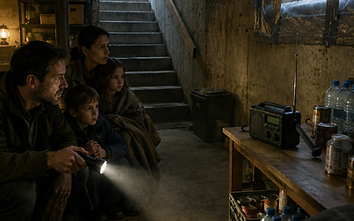
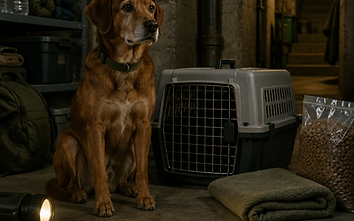
Grid Down Preparedness: What Your Family Needs to Survive 90 Days Without Power
When the Secretary of Defense announced a plan to make every major U.S. military base capable of running without the civilian power grid, it sent a clear message: even the Pentagon does not fully trust the grid to stay up. In this episode, Nick Rians, a veteran who lives completely off-grid on a New Mexico ranch, walks through exactly what an ordinary family needs to get through 72 hours, two weeks, and 90 days without electricity. His framework is refreshingly practical because it comes from someone who lives this lifestyle every single day, not a theorist.
In this guide, we break down his three-tier preparedness plan and the survival supplies that matter most at each stage. You will learn how much water and food to store, how to handle power, medical care, sanitation, communications and security, plus five concrete steps you can take this week to start building your family's grid-down readiness.
Key Survival Takeaways
- Skip the 1-gallon rule: experienced preppers in the comments noted one gallon of water per person per day is not enough for cooking and hygiene. Plan for two to three gallons per person per day when you have storage space, because hydration is only the beginning of your water needs when taps stop working.
- Sanitation fails first: toilets stop flushing almost immediately in an outage. Stock 5-gallon buckets with seat lids and heavy-duty liner bags, plus a hand-crank radio for news and a manual can opener for your food stores.
- Think in tiers, not lists: build a 72-hour kit first, then extend it to two weeks, then to 90 days. Trying to jump straight to a three-month pantry overwhelms most families and leads to abandoned plans.
- Cash matters when card readers die: keep several hundred dollars in small bills at home, because ATMs and payment networks often fail right alongside the grid.
- Layer your lighting: solar yard lights and headlamps offer quiet, rechargeable room lighting without burning batteries, and keep candles and a quality lantern as backup for extended outages.
- Solar power is now affordable: even a modest portable power station and fold-out panel can keep phones, radios and medical devices running indefinitely. Hurricane Helene survivors repeatedly cited portable power as the gear that mattered most.
Gear & Equipment
A grid-down plan is only as strong as the gear behind it.
As an Amazon Associate, we earn from qualifying purchases.
Frequently Asked Questions
How much water should I store for a grid-down emergency?
Most preparedness planning starts at one gallon per person per day, but campers and grid-down survivors consistently report that cooking and basic hygiene push real needs to two or three gallons. For a two-week household supply, that means storing significantly more than the case of bottled water most families keep on hand. Use stackable containers, treat stored water with rotation, and add a quality filter so any additional water you gather is drinkable.
What are the first five things to buy for a power outage?
Nick's starter list is deliberately simple: 12 gallons of water, three days of extra food added to your normal grocery run, flashlights with spare batteries and a radio, and roughly 200 dollars in small bills kept at home. Those five purchases cover the 72-hour tier almost entirely and can be completed in a single week for a modest cost, which is exactly the point. Momentum matters more than perfection when you are starting from zero.
Is a generator or a solar power station better for grid-down prep?
Both have a place. A fuel generator delivers high output for running appliances, but it depends on stored fuel, demands ventilation and is loud enough to announce your preparedness. A solar-charged power station is silent, safe to run indoors, and nearly unlimited in duration as long as the sun cooperates. Many families run a power station as the primary system and keep a small generator as the deep reserve.
What was the FORTRESS America announcement about?
In late September 2026, the Department of Defense announced a plan for major U.S. military bases to generate their own power independently of the civilian grid. Preppers read it as institutional confirmation of a risk they already took seriously: extended grid failure is plausible enough that the military is spending real money hedging against it. Whatever the politics, the practical takeaway is the same as it has always been: your household is on its own for the first hours, days and possibly weeks of any outage.
Final Thoughts
The Pentagon preparing its bases to run off-grid does not guarantee an outage is coming, but it removes the last excuse for assuming the lights will always stay on. Start with the 72-hour tier this week, build toward two weeks, and let the 90-day plan grow from real skills and steady shopping rather than fear. Watch the full video for Nick's tier-by-tier breakdown, then take his advice: buy the water today.
Get the next breakdown
New video articles, gear notes from the field and tool updates — one email a week.
No spam. Unsubscribe any time. We never sell subscriber data.