Winter Car Survival Kit: The Complete Vehicle Emergency Guide
Build a winter car survival kit that keeps you alive if you are stranded: the full gear checklist, cold-weather car prep, and the protocol for the wait.
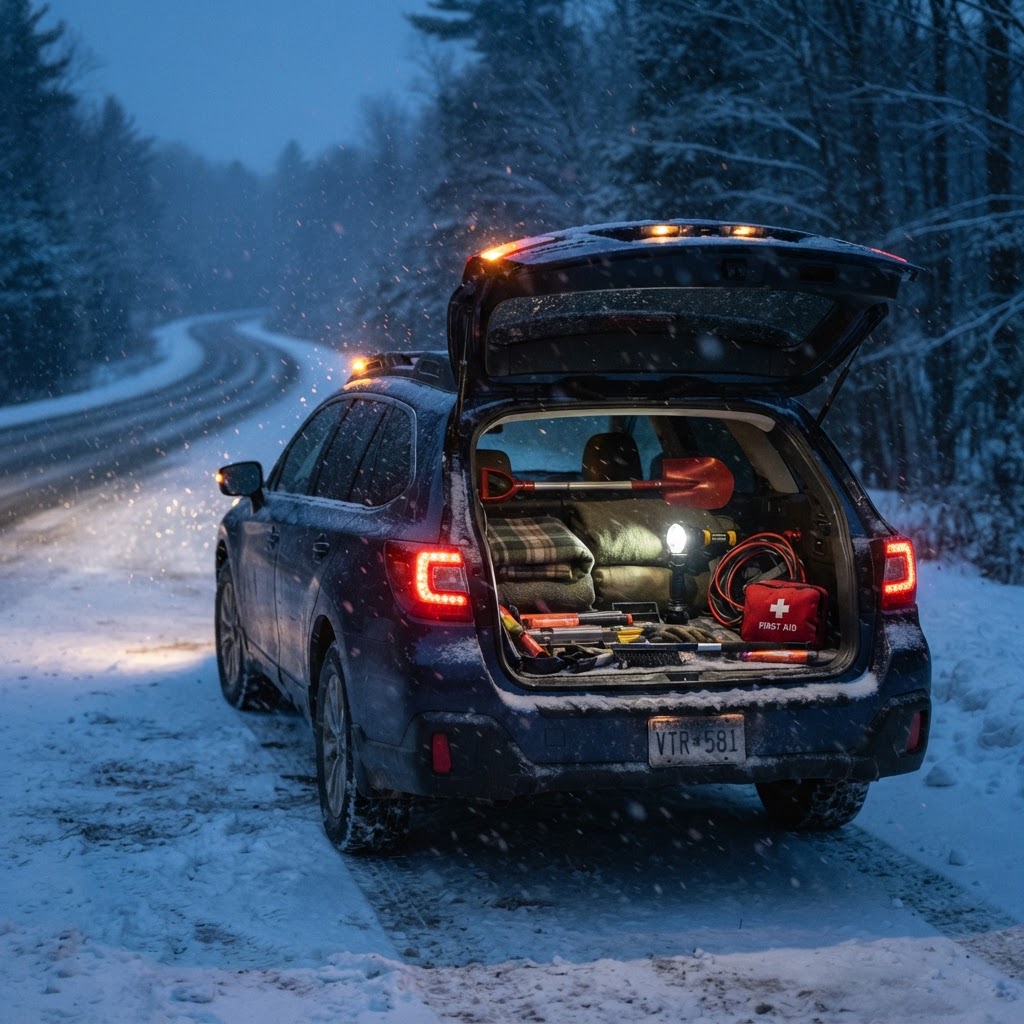
Every winter, drivers who checked the forecast and left on time still end up stopped on the wrong road. A jackknifed trailer two miles ahead, a closed mountain pass, a whiteout that swallows the highway: the closing of one lane can strand a line of cars for six hours or more, and the temperature keeps falling the whole time. The difference between an inconvenient night and a life-threatening one is usually decided before the trip starts, by what is in the trunk.
This guide covers the three things that matter: the core winter car kit that lives in your vehicle from November through March, the cold-weather prep your car itself needs before the first storm, and the exact protocol for surviving a night stranded in snow. It is built on analysis of real winter stranding incidents and standard preparedness guidance from agencies like FEMA and the CDC, plus the same field-tested gear principles behind our guide to survival gear worth buying twice.
Why a Winter Car Kit Is Non-Negotiable
In winter conditions, a disabled car stops being transportation and becomes your shelter. That is either good news or bad news depending on preparation. The three killers in a stranded-vehicle scenario are hypothermia, carbon monoxide, and simple lack of visibility to rescuers. All three are cheap to defend against: insulation for the first, discipline for the second, and a few dollars of reflective gear for the third.
Timing matters too. Snowplows and tow trucks triage accidents before abandoned vehicles, and during a regional storm they are busy for hours. Assume you will wait longer than you think, because everything on the road in a storm waits longer than anyone thinks. The kit below is sized so that a wait measured in hours, not minutes, is uncomfortable rather than dangerous.
The 12-Item Core Kit
- Wool blankets or a sleeping bag. Wool insulates even when damp; cotton does not. Two blankets per regular passenger, or one good bag, stored in the cabin if possible so they stay dry and warm.
- Extra winter clothing. A spare hat, gloves, socks, and boots. You may be walking the last mile in a storm, or sitting for hours in a cooling car. Body heat is the whole game.
- A headlamp and spare batteries. Headlamps beat phone lights because they leave your hands free and do not drain the phone you need for calls. Check the batteries when you swap to winter tires.
- A real first aid kit. Cold hands fumble, and walking on ice produces sprains and lacerations. Know what is in the kit before you need it.
- A portable jump starter. Cold is a battery assassin: below zero, a marginal battery that started fine in October will not crank in January. A pocket-sized lithium jump starter turns the most common winter breakdown into a non-event.
- A folding shovel. For digging out wheels, clearing the exhaust pipe, and carving a path when the drift reaches the door. The compact survival shovels fold flat behind the seat.
- Traction aids. A bag of sand or kitty litter, or a pair of traction mats. Weight over the drive wheels plus grit under them gets most stuck cars moving in minutes.
- Food and water. High-calorie bars that tolerate freezing, and water stored where it can thaw against the heater. Eating generates heat; you would be surprised how much a snack lifts a cold night.
- A power bank and car charger. Phones lose charge fast in the cold. Keep the bank charged and the phone in a pocket, not on the dash.
- Signaling gear. Road flares or reflective triangles, plus a bright cloth for the antenna. Rescuers find cars, but they find visible cars faster.
- Ice scraper, brush, and de-icer fluid. Visibility is survival, and scraping with a credit card in a storm is miserable and slow.
- Basic tools and a tow strap. Duct tape, a multitool, work gloves, and a strap turn a good Samaritan with a truck into a rescue. If you want a deeper look at what earns a permanent spot in a working kit, our breakdown of what a ranger carries every day covers the same logic.
Cold-Weather Car Prep Before the First Storm
The kit handles the human; this section handles the machine. Get the battery load-tested as soon as nights drop below freezing, and replace anything marginal. Check tire tread and pressure (cold air drops pressure a pound for every ten degrees), and if you drive all-seasons in a real snow state, consider whether this is the year for winter tires. Fill with winter-formula washer fluid, top off antifreeze, replace wipers if they streak, and have the exhaust system inspected: a leaking exhaust into a snow-sealed cabin is the carbon monoxide danger in its worst form.
Two habits do most of the work. First, keep the fuel tank at least half full all winter. It prevents fuel-line freeze, and more importantly it is hours of engine heat and battery charge held in reserve. Second, on any long winter drive, tell someone your route and expected arrival, and share your live location from your phone. Winter storms are also grid-attackers, and if you want the full household-side plan, our long-term power blackout survival guide covers the systems that fail together in a big storm.
The Stranded Protocol: Surviving the Wait
When the wheels stop and help is hours away, the protocol is simple and it is not negotiable.
- Stay with the vehicle. It is your shelter and your signal. People die walking for help in whiteouts; cars are found, walkers are not.
- Call early, then conserve. Call 911 or the non-emergency line, share your pin, then put the phone in airplane mode between check-ins to save battery.
- Clear the exhaust pipe before you run the engine. This is the step that kills when skipped. Run the engine 10 to 15 minutes each hour for heat, crack a downwind window slightly, and check the pipe after any wind or snow movement. Never idle inside a deep drift without checking.
- Layer up before you are cold. Put on the spare hat and gloves at the first shiver; insulation works best added early.
- Move without sweating. Wiggle fingers and toes, clap, stretch every hour. Activity warms you; sweat chills you later.
- Stay visible. Hazards on, dome light on when the engine runs, reflective triangles or flares out only if you can place them safely. Tie the bright cloth high.
- Snack and sip. Calories are internal heat. Drink even though you do not feel thirsty; cold suppresses thirst while dehydration still impairs judgment.
If the engine will not run at all, the math changes: insulation, huddling, and signaling become everything, which is exactly why the blankets and flares live in the kit year-round.
Key Takeaways
- Your car is your shelter. Stay with it; it is warmer than the walk and visible to rescuers.
- Insulation beats heat. Two wool blankets and dry layers do more for survival than anything electronic.
- The exhaust pipe is the silent killer. Clear it before every engine run; crack a window while idling.
- Half a tank is a survival margin. Fuel is stored heat and power.
- Visibility shortens the wait. Triangles, flares, and a bright cloth turn a dark stranded car into a target rescuers can find.
- Prepare in October, not December. Every item in the kit list costs less than one tow bill.
Gear & Equipment
The whole core kit can be built for the cost of a single roadside tow.
As an Amazon Associate, we earn from qualifying purchases.
Preparedness Partner Picks: Complete Kits
Disclosure: As an affiliate, we may earn commissions from qualifying purchases through partner links on this page.
Frequently Asked Questions
How long should my winter car kit sustain me?
Plan for 24 hours as the realistic standard, with enough food, water, and warmth to stretch that. Most strandings resolve in a few hours, but regional storms have stranded motorists overnight and longer, and the cost of over-preparing is trunk space.
Is it safe to sleep in a car with the engine running?
Do not sleep while idling. Run the engine 10 to 15 minutes each hour to warm the cabin, verify the exhaust pipe is clear each time, and crack a downwind window. A working carbon monoxide situation is silent: if anyone feels drowsy or headachy while idling, shut the engine off, air out the car, and re-check the exhaust.
Should the kit go in the cabin or the trunk?
Blankets, clothing, food, and electronics in the cabin, where they stay warm, dry, and reachable if the trunk ices shut. Shovels, traction material, and flares can live in the trunk, ideally with the shovel accessible from a seat, not buried under luggage.
What does a complete winter car kit cost?
The full core list runs roughly $150 to $250 depending on quality, and most people already own a third of it. Price it against a single winter tow plus a night in a motel, and the math finishes itself.
Do electric vehicles change the plan?
The core kit is identical, but add margin: EV range drops 20 to 40 percent in deep cold, heat drains the battery, and charging infrastructure collapses in storms. Keep the charge above half in winter and treat the battery percentage the way gas-car drivers treat the fuel gauge.
Bringing It Home
Build the kit this weekend, before the first real forecast, and do the car prep the same week: battery tested, half-tank rule in force, wipers and fluid ready. When you are done, run our Bug-Out Bag Builder quiz to see how your overall readiness stacks up, because the trunk kit and the home kit are two halves of the same plan. Winter does not negotiate, but it is very predictable about rewarding preparation.
Get the next breakdown
New video articles, gear notes from the field and tool updates — one email a week.
No spam. Unsubscribe any time. We never sell subscriber data.