What a Gas Mask Won't Protect You From in a Nuclear Emergency
A gas mask filters fallout dust but stops no gamma radiation, protects no skin, and works only while filters last. Here is what it actually covers in a nuclear emergency.
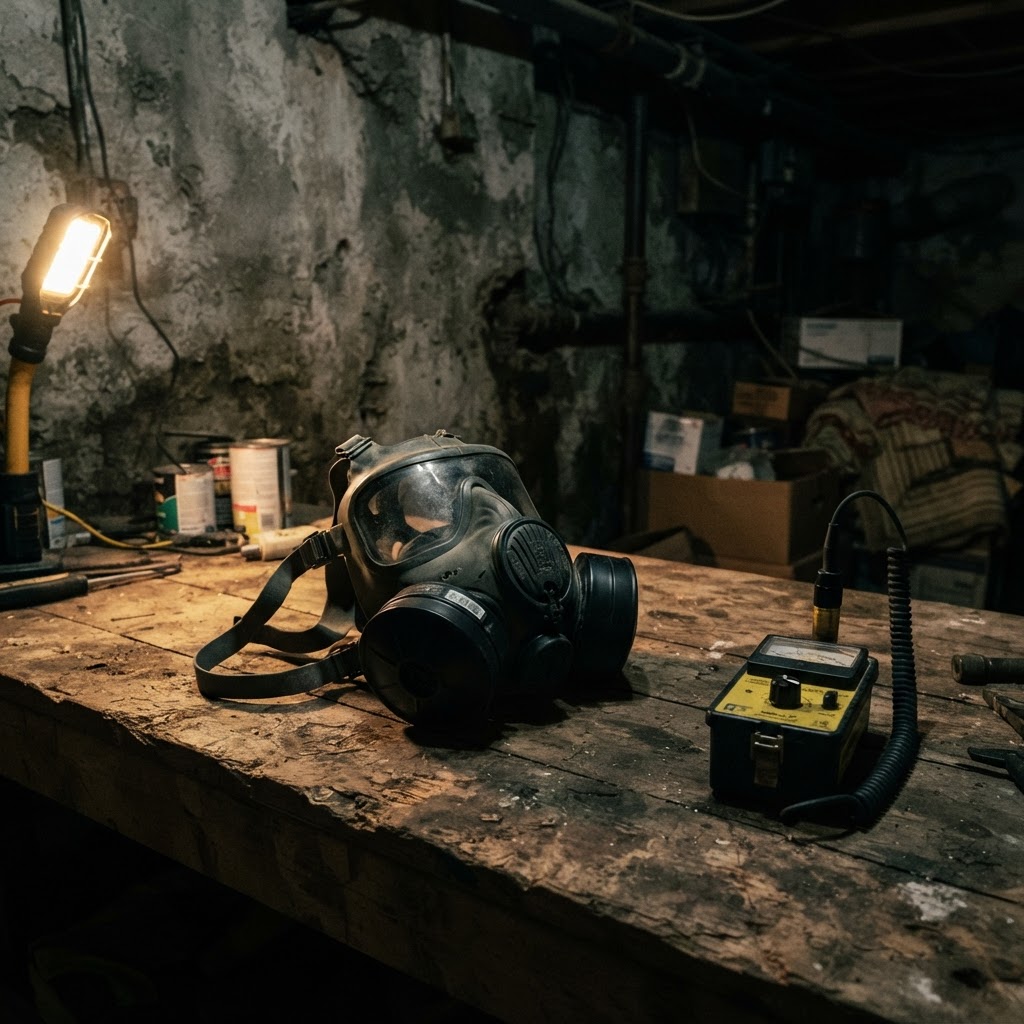
Of every item in the nuclear-prep aisle, the gas mask is the one people buy with the most confidence and the least understanding. It looks like the answer to fallout: strap it on, breathe safe. The reality is narrower. A gas mask is an air filter strapped to your face, and a filter stops particles and vapors - nothing else.
This guide breaks down what a gas mask actually does in a nuclear emergency, the five ways it will not save you, and where it genuinely earns its spot in your kit. The framing follows public guidance from FEMA and the CDC: in a real event, the three rules that outrank any gear are get inside, stay inside, and stay tuned.
What a Gas Mask Actually Does
A protective mask pulls your inbound air through two working layers: a particulate filter that physically traps dust and aerosols, and activated charcoal or advanced carbon media that adsorbs certain chemical vapors. Nuclear fallout is, physically, radioactive dust. If you must move through air carrying that dust, a properly fitted mask stops you from inhaling it - and inhalation is one of the most damaging contamination pathways.
Masks rated CBRN (chemical, biological, radiological, nuclear) are tested against those specific threats and are the only ones worth buying for this scenario. Costume-grade or surplus masks of unknown history are decoration.
Five Things Your Gas Mask Will Not Do
1. It stops no gamma or neutron radiation. Fallout dust emits gamma rays that pass through the filter, the rubber, and your body as if none of it existed. Protection from penetrating radiation comes from mass and distance - walls, earth, concrete, and staying away from the source. A $700 mask offers the same gamma protection as a bandana: zero.
2. It does not protect your skin or eyes. Half the contamination equation happens outside your lungs. Fallout settling on skin and clothing delivers external dose until it is washed off, and a half-mask leaves your eyes completely exposed. Real radiological protection is an ensemble: full-face mask, hood or coveralls, gloves, taped seams. Most preppers own the filter and none of the rest.
3. It supplies no oxygen. A filter mask only works where the air already contains enough oxygen. In a smoldering building, a confined space, or heavy smoke, the hazard is the atmosphere itself, and a filter does nothing. If the scenario is fire and fumes, you need a self-contained or supplied-air escape device, not a CBRN mask.
4. Filters expire and saturate. Sealed filters have a shelf life of years; once opened, they degrade, and against a heavy concentration of particles a filter loads up in hours. A mask with one filter and no spares is a single-use tool. Date your filters, rotate them, and store spares sealed.
5. It only works if it seals. Beards, long hair, glasses arms, and wrong-size masks all break the face seal, and an unsealed mask filters nothing. Children cannot wear adult masks at all - most manufacturers offer no youth CBRN sizes, which is exactly why the family plan for kids leans on sheltering and decontamination, not masks.
When a Mask Earns Its Place
None of that makes the mask useless. It makes it a specialist tool. The realistic uses are short-duration, high-risk movements: walking out of a contaminated zone, checking on a neighbor in the hours after fallout begins to settle, or handling dusty cleanup and decontamination work. For those hours, protecting your lungs matters enormously, because inhaled particles keep irradiating tissue from the inside.
What the mask never does is replace the plan. Sheltering in the most protected part of a building for the first 48 hours does more for your survival odds than any piece of PPE you can carry. Our article on fallout shelter mistakes covers that side of the equation.
Key Survival Takeaways
- A gas mask filters fallout dust, not radiation. Gamma rays pass straight through it.
- The mask is one piece of an ensemble. Skin, eyes, and clothing need cover too.
- Filters are consumables. Shelf life, saturation, and spares all matter.
- Kids and beards break the seal. Family plans should assume masks for adults only.
- Shelter first, mask second. Walls and distance beat filters for the hours that matter most.
Related Gear and Emergency Supplies
If you add radiological PPE, buy it once and buy it rated. A CBRN-rated mask with sealed spare filters covers the realistic use cases; a survey meter tells you whether the situation calls for it at all.
- CBRN-Rated Full-Face Gas Mask - the standard for radiological work
- Sealed 40mm CBRN Filter Cartridges - date them and buy spares
- Protective Coveralls with Hood - keep fallout off skin and clothes
- Radiation Survey Meter - measure the threat instead of guessing
- Decontamination Wipes - strip fallout at the shelter door
Disclosure: As an Amazon Associate, Survival Video Hacks earns from qualifying purchases made through the links on this page. We link to gear categories we judge relevant to the scenario, not the most expensive items.
Frequently Asked Questions
Will a gas mask protect me from a nuclear blast?
No. The immediate dangers of a detonation are blast, heat, and flash. A mask addresses none of them. Its role begins in the aftermath, if you must move through fallout-contaminated air.
Do I need a military surplus mask or a new CBRN-rated one?
Buy new and rated. Surplus masks have unknown storage history, hardened rubber, and expired filters. Certification exists for a reason; treat it as the minimum bar.
How long does one filter last in fallout?
It depends on dust concentration and breathing rate, but plan in hours, not days, for heavy particulate. Carry sealed spares and swap the moment breathing resistance rises noticeably.
What protects against gamma radiation, then?
Mass, distance, and time. Get underground or to the center of a substantial building, stay there while dose rates fall fastest, and let a meter or official guidance tell you when the outside is survivable.
The Bottom Line
Buy the mask - but budget for what it actually is: a filter for a few critical hours of movement, not a bubble of safety. Pair it with coveralls, a meter, and a shelter plan, and store it sealed. For the thyroid side of nuclear preparedness, see our guide on what potassium iodide tablets really do, and run your kit through the bug-out bag builder quiz to see where the gaps are.
Get the next breakdown
New video articles, gear notes from the field and tool updates — one email a week.
No spam. Unsubscribe any time. We never sell subscriber data.