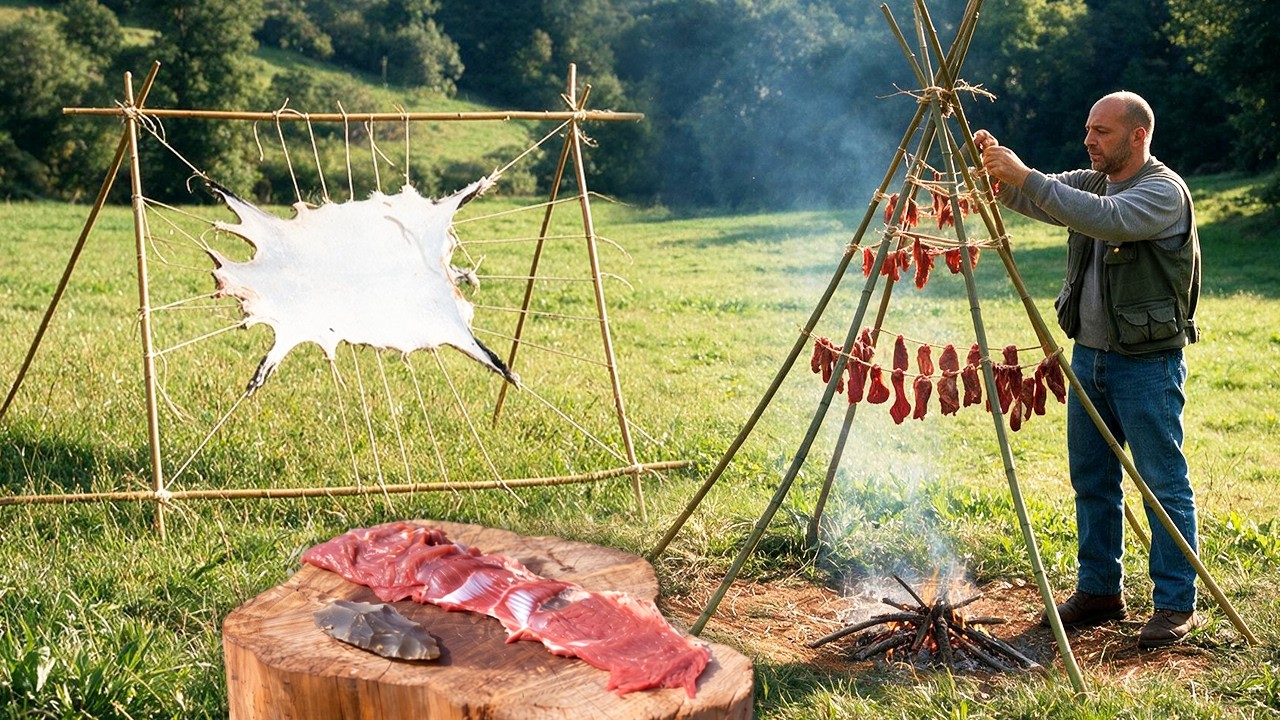
Long before steel knives, chemical tanners, or refrigeration existed, our ancestors turned a single hunted animal into clothing, cordage, cutting tools, and weeks of preserved food using nothing but stone, fire, and deep patience. In this remarkable documentary filmed in Adino, in Spain’s Cantabria region, ethnographer Eugenio Monesma records master practitioners Alfonso García-Oliva and Javier Herrera demonstrating the complete prehistoric survival toolkit: knapping flint tools, striking fire from stone, tanning animal hides, and drying meat the way humans did for tens of thousands of years.
Whether you study bushcraft as a hobby, prepare for scenarios where modern gear fails, or simply want to understand how little we actually need to live, this video is a masterclass in the foundational skills that kept our species alive. Below, we break down the key techniques shown on screen, explain why they still matter to modern survivalists, and point you to gear that lets you practice these ancient skills today.
Key Survival Takeaways
- Flint tools cut nearly as well as steel. Freshly knapped flint blades are shown fleshing and scraping hides with surprising efficiency. Knowing you can produce a working cutting edge from the right kind of stone frees you from total dependence on metal tools.
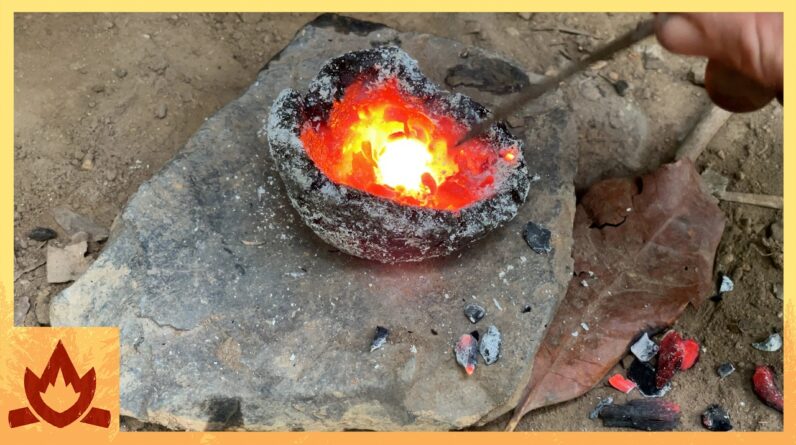
- Fire can be struck, not just sparked. Percussion fire methods using flint struck against marcasite or pyrite predate the bow drill in many regions and work reliably once you know the right stones and how to prepare dry, fine tinder.
- Hide tanning is a multi-day process, not a single technique. Fleshing, scraping, treating the skin with the animal’s own fatty matter, stretching, and smoking are sequential steps. Skip one and the hide is ruined, so survival planning must budget for the full timeline.
- Dried meat is the original long-term food storage. Thin strips, good airflow, and slow drying or smoking turn a perishable kill into a lightweight, high-energy food supply that lasts for months without refrigeration.
- Use the whole animal. Hide becomes clothing and shelter covering, sinew becomes cordage and binding, fat becomes waterproofing and lamp fuel, and bones become tools. For our ancestors, wasting any part of a kill was a survival failure they could not afford.
- Skills beat gear. Every process in the film runs on knowledge and practiced hands alone. Equipment accelerates learning, but process knowledge is the one asset that never breaks, gets lost, or runs out.
From Hunt to Harvest: The Complete Primitive Process
The documentary was filmed in 2002 in Adino, a small Cantabrian village in a region world-famous for its Paleolithic cave sites, making it a fitting place to reconstruct prehistoric lifeways. Alfonso García-Oliva and Javier Herrera work through each stage the way it would have happened thousands of years ago: a flint core is struck and pressure-flaked into blades and scrapers, fire is produced with percussion, and a raw hide is stretched, fleshed, and worked until it becomes soft, durable leather.
The meat-processing segments are equally instructive. Rather than relying on salt or smokehouses, the practitioners show how cutting meat into thin strips and exposing it to steady airflow and low heat preserves it while concentrating its nutritional value. Watching the full chain, from raw materials to finished tools, clothing, and food, is the clearest demonstration you will find of what self-reliance actually meant for most of human history.
Why These Skills Still Matter Today
Modern survival planning usually focuses on gear, but gear degrades, gets lost, and runs out. Primitive skills provide the redundancy layer that no kit can match. Even a partial ability to knap a cutting edge, start fire without matches, or preserve meat without power dramatically extends your options in a long-term wilderness living or grid-down situation. These skills also sharpen your judgment: once you have processed a hide or dried meat by hand, you understand materials, time, and energy budgets in a way that no checklist can teach. That is why primitive technology practitioners and preppers alike treat these techniques as core competencies rather than curiosities.
Gear & Equipment
Practicing primitive skills is safer and faster with a few modern tools in your kit. A dependable Ferrocerium Rod Fire Starter gives you a reliable backup fire method while you learn percussion and friction techniques. A dedicated Hide Tanning Kit with fleshing tools and scrapers lets you rehearse each step before attempting it fully primitive. A starter Flint Knapping Kit provides the hammerstones, pressure flakers, and hand protection you need to safely produce your own stone edges. A quality Bushcraft Knife is indispensable for meat and material preparation at any wilderness workstation. And a Food Dehydrator for Meat is a great modern way to master jerky fundamentals before drying strips over a slow smoky fire.
As an Amazon Associate, we earn from qualifying purchases.
Frequently Asked Questions
How long does primitive hide tanning take? Done properly, fleshing, scraping, treating, stretching, and smoking a hide takes several days of work spread across a week or more, and the timeline depends on weather, hide thickness, and how often you can rework the skin. The documentary makes clear that patience is a core tool in the process.
Can you really start fire just by striking stones? Yes. Flint struck against marcasite or pyrite throws sparks hot enough to ignite properly prepared tinder. The hard part is not the strike but the tinder preparation: fine, dry, fluffy material catches sparks that coarse tinder will let die.
Is dried meat safe without salt or refrigeration? Thin strips dried fast in warm, dry, moving air, or slowly smoked, remove enough moisture to inhibit spoilage for months. The keys are cutting strips thin, keeping airflow constant, and finishing the job fully before storing the meat.
Conclusion
This documentary is a rare record of survival skills that usually exist only in archaeology textbooks, demonstrated by people who practiced them until the techniques worked with their hands. Watch it with a notebook, because the details, from how the flint is held to how the hide is worked, are where the real knowledge lives. Then pick one skill, like fire or meat drying, and rehearse it until it is yours.