Surviving on Primitive Fish Traps: A 7-Day Wilderness Challenge
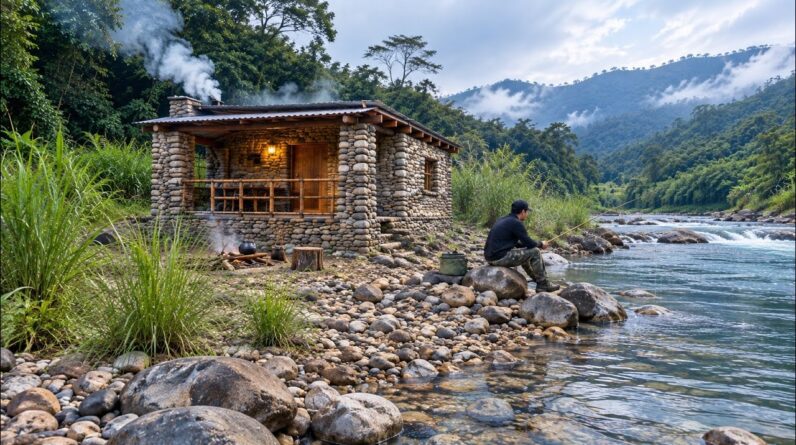
Imagine heading into the wilderness with no fishing rod, no hooks, no modern gear of any kind, and committing to survive for an entire week using nothing but what the land provides. That is exactly what the creator behind RAMPE set out to do in this remarkable 7-day survival challenge. The mission was ambitious: build a series of primitive fish traps from natural materials and rely on them as a primary food source while navigating the relentless demands of wilderness living.
What makes this challenge compelling is not just the ingenuity of the trap designs but the brutal honesty of the experience. By midweek, the gap between survival theory and caloric reality becomes starkly apparent. Small fish, hard-won through hours of construction and patient waiting, barely cover the energy spent gathering materials, tending fire, and maintaining camp. The creator documents every high and low without filters, offering a rare window into what primitive survival actually feels like when the novelty wears off and hunger sets in.
Whether you are a seasoned bushcrafter refining your primitive skills or a newcomer drawn to the idea of self-reliance, this challenge delivers practical lessons you can apply in your own wilderness practice. From reading water flow to identifying the right natural cordage materials, here is a detailed breakdown of the key takeaways and the gear that bridges the gap between primitive methods and modern preparedness.
Key Survival Takeaways
- Trap placement matters more than trap design. Even the most carefully constructed primitive trap will fail if positioned in the wrong part of a river. The creator emphasizes looking for narrow channels, eddies behind rocks, and natural funnels where fish are forced to concentrate. Learning to read water flow and identify these natural chokepoints is the single most important skill for primitive fish trapping, and it takes repeated observation to master.
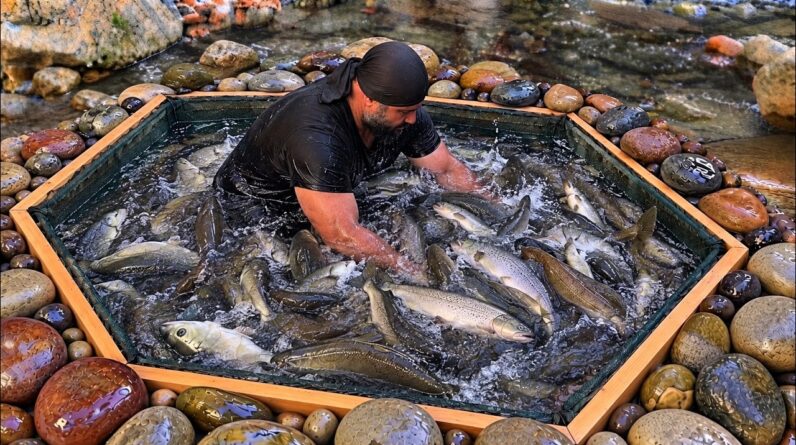
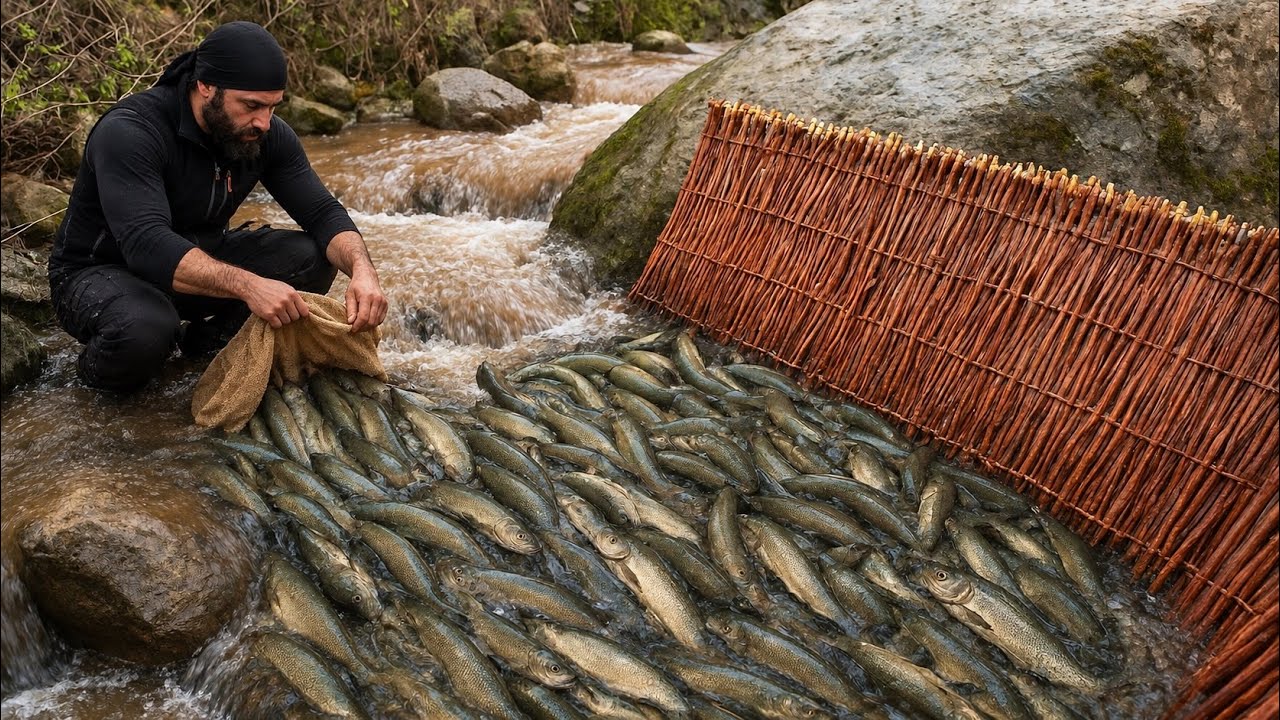
- Multiple trap designs increase your odds. Rather than relying on a single trap type, the creator builds several different designs throughout the week. Basket-style traps woven from flexible branches, funnel traps that exploit fish swimming patterns, and simple stake traps each target different species and water conditions. Diversifying your trap strategy mirrors how indigenous cultures maintained varied tool kits, ensuring that if one approach fails, another may succeed.
- Cordage is your most valuable resource. Without modern rope, binding trap components together requires making natural cordage from plant fibers, bark strips, or roots. The ability to produce strong, reliable cordage from scratch underpins nearly every primitive construction task, from traps to shelters to fire bows. If you cannot make cordage, your options in the wild shrink dramatically.
- Fire maintenance is non-negotiable. Even when fish are scarce, keeping a fire going provides cooked food, warmth, insect deterrence, and a psychological anchor. The challenge reinforces the importance of fire tending as a daily priority, not an afterthought. Letting a fire die means losing your cooking ability, your morale boost, and potentially your only signaling method.
- Patience and observation beat aggression. Primitive trapping is a waiting game. Rushing to check traps or relocating them too frequently spooks fish and reduces catch rates. The most productive stretches of the challenge came when the creator set traps intelligently and let nature work, checking them at natural intervals rather than constantly disturbing the water.
- Caloric reality is sobering. Even with functioning traps, the calories from small fish may not fully replace what you expend building and maintaining your camp. The challenge underscores why foraging diversity, combining fish, plants, and any other available food sources, is essential for long-term wilderness survival. No single food source will sustain you indefinitely.
- Mental resilience determines outcomes. By day five or six, hunger and isolation test the mind as much as the body. The ability to stay focused, adapt strategies, and maintain routine is what separates a completed challenge from an abandoned one. The creator credits daily structure, fire tending rituals, and a problem-solving mindset with carrying him through the hardest stretch.
Essential Survival Gear
While the challenge focuses on primitive methods, every modern survivalist should carry baseline gear that can supplement or replace improvised tools. A compact survival fishing kit with line, hooks, and lures weighs almost nothing and dramatically increases your catch rate compared to hand-built traps. A quality bushcraft knife is indispensable for carving trap components, processing fish, and splitting wood for fire. For reliable fire ignition in wet conditions, a ferrocerium rod fire starter outperforms any primitive method. Carrying paracord survival rope eliminates the time-intensive process of making natural cordage, freeing hours for other critical tasks. Finally, a primitive trapping survival guide is worth studying before you ever need to build a trap under pressure.
As an Amazon Associate, we earn from qualifying purchases.
Frequently Asked Questions
What are primitive fish traps and how do they work?
Primitive fish traps are simple enclosures built from natural materials like branches, vines, and cordage that funnel fish into a contained area they cannot easily escape. Common designs include basket traps woven from flexible branches, funnel traps that exploit natural swimming patterns, and stake traps driven into the riverbed. The key principle is placing them where fish are naturally concentrated, such as narrow channels or eddies behind rocks.
How long does it take to build a primitive fish trap?
Depending on the design and available materials, a primitive fish trap can take anywhere from 30 minutes to several hours to construct. Basket-style woven traps are the most time-intensive, while simple stake traps can be assembled more quickly. The real time investment comes from gathering materials, making cordage, and scouting the right location along the river.
Can you survive on fish alone in the wilderness?
Surviving on fish alone is extremely difficult. Small fish provide limited calories, and the energy expended building traps, tending fire, and maintaining camp often exceeds what you gain. Successful long-term survival requires dietary diversity: combining fish with foraged plants, insects, and any other available food sources. This challenge vividly demonstrates why foraging breadth matters as much as trapping skill.
What is the best material for natural cordage in survival situations?
The best cordage materials depend on your environment. Common options include inner bark from trees like cedar or willow, plant fibers from nettles or dogbane, and flexible roots from coniferous trees. The key is selecting fibers that are strong, flexible, and long enough to braid or twist into rope. Practicing cordage-making before you need it in a survival situation is essential.
Final Thoughts
The 7-day primitive fish trap challenge is a powerful reminder that survival is not about having the best gear but about understanding fundamental principles and applying them with patience and discipline. Trap placement, cordage skills, fire maintenance, and mental fortitude are timeless lessons that apply whether you are deep in remote wilderness or preparing for an unexpected emergency. The challenge also proves that even the most skilled bushcrafter benefits from carrying modern backup gear, because primitive methods demand enormous time and energy that may not be available in a real crisis. Watch the full video to see which traps actually produced results and how the challenge concluded.