



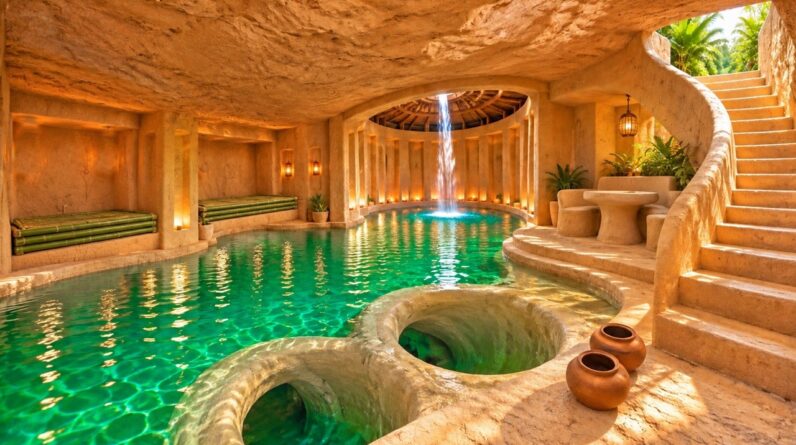
Constructing an earth-sheltered subterranean dwelling deep inside a tropical rainforest demands an intricate understanding of primitive civil engineering, soil dynamics, and hydrological management. Rainforest environments present extreme moisture levels, frequent torrential rainstorms, and dense soil layers heavy with organic clay. To create a long-term, multi-chamber underground living complex equipped with aqueducts, swimming pools, and twin subterranean sleeping quarters, survival builders must carefully balance structural integrity with natural moisture barriers to prevent structural collapse and flooding.
This 100-day rainforest survival project demonstrates how raw wilderness materials can be transformed into a functional, heat-regulated underground habitat. By excavating deep down to stable subsoil layers and utilizing natural binder compounds such as termite mound soil mixed with fine river sand, primitive builders can craft durable hydraulic plaster. Understanding these core wilderness architecture principles provides vital lessons for off-grid homesteaders, survivalists, and bushcraft enthusiasts seeking to build resilient subterranean shelters without modern heavy equipment or synthetic building supplies.
Subterranean Site Selection and Deep Soil Excavation
Selecting the optimal site is the foundational step in any deep-earth excavation project. In jungle environments, builders must evaluate slope gradients, natural groundwater tables, and overhead canopy cover. Deep root networks from mature rainforest trees offer dual characteristics: while large taproots stabilize surrounding soil banks, decaying root systems can introduce unintended water channels. Digging down to depths exceeding three meters requires stepped terracing along trench walls to prevent sudden soil shearing and cave-ins under heavy tropical downpours.
Excavation begins by manually clearing the topsoil layer, which contains loose organic humus and leaf litter prone to rapid decay. Once the dense clay subsoil layer is reached, hand-carved wooden spades and fire-hardened bamboo picks are used to slice through packed earth. Terraced walls are excavated at slight incline angles to distribute lateral soil pressure evenly. Establishing proper wall angles and stepped access ledges ensures structural safety while carving out spacious underground sleeping alcoves and subterranean living quarters.
Termite Clay Hydration and Natural Waterproof Sealants
Waterproofing subterranean structures against relentless rainforest humidity and direct liquid pressure requires specialized natural plasters. Termite mound material serves as an exceptional wilderness cement due to high concentration of fine clay particles bound together by organic secretions. When harvested, crushed into fine powder, and combined with clean river sand and water, termite clay forms a dense, impervious paste that sets firmly when cured under controlled ambient humidity.
Applying this primitive hydraulic plaster across pool basins, slide tracks, and underground floor surfaces prevents water seepage into living chambers. Builders apply multiple thin coats, allowing each layer to partially dry while maintaining sufficient moisture content to avoid shrinkage cracks. Natural mineral pigments and vegetal dyes derived from local jungle roots can be burnished directly into the final wet layer, providing a smooth, durable finish that seals out groundwater while creating an aesthetically pleasing surface.
Gravity-Fed Bamboo Aqueducts and Hydraulic Flow
Continuous clean water supply is essential for long-term jungle survival dwellings. By tapping into elevated freshwater sources like mountain streams or nearby waterfalls, builders construct gravity-fed bamboo aqueducts without needing mechanical pumps. Large-diameter bamboo stalks are split longitudinally, and internal node diaphragms are scraped away using sharp chisels. Channel sections are joined using lap-joints and bound tightly with rattan cordage to form leak-proof conduits across long distances.
Positioning aqueducts at a constant downward slope ensures steady water velocity, preventing sediment accumulation inside bamboo channels. Water enters secondary subterranean settling basins where heavy sand particles settle to the bottom before clean overflow drains into main pool reservoirs. Overflow channels carved around living areas divert excess water down valley, keeping underground sleeping chambers dry and protected from flash flooding during heavy jungle downpours.
Subterranean Thermal Control and Passive Air Ventilation
Underground shelters provide exceptional thermal inertia, maintaining stable temperatures despite sweltering surface heat. However, stagnant air and excessive humidity can lead to mold growth and poor air quality in enclosed earth chambers. Creating passive ventilation pathways requires digging angled intake flues near floor levels and elevated exhaust shafts facing prevailing surface winds, allowing natural thermal convection currents to pull fresh air through subterranean rooms.
Roofing structures over underground sleeping chambers utilize heavy timber joists overlaid with woven bamboo matting, thick layers of dried thatch, and a final cap of compacted soil. This multi-layered roof system provides insulation against radiant heat while shedding rainwater away from chamber entrances. Proper overhead thatched canopy protection combined with floor-level drainage channels maintains comfortable humidity levels and fresh air circulation throughout the underground living compound.
Key Survival Takeaways
- Terraced Excavation Prevents Cave-Ins: Digging subterranean walls with stepped ledges distributes lateral soil pressure safely and prevents catastrophic collapse in wet clay environments.
- Termite Soil Acts as Natural Hydraulic Plaster: Combining crushed termite mound clay with sand yields a waterproof sealing plaster ideal for pools, basins, and damp earthen walls.
- Gravity-Fed Aqueducts Require Proper Gradient: Constructing bamboo channels with consistent downward slope maintains clean water flow without requiring mechanical pumping systems.
- Passive Convection Regulates Airflow: Angled air intake flues combined with elevated exhaust shafts create natural airflow, preventing stagnant humidity inside underground rooms.
- Multi-Layered Thatch Protection Shields Soil: Overlayering subterranean roofs with woven thatch, clay, and timber keeps living areas dry while maintaining stable internal temperatures.
- Settling Basins Purify Runoff Water: Directing freshwater through primary settling pools allows heavy sediments to sink before clean water flows into main storage reservoirs.
Gear & Equipment
To replicate primitive survival techniques or construct off-grid wilderness shelters efficiently, having reliable heavy-duty gear is indispensable. The following high-performance tools provide the durability and cutting power needed for demanding earthwork and timber projects in remote wilderness settings:
Heavy Duty Tactical Trench Shovel – Multi-angle steel spade engineered for high-impact digging, trenching, and soil levelling in tough clay conditions.
Carbon Steel Bushcraft Machete – Full-tang heavy clearing blade ideal for harvesting bamboo, cutting dense vines, and shaping structural timbers.
Heavy-Duty Waterproof Canvas Tarp – Rugged weather-resistant shelter cover designed to keep excavation pits, tools, and earthworks dry during heavy rainfall.
Portable Survival Water Filtration System – High-capacity filtration pump that removes bacteria and sediment from wild water sources for safe drinking water.
As an Amazon Associate, we earn from qualifying purchases.
Mastering primitive earth-sheltered architecture and water diversion systems equips survivalists with the practical knowledge required to thrive off-grid. By combining natural materials like termite clay, bamboo, and timber with sound structural engineering principles, you can create sustainable, highly secure wilderness habitats built to withstand extreme environmental conditions.


What would you like us to build next? Comment below!
Visit our Website: https://primitivejunglelifeskills.com/
Facebook: https://www.facebook.com/primitivejunglelifeskills99
TikTok: https://www.tiktok.com/@primitive_j_lifeskills
Instagram: https://instagram.com/primitivejunglelifeskills
Hehehheheheheh
❤❤❤❤❤😊😊😊😊
14:41
😅😅😊😊😊
Ok 👍 😊
🥰🥰🥰🥰🥰🥰
Bro. Ther. Rich. Why. Wodnt. Have. A camraman
They are using machines
😊😊😊😊😊😊
Láo lòn
11:51 они должны делают 30 минут
🎉🎉🎉🎉🎉🎉🎉🎉🎉🎉🎉🎉🎉🎉🎉🎉🎉😮😮😮😮😮😮😊😊😊😊😊bagus banget
Please build a mansion 🙏🙏🙏
F- 2:37 😡😡😡😡😡😡😡🥶🥶🥶🥶😡😡😡😡😡😡😡😡😡😡😠😠😠😠😠 3:23
Yum I wish I was there. Great food and great making
?,
.qwedgiuifeb😂
6:00
💔💔💔💔💔💔💔💔💘😾😾😾😾😡😡😡😠😠😠🤬🤬🤬😈😈😈
😮😮😮
😂😂😂 🎉😂
yo de pequeña si creia que todo eso era real y lo hacian al momento, creci engañada como siempre T-T
Wow so cooh
❤❤
Hoje não tenho mais nada a dizer sobre o valor da taxa de serviço e a descrição do produto com os dados do cliente que eu fiz de novo e-mail e não obtive nenhuma doença que foi enviada por vocês e o mesmo me informou que o mesmo não havia mais legal 😎
n
fakeyyy
❤❤❤❤
So creative
Nice
😮😮😮😮
His true 😢
E essas marca aí ó de trator cara para de mentir você só conseguiu isso daí só para mentira Para
100÷💯💯💯💯💯💯💯100 100
המאכלים האהובים עליי:
אוראו, ברוקולי, פטריות, בורקס, לבבות, נקניקיות ועוד.
123456789010141425363535353355¥5766656
Iiooookkkklkk,l😊🌎おおおおおおおおおおおおおおおおおおおおおおおおおおおおおおおおおおおお🪐👍👎👍👎👍👍👍👍👍👍👊😡🤬🤬🤬🤬🤬🤬🤬🤬🤬🤬🤬🤬🤬🤬🤬🤬🤫
😮😮😮😮😮
Wow❤🎉🎉🎉🎉
me
😅😅😅 love it😊😊
so nice! ❤
Beauffull
😅
C’est😅vraimemt😅😅😅😅😅😅❤❤❤nice
❤
Love this videos😊