



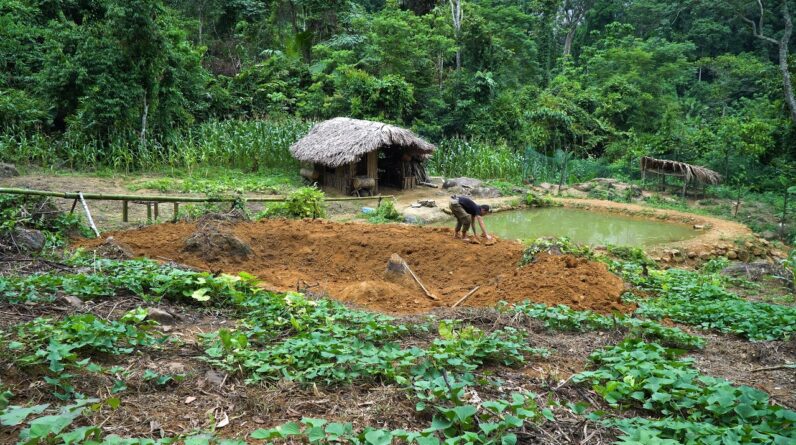
Spending 90 days completely off-grid deep in a tropical rainforest represents the pinnacle of long-term wilderness survival and self-reliance. Rainforest environments present extreme humidity, near-constant torrential downpours, and intense insect pressure that will quickly break down inadequate gear or poorly constructed shelters. To survive three full months under these conditions, a bushcraft practitioner must harness natural geological features, build waterproof structures, and establish continuous food and clean water supply lines.
In this in-depth off-grid living guide, inspired by long-term rainforest survival challenges, we break down the vital strategies required to establish a self-sufficient jungle homestead. Utilizing a massive natural rock overhang or cave as a structural foundation provides instant overhead protection, while clay, timber, and stone walls create a comfortable microclimate. From harvesting predatory snakehead fish in mountain streams to gathering wild rainforest fruits, mastering these techniques will allow you to flourish off the grid.
Key Survival Takeaways
- Rock Cave Shelter Integration: Utilizing giant natural rock formations reduces structural material needs while offering complete protection against falling jungle limbs and heavy downpours.
- Clay and Stone Hearth Construction: Building a raised indoor fire hearth with natural clay and stone vents smoke away while keeping the living area dry and termite-free.
- Freshwater Stream Fishing Techniques: Setting targeted line rigs and basket traps in calm stream eddies yields a steady supply of high-protein snakehead fish and river crabs.
- Gravity-Fed Rainwater Harvesting: Diverting clean mountain stream runoff or rainwater through bamboo conduits provides continuous, easily filterable fresh water for cooking and hygiene.
- Moisture and Mold Control: Elevating sleeping platforms on timber frames and maintaining a continuous low bed of coals prevents dampness and skin infections.
- Forest Foraging and Botanical Knowledge: Safely identifying wild jungle berries, edible roots, and bamboo shoots supplements animal protein with vital vitamins and complex carbohydrates.
Designing a Permanent Off-Grid Rock Cave Homestead
When selecting a site for a 90-day rainforest survival stint, natural geological features offer unmatched protection. A giant rock overhang or cave mouth acts as a ready-made roof that never leaks. However, converting a raw rock niche into a livable, long-term homestead requires significant modification to control moisture, drafts, and wild pests.
Begin by clearing loose debris and leveling the dirt floor inside the cave shelter. Construct outer retaining walls using dry-stacked river stones bound with sticky river clay. Clay acts as a natural mortar that hardens as it dries, sealing gaps against moisture and crawling insects. Leave dedicated air intake vents near the floor and a smoke egress opening near the roof ceiling. Raising your sleeping platform at least two feet off the ground using notched hardwood poles keeps your bedding isolated from damp earth and nocturnal jungle wildlife.
Harvesting Stream Protein: Snakehead Fish and River Crabs
Maintaining high muscle mass and physical energy over 90 days requires consistent animal protein. Rainforest rivers and mountain streams are rich aquatic ecosystems packed with nutritious fish species like snakehead fish, freshwater eels, and river crabs. Relying on passive fishing methods ensures you capture calories while working on homestead infrastructure.
Construct passive basket traps using split bamboo strips woven tightly with natural jungle vines. Position the funnel traps facing upstream in narrow water channels where aquatic life naturally travels. Bait the traps with crushed land snails or wild fruit pulp. Supplement traps with handline fishing in deep stream pools during early morning and late afternoon hours. Cooking fish thoroughly over open hearth coals eliminates potential aquatic parasites and provides essential dietary fats.
Off-Grid Hygiene, Fireplace Vents, and Dampness Prevention
Continuous dampness is the greatest threat to off-grid rainforest survival. High humidity prevents wet clothing from drying naturally, leading to hypothermia during cool rainy nights and fungal skin infections. Keeping a perpetual small fire burning on a clay hearth inside the rock shelter dries out ambient air, repels mosquitoes, and keeps structural timbers dry.
For drinking water, never consume untreated stream water regardless of how clear it appears. Set up a simple bio-sand water filter using a hollowed bamboo tube packed with layers of charcoal, fine sand, coarse gravel, and crushed stones. Pouring stream water through this multi-tier natural filtration system removes sediment and organic impurities before final boiling over your hearth fire.
Gear & Equipment
Long-term off-grid living in high-moisture jungle environments demands heavy-duty, dependable survival tools. Investing in proven equipment safeguards your health and increases camp productivity during extended stays. Below are top gear recommendations for rainforest bushcrafting:
Portable Survival Water Filtration Pump
Heavy-Duty Waterproof Survival Tarp
As an Amazon Associate, we earn from qualifying purchases.
Conclusion
Mastering 90-day off-grid survival in a rainforest requires patience, physical hardiness, and intelligent resource utilization. By leveraging natural rock caves, maintaining an efficient indoor hearth, and trapping river protein, you can create a thriving off-grid lifestyle. Practice these essential bushcraft strategies to build confidence and resilience in any jungle wilderness environment.


Да он очень аккуратно строит и красиво
This is one of the most natural off grid living scenes I’ve ever seen.
I really really like this 😊❤
survived 90 days in the wild, built a wonderful warm shelter from a giant rock and foraged around the shelter, ate wild berries and some fish and crabs in mountain streams
That would sell for $1.2 million here in California
Absolutely incredible!!
Дуже, дуже гарно, але треба із кимось жити у такій красі, бо самому скучно❤️🟦🟨
Як гарно ти працюєш, дякую за таке прекрасне відео👍❤️🟦🟨
Як гарно ти працюєш, дякую за таке прекрасне відео👍❤️🟦🟨
I've watched your video 3 times today 😊. Thank you for sharing and inspiring. I will be subscribing to your channel. Take 🌷care.
D'eau coup ma chère la maison fille,ne t'inquiète ❤😂❤😅
I would cut in a small groove on the underside of the rock so water does not run down the stone when it rains and allows water to flow all the way to the stone walls you built. Same concept as cutting a groove on the underside of a windows ledge or drip edge on a roof.
Получилось очень крпсиво! Но как долго простоит этот дом, учитывая то, что камни скреплены глиной? Спасибо за видео!
У тебя пчелы сдохнут с голоду ты любишь себя
Rất ấn tượng. Một sản phẩm tuyệt vời đến từ bàn tay của người Việt Nam
Thank you 😊
Es increíble tengo un vecino que es ucraniano y actúa como tú sin ponerse nada para sacar panales
Sabes trabajar muy bien el barro y la piedra se nota que tienes experiencia
I'm usually not imprssed by the final result of mud houses in jungles and forests, but yours is really really nice and neat.
Gözəl allahımın yaratdığı hər şey gözəldi onu gözəl bizə görünsün deyə gozəlləsdirib insanlara bacarığını gösterir bunun cun də həmişə sizə təşəkkür edirik və var olun var olun sizi kimi insanlar bu bilmədiyimizi bizə öyrədib göstərirsiniz halal olsun sizin kollektivinizə və işçi heyətinizə
روع
Я в восторге 👏👏👏👏👏👏👏👏👏
Çok güzel azimle çalıştı burasi neresi buradami Vietnam?
انت رائع❤❤
I love that stone house did an incredible job on it thats for build me one lol
Itu org nya ngk mandi mandi 😮
I saw many similar videos, but this one.…. is another level!
Wow, it is a beautiful house, very cozy. Very meticulous work. You have kitchen work top, a bed to sleep in, a cooking stove, stairs to your house. Your house has a good height, don't need to hunch your back. It can be a tourist attraction to nature.
Bruh respect for you🙂❤️❤️❤️
❤❤❤❤❤
❤❤❤❤❤❤❤❤❤❤
What is he doing with the bees? I'm lost. Thanks. You are absolutely amazing. If i need to survive off the land ever, I want this man with me
Это фантастика! Потрясающе!!!
太配服您了!
這種傳統手工文化快消失了.給這位勇士100個👍👍讚
好假