A Military Ration Older Than Most of the People Eating It
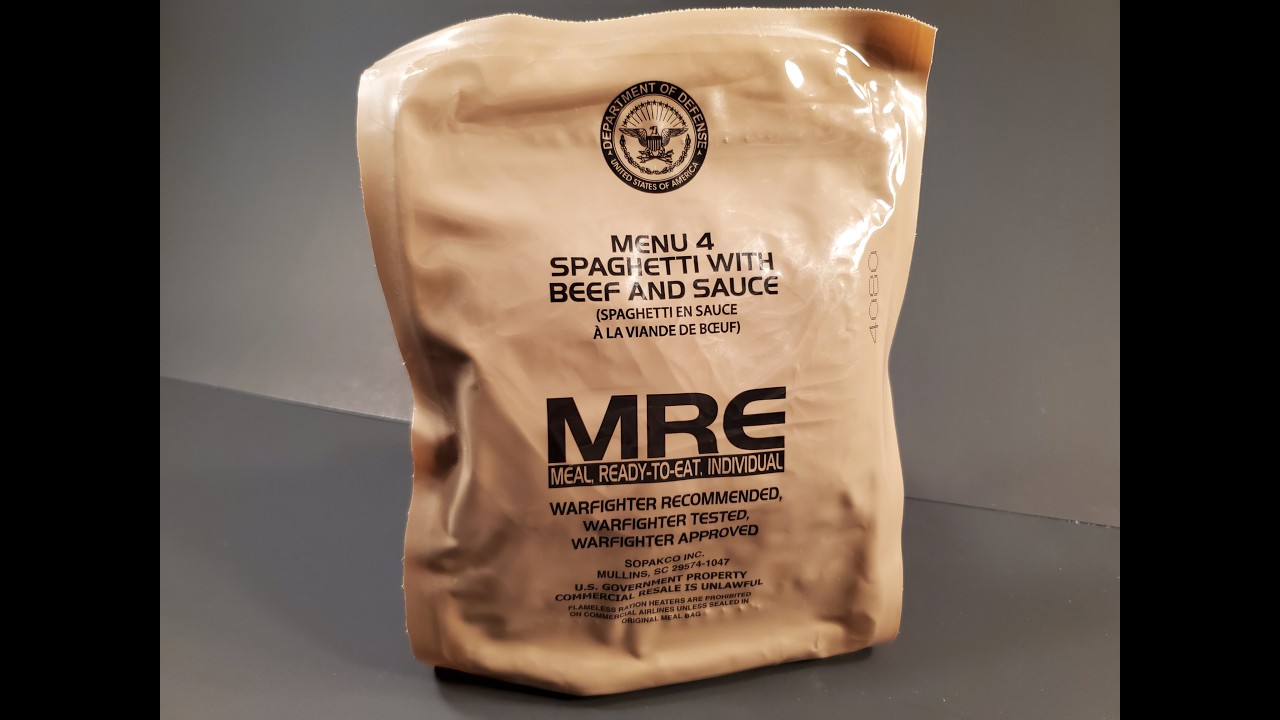
Menus come and go in the MRE program, but one dish has never left the lineup: Spaghetti with Beef Sauce, in continuous US service since the MRE replaced canned C-rations back in the early 1980s. In the video above, Steve1989MREInfo opens a current-production 2024 pouch and works through every component, from the main entree down to the accessory pack. His verdict is blunt: this is one of the absolute best menus currently in service, and the credit goes to the newest recipe formula, which finally delivers a high-fat, genuinely flavorful beef sauce from a shelf-stable retort pouch.
For preppers and anyone building an emergency food supply, this kind of review is more than entertainment. It is a rare, close-up look at how modern retort-sterilized food actually performs after sitting in storage, how the flameless ration heater turns an ounce of water into a hot meal, and what a complete Meal, Ready-to-Eat really delivers in calories, macros, and morale. You cannot buy that kind of hands-on data at any price, so it pays to borrow it.
In this article we break down what is inside the 2024 Spaghetti with Beef Sauce menu, why the entree scores so well after five decades of reformulation, and the storage and rotation lessons every emergency food plan should steal from military rationing.
Inside the 2024 MRE Spaghetti with Beef Sauce Menu
The entree sits at the center of a full meal kit that typically includes a starch or snack, a spread, a bakery item, a beverage powder, and the accessory pack with flameless ration heater, spoon, coffee, creamer, sugar, salt, and a moist towelette. The real engineering story is the retort pouch itself: flexible, multilayer packaging that survives thermal sterilization, leaving the food inside commercially sterile and shelf-stable for years without refrigeration.
What stands out in the review is how normal the meal looks and tastes for something that came out of a foil pouch. The beef sauce carries real fat content, which matters outdoors, because fat is the most calorie-dense macronutrient at roughly nine calories per gram. The pasta also holds its texture better than most retort entrees, the product of decades of dialing in the sauce acidity and the sterilization cycle. Bland, mushy field food this is not.
Key Survival Takeaways
- Retort pouches are proven long-term food tech. The same thermal sterilization behind this MRE works for any flexible-pouch emergency food. Stored cool and dark, menus like this stay safe and palatable for years, often well beyond their inspection dates.
- Fat equals calories, and calories equal capability. A high-fat main entree is an advantage in cold weather and high-output scenarios. A full MRE delivers roughly 1,200 to 1,300 calories, engineered to be one-third of a soldier’s daily intake.
- The flameless ration heater is a complete cooking system. A small chemical pouch plus an ounce of water produces a hot meal with no fire, no smoke, and no fuel to carry. That is a genuine tactical advantage when you cannot afford to signal your position or light a fire in wet conditions.
- Morale food is survival food. Steve’s point that the newest formula is actually enjoyable matters more than it sounds. In a prolonged emergency, a hot, familiar, normal-looking meal is a powerful psychological anchor that helps prevent appetite fatigue.
- Read dates and storage conditions, not expiration myths. Rations are stamped with pack and inspection dates, and quality declines gradually based mainly on storage temperature. A basement-stored MRE can outlast a garage-stored one by years.
- Test your emergency food before you depend on it. Buy a sample, eat a few menus now, and note which ones your household actually enjoys. A pantry full of food nobody will eat is not a plan.
- Rotate, don’t hoard. Work rations into normal life through camping trips and power outages, then replace what you use. Your stockpile stays fresh and your field skills stay current at the same time.
Common MRE Questions, Answered Quickly
- How long do MREs stay good? Inspection dates usually fall about three years after packing, but that is a quality guideline, not a safety cliff. The main variable is heat: cool storage can extend palatable life well past the printed date, while a hot car trunk can ruin a pouch in a single summer.
- How many calories are in a full MRE? Roughly 1,200 to 1,300 per menu, designed so three menus cover a soldier’s field day.
- Are expired MREs safe to eat? Commercial sterilization means the food stays safe as long as the pouch is intact. Check for swelling, pinholes, rust, leaks, or off smells before eating anything well past its date, and treat your nose as the final inspector.
Gear & Equipment
If this review convinced you to add military-style rations to your preparedness kit, start with a sample of genuine MRE Meals Ready to Eat so you can taste-test menus yourself before committing to a case. Keep a box of Flameless Ration Heaters on hand for no-fire meals, and pair short-term rations with a long-shelf-life Freeze Dried Emergency Food Supply for deep pantry coverage. For maximum shelf life on bulk staples like rice and pasta, store them in Mylar Bags with Oxygen Absorbers, and eat in the field with a durable Titanium Spork that handles scorching entrees straight from the heater pouch.
As an Amazon Associate, we earn from qualifying purchases.
Final Thoughts
The 2024 US MRE Spaghetti with Beef Sauce earns its nearly half-century service record on fundamentals: real fat, real flavor, and packaging that has proven itself across generations of soldiers. Whether you build your emergency pantry around military rations, freeze-dried buckets, or a mix of both, the lesson is the same. Choose food you have actually tested, store it cool, and rotate it through your life instead of letting it expire in a closet.