Why Financial Preparedness Matters
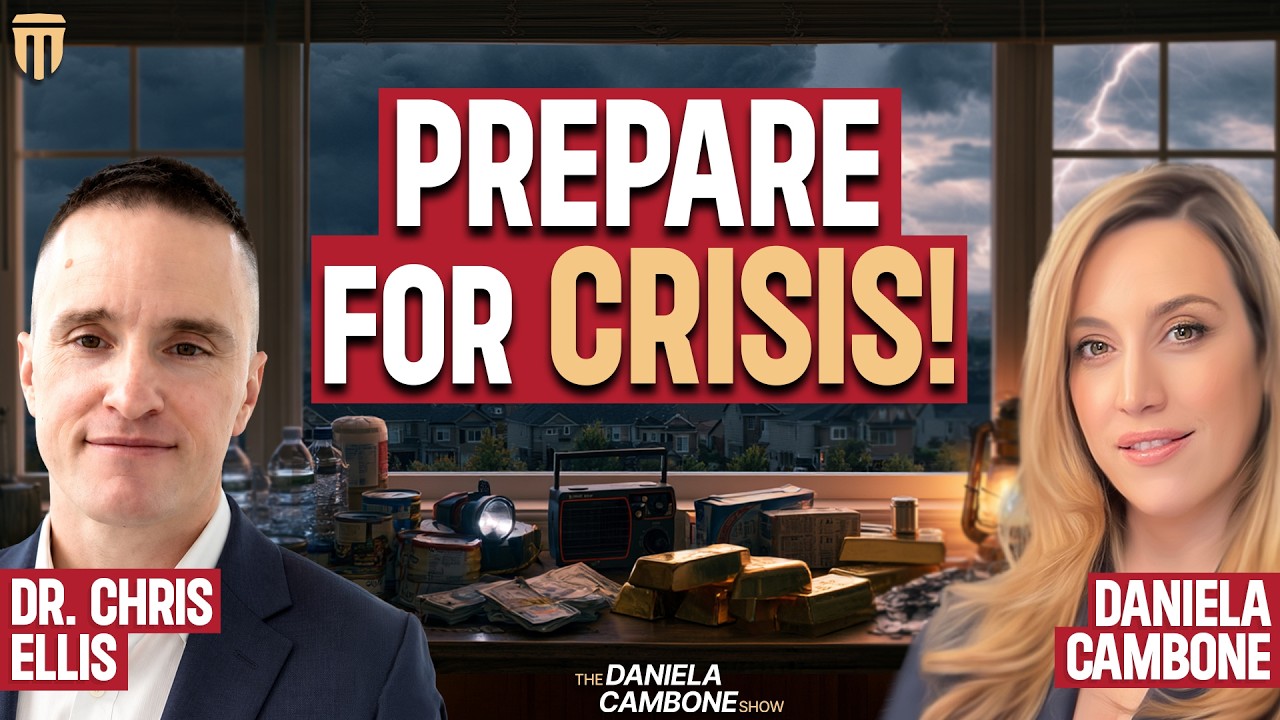
When most people hear the word “prepper,” they picture someone hoarding canned goods in an underground bunker or building a fortress in the wilderness. But the reality of modern preparedness is far more nuanced and practical than the stereotypes suggest. Over 20 million Americans are actively preparing for crises of various kinds, and their strategies go well beyond stockpiling food and water. In this video, Dr. Chris Ellis sits down with Daniela Cambone to break down what preparedness actually looks like across the country and why financial resilience is every bit as critical as having a well-stocked emergency kit.
You will learn why cash on hand may not be enough during a banking crisis, how gold and silver function as real assets that preserve value across economic disruptions, and why community ties could be your most valuable resource when institutions fail. The discussion also covers the psychology of preparedness, the importance of building practical skills alongside financial assets, and how to prioritize your preparation efforts when you cannot prepare for everything. Whether you are just starting your preparedness journey or looking to close gaps in an existing plan, this guide offers actionable strategies for building the kind of resilience that carries you through both everyday setbacks and larger systemic shocks.
Financial preparedness is the often-overlooked pillar of a complete survival plan. While most preppers focus on tangible supplies like food, water, and gear, the ability to weather an economic disruption, banking crisis, or currency devaluation can be just as life-altering as any natural disaster. The strategies discussed here work together as a system: physical metals protect your savings, cash reserves cover immediate needs, practical skills reduce your dependence on supply chains, and community networks create a safety net that no individual can build alone. Treating financial resilience as a core preparedness skill ensures you are ready for the full spectrum of disruptions, not just the ones that make the evening news.
Key Survival Takeaways
The conversation between Dr. Ellis and Cambone distills years of preparedness thinking into practical, approachable advice. Here are the most important lessons for anyone looking to strengthen their financial and personal resilience:
- Diversify your preparedness strategy. True resilience combines physical supplies, financial assets, practical skills, and community connections. Over-reliance on any single approach leaves you dangerously exposed when that system fails.
- Physical gold and silver as real assets. Unlike paper currency, precious metals carry intrinsic value and have maintained purchasing power across centuries of economic upheaval. Keeping a portion of your savings in physical gold and silver provides a hedge against inflation, currency devaluation, and banking instability.
- Maintain emergency cash reserves. Keep physical cash on hand for scenarios where electronic payment systems fail. Power outages, cyber incidents, and banking disruptions can make digital money temporarily inaccessible exactly when you need it most.
- Build and practice practical skills. Skills like food preservation, basic repair, first aid, and water purification are assets that cannot be confiscated, devalued, or rendered inaccessible. The more self-sufficient you become, the less dependent you are on fragile supply chains.
- Strengthen community ties before crisis hits. No one survives alone. Building trust with neighbors and local networks creates a mutual aid system that becomes invaluable during extended emergencies when formal institutions may be overwhelmed, delayed, or absent.
- Prepare for probable scenarios first. While dramatic disasters capture headlines, prioritize preparation for statistically common events: job loss, localized power outages, supply chain disruptions, and short-term food shortages. These are far more likely to affect your family.
- Think in terms of real assets. When evaluating what to hold, consider what retains value independently of financial systems. Land, tools, knowledge, physical metals, and preserved food all qualify. Paper wealth can evaporate overnight, but real assets endure.
Common Financial Preparedness Mistakes to Avoid
- Putting all your trust in paper assets. Stocks, bonds, and bank balances can be frozen, devalued, or wiped out in a crisis. Diversify into physical assets like precious metals, land, and tools that do not depend on financial institutions to retain value.
- Keeping all your cash in the bank. If ATM networks go down or banks impose withdrawal limits, you could be locked out of your own money during the exact moment you need it most. Always keep a physical cash reserve at home in small bills.
- Ignoring the security of your physical assets. Owning gold and silver is only useful if you can protect them. Invest in a quality safe, diversify hiding spots, and avoid advertising what you have to people outside your trusted circle.
- Focusing only on financial assets and neglecting skills. Money and metals cannot purify water, patch a wound, or fix a broken generator. Allocate time to learning hands-on skills that reduce your dependence on paid services during a crisis.
- Preparing in isolation. Even the best-funded prepper cannot handle every scenario alone. Building relationships with neighbors and local community members before a crisis creates a support network that multiplies your resilience at zero cost.
Gear and Equipment
Building your financial preparedness kit means having the right tools to protect and manage your real assets:
- A secure fireproof home safe to protect physical gold, silver, and emergency cash from theft, fire, and flood.
- A coin storage tube set for organizing and storing precious metals in mint condition.
- A digital pocket scale to verify the weight of bullion and coins, ensuring authenticity when buying or trading.
- A Faraday bag for EMP protection to protect critical electronics and backup data.
- A waterproof document bag to keep financial records, insurance papers, and identification safe from water and fire damage.
As an Amazon Associate, we earn from qualifying purchases.
Financial Preparedness Quick Reference Checklist
- Set aside an emergency cash reserve in small bills, enough for at least one month of expenses
- Allocate 5 to 10 percent of savings into physical gold and silver bullion or coins
- Invest in a fireproof, waterproof safe and store it in a discreet location
- Keep a digital pocket scale for verifying precious metal weights and authenticity
- Protect critical documents in a waterproof and fireproof document bag
- Store backup electronics and data in a Faraday bag for EMP protection
- Identify the three most likely financial disruptions in your area and plan for each
- Learn at least two practical skills this year: first aid, food preservation, or basic repair
- Introduce yourself to two neighbors and discuss shared preparedness goals
- Audit your financial assets annually to ensure a healthy mix of real and liquid assets
Conclusion
Financial preparedness is not about predicting doomsday or living in fear. It is about building practical resilience against the disruptions that everyday life and larger crises can deliver. By combining physical precious metals, emergency cash reserves, practical skills, and strong community networks, you create a layered safety net that no single event can unravel. The key is to start where you are with what you have. Begin by setting aside a modest emergency cash fund, then gradually add physical precious metals to your savings. Invest time in learning hands-on skills that reduce your dependence on external systems. Build relationships with your neighbors before you need them.
Start small, stay consistent, and let preparedness become a lifelong habit rather than a one-time project. The most resilient people are not the ones who prepare for everything, but the ones who build adaptable foundations that flex with whatever comes. Financial resilience is a skill that compounds over time, and every step you take today narrows the gap between uncertainty and confidence.