Apartment and City Prepping: How to Prepare Without a Basement or a Backyard
Apartment and City Prepping: How to Prepare Without a Basement or a Backyard
Why the Standard Prepper Playbook Fails in a Fourth-Floor Walkup
Almost every preparedness guide assumes you own dirt. Cache supplies in the basement, run a generator in the garage, drain the gutters into a barrel, shelter in a windowless room of a house you control. If you rent a one-bedroom on the third floor of a brick building in a city of two million people, none of that applies.
That does not make you unprepared, it makes you a different kind of prepared. Urban households face a narrower set of emergencies and a wider set of constraints: no storage, no yard, a landlord, shared walls, one stairwell. The plan below works inside those limits, in the order cities actually fail: water pressure, power, sanitation, information.
Key Takeaways
- In a city, the first thing to fail is rarely food. It is water pressure, power, or the ability to flush a toilet.
- Store water vertically in stackable containers and rotate it on a calendar, not on memory.
- Never run a fuel-burning heater, stove, or generator indoors. Carbon monoxide kills more people in outages than the outage does.
- Your building's single stairwell is both your exit and your biggest risk. Walk it twice, in the dark, before you need it.
- Neighbors are a resource. A building that talks to each other recovers faster than one that does not.
Know Which Threats Your Building Actually Faces
Rural prepping is about isolation. Urban prepping is about density and dependency. Four scenarios cover most of what an apartment household will live through.
Extended utility failure
Winter storms, ice, grid strain, and cyber incidents have all produced multi-day urban blackouts. When the power goes, the pump stations go with it, and above the sixth floor, so does the pressure that lifts water.
Water system interruption
Boil-water advisories and main breaks are common and often resolved within a day or two, but the advisory usually arrives after people have already used the tap.
Building-level emergencies
Fires, gas leaks, and structural problems displace people with almost no notice, and apartment residents are displaced as a building, not a household.
Civil disturbance or a hazardous plume
Both argue for the same response: stay inside, seal what you can, monitor official channels.
Weight your kit toward water, light, heat, sanitation, and information, not wilderness gear. For the hour-by-hour timeline of a long outage, see our 72-hour blackout checklist.
Water: Store It Vertically and Rotate It Honestly
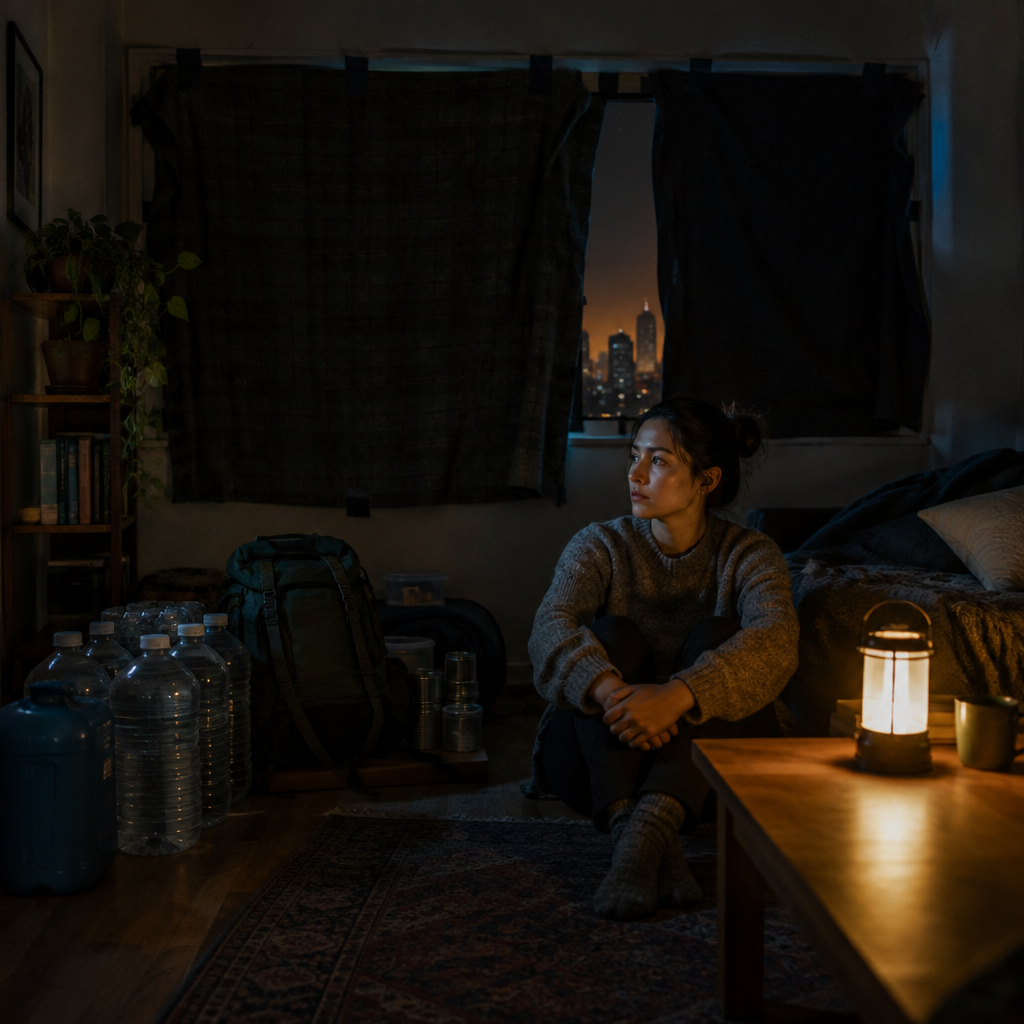
The baseline most agencies use is one gallon per person per day for drinking and basic hygiene, with a three-day minimum and a two-week preference where storage allows. Two adults for two weeks is 28 gallons, roughly 230 pounds, and in an apartment the only place it can live is upward.
Tier 1: grab-and-go, about 3 gallons
Two cases of sealed bottled water by the door, plus a flat of pouches in your go-bag. This is what leaves with you.
Tier 2: shelter supply, 10 to 20 gallons
Stackable rectangular containers designed for water, not repurposed milk jugs, which degrade and leak. Line a closet floor with a waterproof tray and stack two high. A 3.5-gallon container weighs about 28 pounds, the realistic limit for most people on stairs.
Tier 3: bulk reserve, optional
A water brick or bathtub bladder, filled only when a storm is forecast. Do not store 50 gallons permanently in a rental you may leave in eight months.
Rotate on a fixed date: write the fill month on every container and replace municipal supply every six months. Add a gravity filter and unscented bleach for non-municipal water. Our guide to sourcing, filtering and storing water when the tap stops covers treatment in full.
Food: Build a Shelf That Does Not Need a Stove
Apartment food storage fails for one reason: people buy 25-pound bags of rice and then discover they cannot cook them when the range is dead. Build around food that is edible cold, then add cooking capability as a bonus.
Anchor the stock with canned proteins and vegetables, peanut butter, crackers, shelf-stable milk, instant coffee, and bars. Add a manual can opener, because the electric one on the counter is not a plan. Aim for seven days of food you already eat, rotated through normal meals, before buying anything freeze-dried.
For heat-and-eat capability, a butane single-burner stove on a hard surface near an open window is the standard urban solution, with one non-negotiable rule: never in a sealed room, never during sleeping hours. Any fuel-burning appliance indoors produces carbon monoxide, so a battery CO alarm belongs in the kit.
Light, Heat and Power Without Burning the Place Down
You cannot run a generator on a balcony and should not run a propane heater in a bedroom. You can build a lighting and power layer that is completely safe indoors.
Light
Two rechargeable LED lanterns, one per room you actually occupy, plus two headlamps for hands-free work in a dark stairwell. Keep them charged and top up on the first of each month. Candles are a fire risk in a building with shared walls and one exit, and a poor substitute for a $25 lantern.
Heat
In a blackout your apartment loses heat slowly because it is surrounded by other apartments. Shrink the space you heat: pick one interior room, hang blankets over the doorway, layer clothing, and use sleeping bags rated for the temperature you expect. Seal window drafts with removable caulk rope or plastic film, both renter-safe.
Power
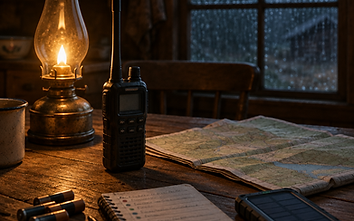
A 300 to 500 watt-hour portable power station runs a phone, radio, laptop, and lantern for days. That is the correct purchase for an apartment. A solar panel in a fire-escape-facing window is a supplement, not a source.
Sanitation When the Toilet Will Not Flush
Toilets stop working when pressure drops, and a building with 60 units and no working toilets becomes a health problem in under 24 hours. This is the most under-planned part of apartment preparedness and the fastest way to get sick.
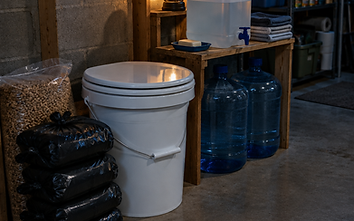
The minimum kit is a lidded 5-gallon bucket, a snap-on seat, heavy contractor bags, and an absorbent such as sawdust, cat litter, or gelling powder. Line the bucket, use it, cover each deposit with absorbent, seal the bag, and store it away from living space. Plan on roughly one bag per person every two days.
Add hand hygiene that does not depend on the tap: alcohol sanitizer, no-rinse wipes, and a hand-washing station made from a spigoted water container. If service is interrupted, assume the supply is contaminated until officials say otherwise. Our full plan for sanitation and hygiene when the grid goes down covers waste, dishes, and illness prevention in more depth.
Security in a Building You Do Not Control
You cannot replace a rental's front door, but you can make it harder to open and harder to watch. Renters have three levers: the door, the sightlines, and the information you share.
For the door, a door security bar or portable wedge lock adds real resistance with no permanent modification. A wooden dowel in a sliding window track takes seconds. Keep the deadbolt engaged whether you are home or not. For sightlines, close blinds at night and keep your lantern in a room away from windows so your movement is not backlit. For information, know where the utility shutoffs and stairwell exits are, and do not post that you are riding out a storm alone.
The 30-Minute Evacuation Plan
Every apartment household needs one plan that assumes the building itself is the emergency. Write it down and rehearse it once.
Assign a primary and a backup exit. In a fire the elevator is not an option, so count the doors between your unit and the stairwell with your hand on the wall; that count is how you find your way down in smoke. Decide now what you carry: documents, medications, phone and charger, cash, a change of clothes, and your go-bag. Everything else is replaceable.
Pick a meeting point outside the building, not in the lobby, and a second one a few blocks away. Agree on an out-of-area contact who can relay messages when local cell service saturates. Text rather than call, since texts often get through when voice does not. Households where people commute should keep a separate kit in the car or at work, which our get-home bag guide for commuters covers in detail.
The Neighbor Factor
A city block is a supply chain made of people. The building that checks on its elderly residents, shares a ladder, and knows who owns a working radio recovers in days. Start with three low-stakes actions: introduce yourself to the two units nearest yours, exchange numbers with the building manager, and find out who on your floor has medical training, a vehicle, or a pet that will need help. In a real outage that list beats an extra case of water, and it solves the problem no kit can: someone to knock on your door if you do not answer.
A 30-Day Apartment Prep Schedule
You do not need a $2,000 shopping trip. You need four weeks of small, boring purchases.
- Week 1: Two cases of bottled water, a manual can opener, and a written evacuation plan taped inside a closet door.
- Week 2: Two rechargeable LED lanterns, two headlamps, and a battery CO alarm.
- Week 3: Sanitation bucket kit and a door security bar.
- Week 4: Stackable water containers, a butane single-burner stove, and one week of no-cook food you will actually eat.
After that the only recurring task is the calendar: rotate water every six months, recharge batteries monthly, and replace stored food as you eat through it.
Gear & Equipment
These five purchases carry the most weight in an apartment.
As an Amazon Associate, we earn from qualifying purchases.
Frequently Asked Questions
How much water should I store in an apartment?
One gallon per person per day. Three days is the minimum most agencies recommend, but two weeks is better if you have closet space. Two adults for two weeks is 28 gallons, which fits a standard closet using stackable containers on a waterproof tray.
Can I use a propane heater in an apartment during a blackout?
No. Indoor-rated portable heaters still produce carbon monoxide, and apartments exchange far less air than a house. Use clothing layers, sleeping bags, and one heated room instead, and keep a battery CO alarm regardless of what you use.
What is the most important item for city prepping?
Water, followed closely by a way to manage waste. Urban supply chains restore food quickly but water pressure and sanitation slowly, so those two failures cause the most immediate harm in a dense building.
How do I prep in a rental without losing my deposit?
Stick to reversible measures: tension-mounted blackout curtains, removable caulk rope for drafts, no-drill door security bars, and freestanding shelving. Nothing in this plan requires a permanent modification to the unit.
Is a basement the best shelter in a city emergency?
Only for tornadoes, blast, and fallout. For flood, fire, and hazardous material releases, upper floors and interior rooms are safer. Know which hazard you are sheltering from before you choose a floor.
The Point of All of This
Urban prepping is not about escaping the city. It is about making a small rented space resilient enough that a bad week stays a bad week. Water you can carry, light you can trust, a toilet that works without the grid, a door that holds, and neighbors who know your name will cover more real emergencies than any amount of wilderness gear.
Start with the four-week schedule, then find out how your current kit scores. Our Bug-Out Bag Builder quiz walks through the loadout question by question and tells you what is missing, before an outage finds the gaps for you.
Get the next breakdown
New video articles, gear notes from the field and tool updates — one email a week.
No spam. Unsubscribe any time. We never sell subscriber data.