



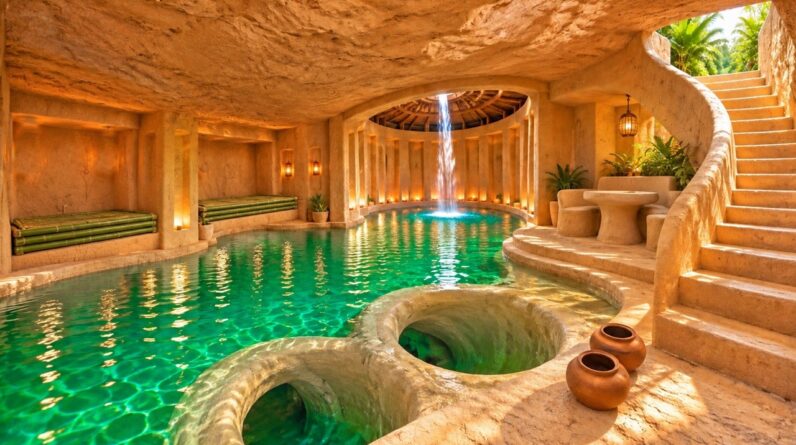
Subterranean architecture represents one of humanity’s oldest and most efficient methods of environmental protection. By utilizing the massive thermal mass of the earth, underground shelters maintain stable internal temperatures regardless of scorching summer heat or freezing winter blizzards. Constructing an elaborate underground living complex with private swimming pools, structural archways, and earthen living quarters using primitive tools requires deep knowledge of soil mechanics, structural geometry, and damp-proofing methods.
In this 100-day subterranean project, survival builders transform raw dirt banks into an engineered earth-sheltered sanctuary. Through strategic excavation, arched soil ceiling engineering, and natural waterproof plaster application, this build highlights how primitive techniques can achieve modern living comfort. For survivalists and wilderness retreat planners, understanding these subterranean building concepts is crucial for creating covert, storm-proof emergency shelters in off-grid settings.
Structural Dynamics of Underground Earth Arches
The primary hazard in subterranean construction is roof collapse caused by vertical gravity loads and soil shear forces. Rectangular or flat earthen ceilings are inherently weak and prone to sagging or sudden cracking. To overcome this limitation without modern reinforced concrete, primitive builders utilize catenary or semi-circular arch geometries when carving underground room vaults and corridors.
Arched ceilings transfer downward gravitational loads outward into vertical sidewalls through compressive forces, eliminating tensile stress along the ceiling center. Builders carefully sculpt curved ceiling profiles using handheld scraper tools, maintaining consistent radii throughout the structure. Buttressing lower sidewalls with compacted clay pillars further enhances structural strength, allowing large subterranean rooms to support massive soil overburdens safely above.
Moisture Control and Sub-Surface Vapor Barriers
Managing dampness is a critical challenge in earth-sheltered architecture. Groundwater seeping through porous soil can cause mold growth, structural weakening, and unlivable interior humidity. Effective moisture control requires implementing dual-layer protection consisting of passive external drainage channels and internal vapor sealing plasters.
On the exterior, builders excavate deep perimeter trenches filled with coarse gravel and river rocks along wall foundations, creating low-resistance pathways for sub-surface water to drain harmlessly beneath living floors. Internally, walls and floors are plastered with a dense mixture of lime-rich wood ash, fine sand, and sticky clay. Burnishing this plaster with smooth stones creates an impervious hydraulic skin that seals out ground moisture and maintains crisp indoor air quality.
Excavation Tools and Efficiency Techniques
Excavating hundreds of cubic meters of dense subsoil manually requires specialized tool selection and physical energy management. Standard wooden sticks quickly split or dull when striking compacted subsoil layers. Primitive builders craft high-impact excavation tools by fire-hardening hardwood digging sticks and binding sharp stone or metal heads to heavy timber handles using soaked rawhide or rattan lashings.
Leverage techniques significantly reduce worker fatigue during deep excavation. Builders drive heavy wooden wedges into natural soil fissures to break loose large earth blocks rather than scraping away small particles. Soil is removed from excavation pits using woven vine baskets hoisted via simple overhead tripod pulley systems, speeding up dirt evacuation while protecting builders working inside deep pit bottoms.
Integrated Earth Heating and Subterranean Smoke Flues
Maintaining comfortable warmth inside underground rooms during cold nights requires safe fire management. Burning open fires inside enclosed earth shelters without proper ventilation creates lethal carbon monoxide accumulation. Primitive builders construct internal clay hearths connected to long horizontal smoke flues buried beneath living floors before exiting through elevated exterior chimney shafts.
As hot smoke travels through sub-floor stone channels, heat is absorbed by surrounding floor earth, creating an efficient radiant heating system similar to traditional hypocaust heating. Thermal energy stored in the floor slowly radiates upward throughout the night, keeping sleeping areas warm without exposing occupants to hazardous smoke or direct flame hazards.
Key Survival Takeaways
- Arched Ceilings Prevent Roof Collapses: Carving curved or catenary roof vaults transfers vertical soil weight into compression along side walls, preventing structural sagging.
- Sub-Surface Rock Drains Relieve Water Pressure: Backfilling perimeter trenches with coarse gravel directs underground water away from room foundations.
- Fire-Hardened Tools Increase Digging Efficiency: Tempering hardwood digging sticks over open flames hardens wood fibers, making tools far more resistant to wear in tough soil.
- Radiant Sub-Floor Heating Stores Thermal Energy: Routing smoke flues beneath earthen floors warms floor mass, providing clean, smoke-free radiant heat overnight.
- Stone Burnishing Seals Hydraulic Plasters: Polishing wet clay plaster with river stones closes surface pores, creating a durable barrier against ground moisture.
- Tripod Hoists Streamline Dirt Removal: Utilizing overhead wooden tripods with woven baskets speeds up soil evacuation from deep excavation pits safely.
Gear & Equipment
Constructing substantial subterranean shelters requires heavy-duty tools designed to handle tough soil, rock, and dense roots. Equipping yourself with dependable survival equipment makes earthmoving and timber processing significantly faster and safer:
Steel Pickaxe and Mattock Combo – Dual-headed steel pick axe designed to break up hardpack clay, rocky soil, and stubborn root networks easily.
Heavy Duty Leather Work Gloves – Reinforced leather gloves providing maximum hand protection against blisters, sharp stones, and heavy timber handling.
Folding Bushcraft Hand Saw – High-carbon steel folding saw featuring aggressive razor teeth for quick timber harvesting and structural wood trimming.
Thermal Emergency Bivy Sack – Ultra-lightweight heat-reflective bivy sack essential for keeping warm and dry during cold wilderness night stays.
As an Amazon Associate, we earn from qualifying purchases.
Mastering subterranean arch design, damp-proofing, and radiant floor heating allows survivalists to build robust, climate-controlled underground shelters. By harnessing natural earth insulation and smart primitive engineering, you can craft long-lasting off-grid structures that provide unmatched security and environmental protection.



Its the fake catch of the day for me lmao
I never knew that blue paint was produced by tress. SMH (shaking my head)
same tired old crap
It's fake they use nail… 😂😂😂
alonnnnn 09999😊😊😊
Beautiful creation guys!❤..and the swimming pool was amazing.
It’s fake but it’s cool
at this point they dont even care anymore
I think there's a part of the development that you guys didn't show. There should be heavy equipment and lots of people to help with this work
i wanna build this
Bro haven't wear shirt for 6 years?
You build it in the forest and destroy the forest 😢 👎👎👎
Your channel is trash.
Красиво сделано, очень много труда вложено в эту работу. Но в дом попасть нельзя. Нужен отдельный вход.
Wow bagus banget 😮😮😮😊😊😅😅gg
I mean its fake but hey its entertaining
What
its a thing where you know its not real, but its still cool
19:48 think I missed something
The funny video….😂😂
2man? is lie ….😂😂
When i was kid i think it was so genius and talented but today i know😂
If u know u know😂
Lovely to Tata ❤❤🎉🎉🇧🇩🇧🇩🌷🌷🌻🌻⭐⭐
БОТЫ