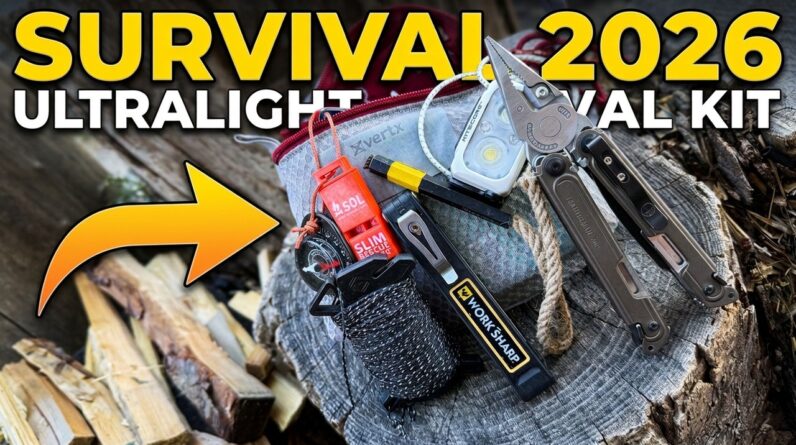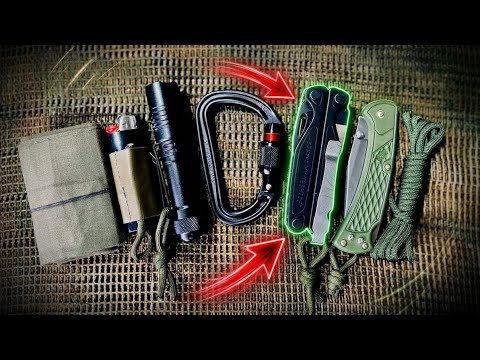
There is a big difference between survival gear you own and survival gear you carry. A knife that lives in a drawer, a fire starter still sealed in its packaging, a first aid kit riding in the trunk of your car — none of it helps when things go sideways. Andrew Ogle of Ranger Survival and Field Craft has spent decades working and teaching in the outdoors, and in this video he does something refreshingly practical: he empties his pockets and lays out exactly what he carries on his body every single day, and he explains the reasoning behind each piece.
That reasoning is what makes this gear dump worth your time. Anybody can list products; far fewer people can tell you why an item earned a permanent spot in a daily carry rotation, what gets left behind, and how years of field experience shaped those choices. Watch it and you will come away with a clearer picture of what belongs on your person, where to stage each item, and why simple, proven tools beat clever gadgets when your comfort — and potentially your life — is on the line.
Why a Daily Gear Dump Is Worth Watching
Real rangers and field professionals do not assemble their kits from wish lists. Their loadouts are the residue of thousands of hours outdoors, where every ounce has to justify itself and every tool has failed at least once under pressure. When someone with that background shows you what actually stays on their belt after all the experimenting, you are getting a filtered shortlist of gear that works in practice, not on paper.
It is also a useful audit for your own habits. Most people interested in survival carry far less than they think they do, or they stage it in a pack they set down the moment they reach camp. Gear carried on your body goes where you go, including into that unexpected detour where it matters most. Comparing your everyday carry against a working ranger’s is one of the fastest ways to find the gaps in your system.
Key Survival Takeaways
- Carry your kit on your body, not just in a pack. Gear in a dropped pack might as well be at home. The items that matter most — knife, fire, cordage, basic medical — belong on your person so they stay with you in every scenario.
- The cutting tool is the centerpiece. A reliable blade processes firewood, makes sparks, prepares food, builds shelter, and handles countless camp tasks. Choose one you are willing to bet on, keep it sharp, and carry it daily so using it becomes second nature.
- Fire belongs on you in more than one form. A ferro rod is the standard for a reason: it works wet, works at altitude, and never runs out of fuel. Pair it with a secondary method so a single lost or broken item never leaves you without fire.
- Cordage solves problems nothing else can. From lashing a ridgepole to rigging a snare or replacing a bootlace, 550 paracord repeatedly earns its pocket space throughout the video.
- First aid is not optional in a daily kit. Being able to stop bleeding or dress a wound immediately turns an emergency into an inconvenience. Keep it compact enough that you never have an excuse to leave it behind.
- Consistency builds speed. The same tool in the same pocket every day creates muscle memory, so you can find what you need in the dark, in gloves, or under stress without thinking.
- Multi-use beats single-purpose. Every item in a tight daily rotation should do several jobs. Gadgets that do one thing rarely survive the cut when space is limited.
Gear and Equipment
If the video has you rethinking your own everyday carry, these fundamentals mirror the kind of gear a working ranger actually uses daily. Start with a solid EDC fixed blade bushcraft knife you can maintain in the field, add a ferrocerium rod fire starter so fire is always on your person, and stage a generous hank of 550 paracord in your kit. Round it out with a compact trauma first aid kit and a compact EDC flashlight, and you will have covered the core of what a seasoned ranger keeps within reach at all times.
As an Amazon Associate, we earn from qualifying purchases.
Frequently Asked Questions
What are the most important items for everyday carry survival gear?
A cutting tool, a fire starter, cordage, and a compact first aid kit form the non-negotiable core. Everything else is optional until those four live on your body every single day, not in a pack you might set down.
How do I choose an everyday carry survival knife?
Prioritize a full-tang fixed blade or a locking folder you can open with one hand, in a size and weight you will actually carry. A folded blade in your pocket beats a larger knife left at home, and daily carry is what builds the muscle memory you need under stress.
How much survival gear should I carry every day?
Enough to handle cutting, fire, cordage, and bleeding without being so bulky that you leave it behind. The test is simple: if any part of your kit requires a bag you set down at the door, that piece is not truly part of your everyday carry.
Final Thoughts
The best survival kit is the one you genuinely carry every day, and this video is a rare chance to compare your habits against a professional who has already made every mistake for you. Strong engagement on the video — over 1,800 likes and a hundred-plus comments — shows how many people found the breakdown genuinely useful. Watch it through, then conduct your own pocket audit and be honest about the gaps.