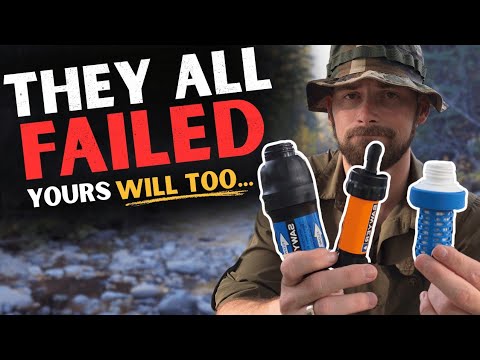
Waterborne illness is one of the fastest ways a survival situation goes from bad to catastrophic, yet most preppers stash a filter in their pack and never give it a second thought. In this video, Prepared Airman, a reviewer who takes no paid sponsorships, puts popular backcountry water filters through honest, real-world testing to find out which ones actually deliver safe water when it matters. The results challenge several assumptions that gear marketing has taught us.
Over the course of the video you will learn how hollow-fiber filters really work, the hidden failure modes that can silently compromise your filter, why simplicity often beats feature-heavy designs, and how to field-test and maintain your own setup before an emergency forces the issue. Whether you carry a Sawyer, a Katadyn BeFree, or nothing at all yet, this is required viewing before you bet your health on a piece of gear.
Key Survival Takeaways
- Hollow-fiber filters do not remove viruses. Filters like the Sawyer Squeeze and Katadyn BeFree excel at bacteria and protozoa, but viruses pass straight through. Where viral contamination is a risk, pair your filter with chemical treatment, UV purification, or boiling.
- Clogging is the number one field failure. Silt and debris choke hollow-fiber membranes fast. Backflush regularly with the included syringe and pre-strain murky water through a bandana or cloth before it ever reaches the filter.
- Freezing can ruin a filter invisibly. A frozen hollow-fiber filter can develop microcracks that let pathogens through with no visible damage. Never let your filter freeze, and treat any filter that may have frozen as compromised.
- Slow flow is a warning, not a challenge. When squeezing gets hard, stop forcing it. Excessive pressure can rupture fibers and open a path for contamination. Clean or replace the filter instead.
- Simple designs win. Fewer moving parts, fittings, and adapters mean fewer failure points in the field. The most reliable system is usually the most basic one you actually know how to use.
- Carry a backup method. Tablets, a small boil kit, or a second filter ensure that one clogged membrane does not end your water security.
- Test your gear at home. Run your filter on tap or clear creek water before your life depends on it. Learn its quirks now, not during an emergency.
Why Water Filters Fail When It Matters Most
Most filter failures are quiet, not catastrophic. The filter still looks fine, water still comes out, and yet the protection you think you have is gone. Hollow-fiber membranes are bundles of microscopic tubes rated to block organisms down to about 0.1 microns. Anything that damages those fibers, whether dropping the filter on rocks, squeezing too hard, or letting it freeze, can open channels wide enough for bacteria to slip through with no outward sign.
Manufacturer capacity claims deserve scrutiny too. Ratings in the tens of thousands of gallons assume diligent backflushing and reasonably clear source water. In silty conditions a filter can need cleaning after every few liters. The surrounding hardware fails as well: squeeze pouches split at the seams, threads cross-strip, and gaskets get lost in a pack. Long-term field experience shows that your filter is a system rather than a single magic device, and every component of that system needs maintenance and spares.
Building a Layered Water Treatment Plan
The most robust approach treats water security in layers. Start with source selection: collect from clear, moving water when possible and pre-strain cloudy water through cloth. Your primary filter handles bacteria and protozoa. Add a second method that addresses what the filter cannot: UV purifiers and chemical tablets knock down viruses, and boiling covers everything if you have fuel and a container.
Store your components so they stay functional. Dry the filter completely before long-term storage, protect it from freezing in winter kits, and carry a spare dirty-water pouch. Rotate chemical treatments before they expire. Most importantly, rehearse the entire process until you can produce safe drinking water in the dark, in the rain, with cold hands.
Common Water Filter Questions, Answered
- Do water filters remove viruses? No. Hollow-fiber filters stop bacteria and protozoa, but viruses pass straight through. Add chemical tablets, UV purification, or boiling wherever viral contamination is a concern.
- How long does a hollow-fiber filter last? Up to its rated capacity with regular backflushing and clear source water, and far less in silty conditions. Pre-strain cloudy water and clean the filter often.
- How do I know if my filter is failing? Slowing flow is the first warning sign. Stop forcing hard squeezes, backflush thoroughly, and retire any filter that has frozen or taken a hard impact on rocks.
- Is boiling better than filtering? Boiling neutralizes everything, including viruses, but it costs fuel and time. A filter produces safe water faster in volume; carrying both gives you true redundancy.
Gear & Equipment
Building a reliable water setup does not require a closet full of gear. Start with a proven primary filter like the Sawyer Squeeze Water Filter System, then add the ultralight Sawyer Mini Water Filter as a backup or pocket-carry option. The Katadyn BeFree Water Filter Bottle pairs a fast-flowing filter with a squeeze bottle you drink straight from. For viral protection, the SteriPen Ultra UV Water Purifier neutralizes viruses, bacteria, and protozoa in clear water in about 90 seconds. Round out the kit with Aquamira Water Treatment Tablets as a featherweight backup that works when nothing else will.
As an Amazon Associate, we earn from qualifying purchases.
Final Thoughts
A water filter is one of the most important pieces of survival gear you own, and also one of the easiest to over-trust. Test it, maintain it, back it up, and know exactly what it can and cannot remove. Honest, unsponsored reviews like this one are worth their weight in safe drinking water, so watch the full breakdown before you stake your health on your next sip.
Water security is only half of your preparedness baseline. For the food side, read our hands-on US MRE Spaghetti with Beef Sauce review and build an emergency pantry you have actually tested.