



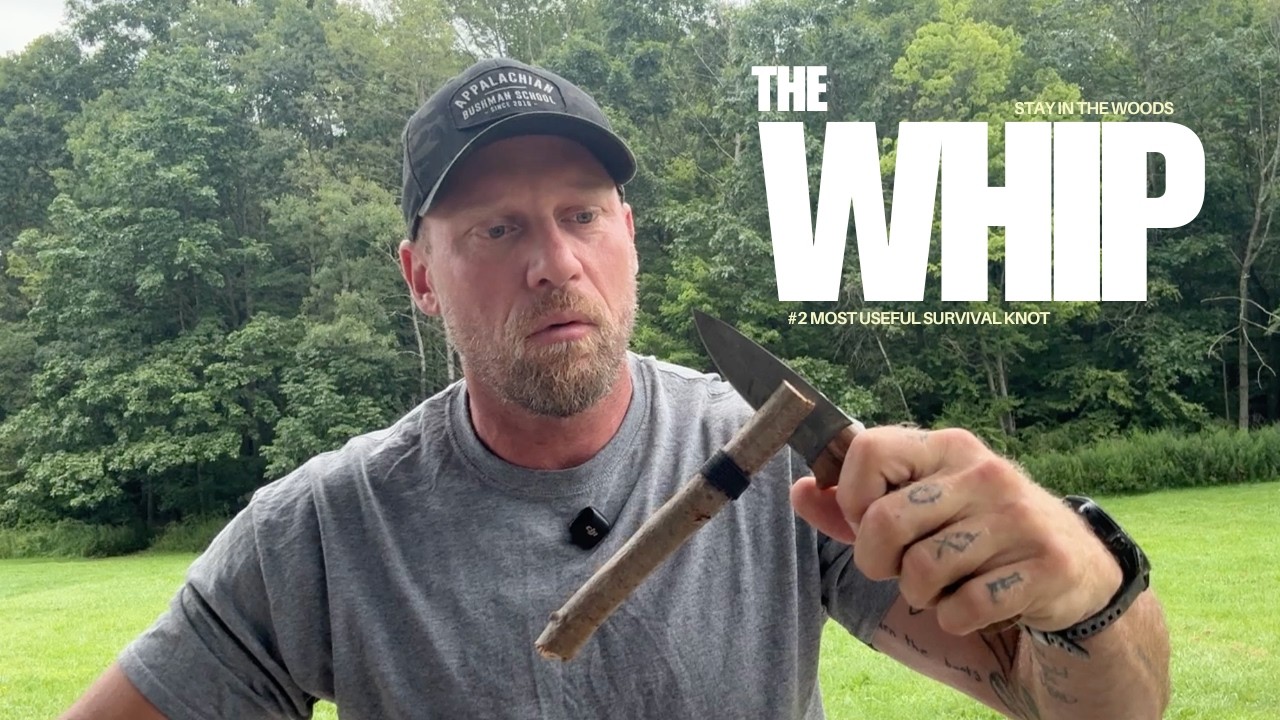
Lashing is one of the most useful bushcraft skills because it lets you turn cordage and poles into practical structures. A sound lashing can stabilize a tripod, secure a shelter frame, reinforce a pack, or hold together a field repair. The Coalcracker Bushcraft tutorial, “Whip it Good,” focuses on a survival lash worth adding to your working skill set.
The key lesson is not memorizing a fancy knot name. It is learning how to bind two pieces of material so friction, tension, and repeated wraps share the load. Practice slowly with large rope and clean poles first. Speed comes later; a rushed lashing that slips is worse than a simple one tied carefully.
Key Survival Takeaways
- Start with sound materials. Choose poles without major cracks and cordage without damaged fibers. A perfect knot cannot compensate for rotten wood or frayed rope.
- Keep the joint aligned. Position the poles so the force travels through the joint instead of levering them apart. Alignment often matters more than adding extra wraps.
- Maintain even tension. Snug each wrap without cutting into natural-fiber cordage. Loose wraps create movement; excessive force can weaken the line or split a pole.
- Use frapping turns to lock the bundle. Crosswise tightening turns between the bound poles compress the wraps and dramatically reduce wobble when the joint is loaded.
- Finish securely and inspect. Tuck or tie the working end so it cannot unravel. Test the structure gradually before leaning your full weight against it.
- Match cordage to the job. Natural fibers can grip well and are useful for camp projects, while synthetic line offers strength and weather resistance. Know how each behaves when wet.
- Practice under realistic conditions. Try the same lash with gloves, limited light, and cold hands. A technique that only works at a dry workbench is not yet a dependable field skill.
Gear & Equipment
Start with a spool of 550 paracord for repeated practice and general repairs. Add natural hemp cordage to learn how traditional fibers grip and tighten. A bushcraft fixed-blade knife can trim poles and cord ends, while a folding camp saw makes it easier to prepare straight poles safely. Keep a waterproof cordage bag so your line stays organized and usable in wet conditions.
As an Amazon Associate, we earn from qualifying purchases.
Use Lashing Safely
Do not use a lash as a substitute for engineered hardware when building anything that supports people, overhead loads, or a fire. Keep cutting tools sheathed when not in use, and test camp structures with light loads first. If a joint shifts, unload it and rebuild rather than simply adding more rope.
A reliable lashing turns basic materials into useful infrastructure. Learn the wrap sequence, understand why the joint holds, and practice until you can tie it deliberately without rushing. That combination of technique and judgment is what makes cordage a genuine survival tool.
