



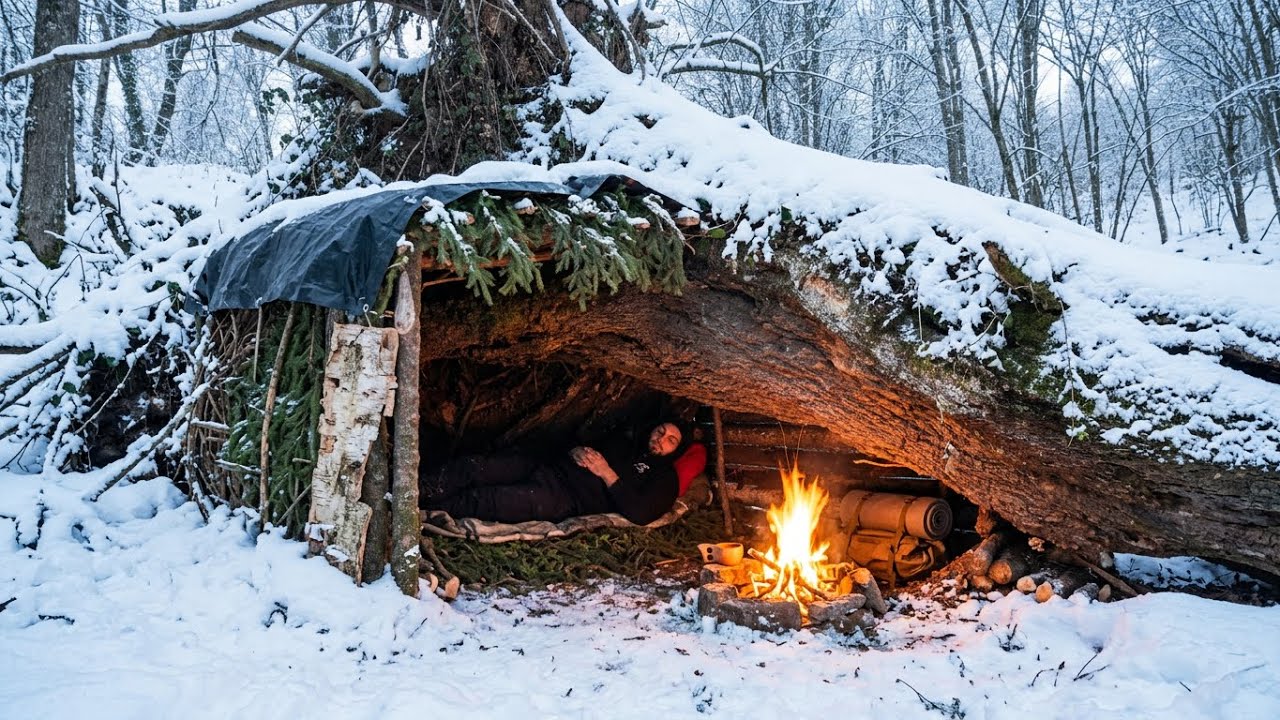
Winter changes the survival equation quickly. Snow can insulate a shelter, but cold air, wind, moisture, and darkness punish poor decisions. In the featured Armin Bushcraft video, a solo shelter build provides a useful case study in choosing a workable location, organizing materials, controlling heat loss, and preparing for an overnight stay in freezing conditions.
This is not a substitute for winter training or a forecast check. Instead, use the build as a practical framework: make shelter and fire decisions before you are exhausted, keep critical equipment dry, and maintain an exit plan. The best winter shelter is the one you can construct safely with the time, energy, and materials actually available.
Key Survival Takeaways
- Choose location before construction. Avoid avalanche paths, beneath dead branches, drainage channels, and exposed ridgelines. Look for natural wind protection while staying clear of hazards.
- Insulation matters more than size. A compact shelter with a thick floor and well-packed walls is easier to warm than a large open space. Separate your body from the snow with a deep layer of dry boughs or other insulating material.
- Control moisture aggressively. Wet clothing and damp bedding can destroy warmth. Keep snow from entering the sleeping area, vent combustion gases, and protect insulation from melting snow.
- Gather fuel before dark. Cold-weather firewood collection burns energy. Stage dry fuel near the shelter, but far enough from flames and sparks to reduce fire risk.
- Manage ventilation. Any shelter using a stove, candle, or open fire requires a deliberate vent. Carbon monoxide is odorless and can become fatal even when the shelter feels warm.
- Build for your actual night. A shelter intended for a short emergency rest can be different from a long-term camp. Prioritize a dry sleeping platform, wind protection, and a safe heat source before cosmetic improvements.
Gear & Equipment
A dependable winter-rated sleeping bag adds a critical margin when temperatures drop. Pair it with an insulated sleeping pad because ground conduction can drain heat even inside a well-built shelter. A compact folding saw helps process deadfall efficiently, while a heavy-duty winter tarp provides a fast backup roof. Carry a compact carbon monoxide detector whenever combustion occurs in an enclosed or partly enclosed space.
As an Amazon Associate, we earn from qualifying purchases.
Winter Safety Comes First
Tell someone your route and return time, carry a communication device, and check weather and avalanche information before leaving. Never sleep with an unvented flame in a sealed shelter. If you become confused, unusually sleepy, or clumsy, treat it as an emergency: get ventilation, add dry layers, and seek help.
Building a snow shelter is a valuable skill because it turns local materials into insulation and wind protection. Practice in controlled conditions, measure success by warmth and safety rather than appearance, and always keep a simpler backup shelter plan ready.
