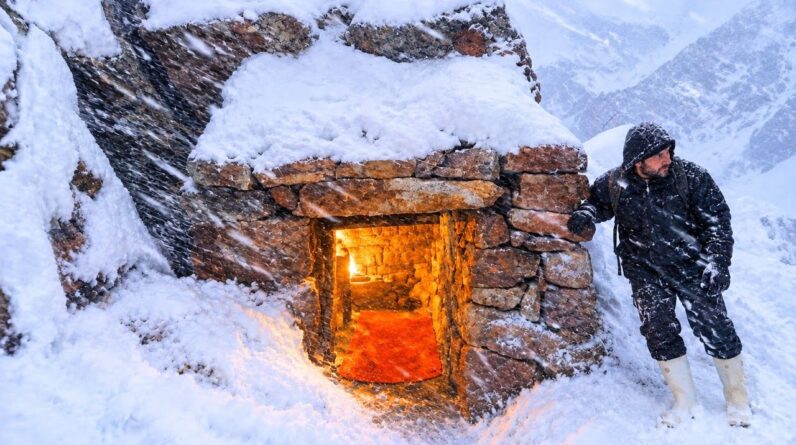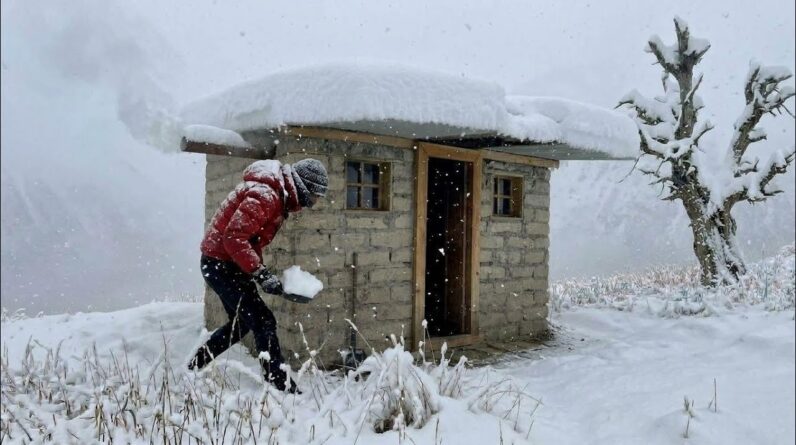
Midwinter, far from any help, the wind shifts from inconvenience to threat. Visibility collapses, the temperature keeps dropping, and every minute spent walking burns calories your body will need to survive the night. That is the exact moment this video captures: instead of pushing deeper into the whiteout, an experienced outdoorsman spots an abandoned stone house and makes the call that saves him. He stops, moves in, and converts a freezing ruin into a workable winter shelter while the blizzard spends itself against the walls.
What follows is one of the most instructive real-world winter shelter scenarios you will find on film. Heavy snow piles against the exterior, wind drives through every gap in the masonry, and the stone itself radiates cold like the inside of a refrigerator. The video documents the full sequence: judging whether the structure is safe to occupy, choosing the right room, sealing drafts, building an insulated sleep system off the frozen floor, and holding body heat through the worst hours of the storm.
It is also a rare look at a decision most survival guides skip entirely: sometimes the smartest move is to stop traveling and let the storm break against something stronger than a tent. Fabric shelters fail in exactly the conditions shown here. A stone building changes the problem from defending a flimsy barrier to managing heat inside a solid one, and that is a problem you can actually win with the right preparation.
Key Survival Takeaways
- Stop moving before the whiteout hits. Traveling in a blizzard invites disorientation, frostbite, and injury. An abandoned stone house found before conditions deteriorate is worth more than any gear in your pack.
- Assess structural safety before you settle in. Check the roof for sagging or snow load, inspect floors for rot, identify every exit, and look for cracks that worsen with freeze-thaw cycles. A shelter that collapses on you is worse than no shelter.
- Thermal mass works both ways. Stone absorbs cold all night and stays well below ambient temperature. It becomes a heat sink for your body unless you deliberately insulate against it and add a controlled heat source.
- Fight the drafts, not just the cold. Wind stripping through broken windows and gaps in mortar accelerates heat loss dramatically. Stuffing openings, hanging a windbreak, and pitching your bed out of the airflow keeps warmth where you are.
- Insulate yourself from the floor. Conduction into frozen stone drains body heat faster than cold air does. Lay down branches, cardboard, or bedding material several inches thick before your sleeping pad ever touches the ground.
- Stay dry at all costs. Melted snow tracked inside and sweat from overexertion both destroy insulation value. Manage your layers and dry your gear, because in extreme cold wet means hypothermic.
- Ventilate if you use any flame. A candle, stove, or heater in a sealed stone room can produce deadly carbon monoxide. Always keep air moving, even when it costs you a few degrees.
Turning a Cold Ruin Into a Shelter, Step by Step
- Size up the building first. Walk the perimeter, look for leaning walls or a sagging roofline, and test floors before trusting them with your weight. Pick the structurally sound room, not the most comfortable one.
- Pick the smallest workable room. Smaller spaces trap body heat better. A corner room with one door and few openings beats a large open space you can never warm.
- Seal the envelope. Stuff clothing, moss, or debris into window gaps and door seams. Hang a tarp, blanket, or salvaged material as an inner windbreak to create a cocoon inside the room.
- Build your floor insulation. Pile several inches of dry material between you and the stone before laying your pad. Layered debris or cardboard is worth more than an extra blanket on top of you.
- Rig a reflective sleeping chamber. Hang emergency blankets around your sleeping space to bounce radiant heat back onto you and shrink the volume your body is trying to warm.
- Set a maintenance routine. Clear snow from the doorway before it drifts shut, monitor the weather through any opening, and keep checking the roof as accumulation builds. A shelter needs management all night.
Why a Stone House Beats a Tent in a Blizzard
Stone buildings have three properties that matter in extreme winter weather: mass, durability, and wind resistance. Thick walls block driving wind and snow that would flatten a tent or crush a tarp shelter, while the enclosed footprint shrinks the space you need to heat from the size of a room down to the size of a cocoon. Heavy snow sliding off a steep roof also works in your favor, clearing itself instead of accumulating overhead the way it does on low shelters.
The lesson of this video is about managing the tradeoff. Stone gives you unbeatable protection from wind and precipitation, but it gives you nothing for free in warmth. Survival inside a cold stone structure is entirely about your sleep system and how well you separate yourself from the mass of the building. Take care of those two things and a ruin becomes a fortress; ignore them and it becomes a refrigerator with a roof. Preparation, not the building itself, is what makes the shelter survivable.
Gear and Equipment
The right gear turns a cold stone room into a survivable camp. Start with a cold weather sleeping bag rated well below the temperatures you expect, and pair it with a high-R-value insulated sleeping pad so the stone floor cannot pull heat out of you all night. Add a stack of emergency thermal blankets to reflect body heat back toward your sleeping area. For a controlled heat source, an indoor-safe portable propane heater can take the edge off a stone room if you ventilate properly, and disposable hand warmers tucked into pockets and boots keep extremities functional through the worst hours.
As an Amazon Associate, we earn from qualifying purchases.
Frequently Asked Questions
Is it safe to sleep in an abandoned stone building during winter?
It can be, if you inspect it first. Verify the roof can bear snow load, confirm floors are solid, map your exits, and check that drifting snow will not block the doorway overnight. Never trust an unexamined structure no matter how bad the storm gets.
How do you stay warm inside a stone house with no heating?
Build a layered sleep system: insulate heavily from the floor, use a subzero-rated bag, hang thermal blankets to shrink and reflect heat into your sleeping space, block all drafts, and keep a small ventilated heat source if available.
Does heavy snow accumulation make an abandoned building dangerous?
Yes. Snow adds substantial weight to questionable roofs and drifts can seal your exit. Periodically clear the doorway, listen for structural groaning, and be ready to relocate to a safer corner of the building if anything shifts.
What should you do if no building is available before the storm hits?
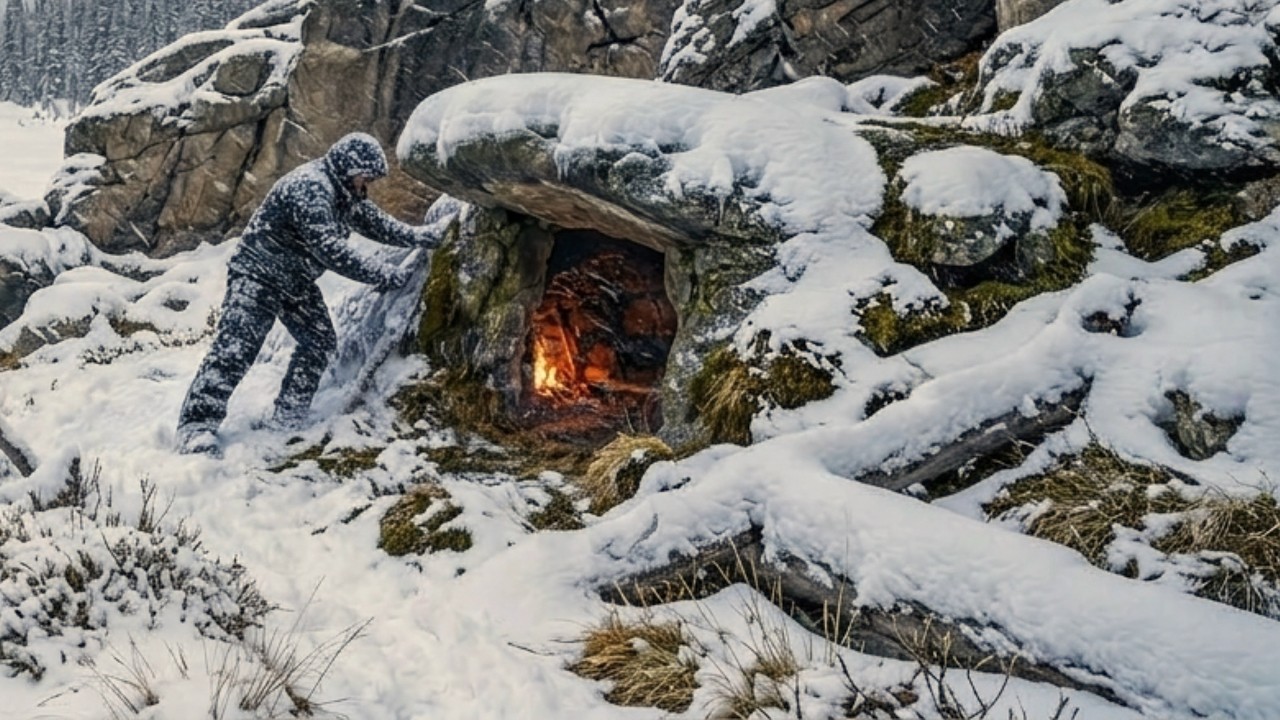
Stop early and dig in before the snow is too deep to work with. A snow cave, snow trench, or tree-well shelter combined with a small, well-insulated sleeping core is far safer than trying to walk through a whiteout. The priority is getting out of the wind and separating yourself from the ground, wherever you end up.
Final Thoughts
Extreme winter survival is rarely about heroic effort; it is about making one good decision early and then defending your body heat with discipline. Hunkering down in a solid stone house while a blizzard spends itself against the walls is textbook risk management, and this video shows exactly how it is done. Learn the structure, insulate yourself from it, and let the storm do the losing.