



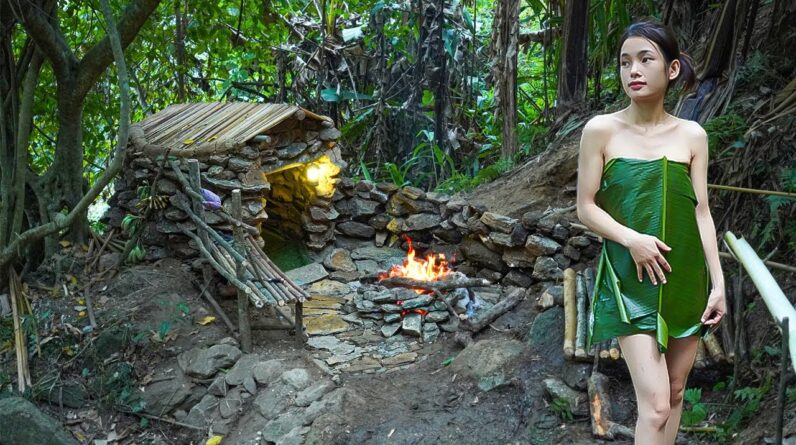
Surviving solo in a dense tropical rainforest for 500 days demands extraordinary psychological resilience, continuous adaptation, and absolute mastery of bushcraft building techniques. Entering the wilderness with no modern food, water, or manufactured shelter forces a survivalist to rely entirely on natural forest resources. Over nearly a year and a half of solo wilderness living, constructing a permanent weatherproof home and establishing reliable food systems are essential for long-term survival.
Living off-grid in humid rainforest ecosystems presents relentless challenges, including wood rot, torrential downpours, venomous wildlife, and rapid food spoilage. Overcoming these hazards requires learning how to harvest structural bamboo, weave thatched palm roofs, and build elevated clay hearths. Examining the step-by-step evolution of a 500-day rainforest homestead offers invaluable lessons for long-term wilderness survivalists and off-grid builders.
Key Survival Takeaways
- Rainforest Resource Utilization: Harvested bamboo poles, natural rattan vines, and broad palm fronds form the essential core raw building materials for constructing lightweight, weather-resistant, and ultra-strong tropical wilderness shelters.
- Elevated Living Platforms: Raising shelter floors 2 to 3 feet above the ground prevents flooding from flash rain events and deters nocturnal insects, damp mud, and crawling snakes.
- Multi-Layered Thatch Roofing: Overlapping dried palm fronds at steep roof angles creates 100% waterproof roofing that sheds heavy tropical downpours effortlessly year-round.
- Sustainable Food Procurement: Combining fish traps, primitive deadfall land snares, and foraging for wild roots establishes a steady daily caloric intake over extended stays.
- Clay Hearth Construction: Building raised mud hearths inside shelters allows safe indoor cooking and smoke generation to repel aggressive mosquitoes and sandflies during wet weather.
- Tools & Material Maintenance: Regularly drying structural timbers, sharpening steel cutting blades, and treating cordage prevents rapid moisture degradation in humid jungle climates.
Engineering a Permanent Rainforest Shelter
The primary hurdle in long-term tropical survival is conquering relentless humidity and rain. Simple lean-to structures deteriorate rapidly under heavy weather. For long-term living, builders utilize green bamboo posts for structural framing. Bamboo offers incredible strength-to-weight ratios and naturally resists moisture when properly harvested. Posts are driven deep into gravel-lined footings, and structural beams are tightly bound using harvested rattan vines, creating a flexible frame capable of withstanding high winds.
Roofing design is equally critical. Thatch roofs must feature a pitch of at least 45 degrees to ensure water runs off quickly rather than seeping through. Workers gather hundreds of mature palm fronds, splitting their stems and shingling them tightly from the eaves up to the roof ridge. A properly constructed palm thatch roof provides excellent waterproofing and thermal insulation while allowing heat and smoke to vent naturally.
Establishing Long-Term Water and Food Procurement Systems
Sustaining physical strength over 500 days requires establishing automated passive food gathering systems. Relying solely on manual hunting burns excessive calories. Instead, bushcrafters build woven bamboo funnel fish traps placed in river channels and deploy primitive friction-triggered deadfall traps along game trails. Passive trapping yields steady protein supplies while freeing up time for camp construction and firewood gathering.
Water security in the rainforest requires careful filtering and boiling. Although fresh water is abundant in jungle rivers, surface streams carry high loads of organic decay and parasites. Collecting clean rainwater directly from palm frond catchments or passing river water through multi-stage sand, charcoal, and gravel filters removes particulate matter prior to boiling over an open fire.
Psychological Endurance and Long-Term Off-Grid Homesteading
Beyond physical shelter and food, surviving 500 days alone requires mental fortitude and daily routine. Maintaining a structured workday—splitting time between tool maintenance, structural repairs, forage gathering, and fire tending—prevents isolation fatigue. Crafting clay pottery for cooking and storage transforms a raw emergency camp into a comfortable, self-sufficient wilderness homestead, proving that human ingenuity can thrive in the world’s most challenging environments.
Additionally, maintaining skin and foot health in perpetually damp rainforest conditions requires active drying procedures. Survivalists build low bamboo drying racks inside their shelters where wet clothes, leather footwear, and fiber cordage are dried using radiant hearth heat each evening, preventing fungal infections and material decay during long-term stays.
Gear & Equipment
Equip yourself for long-term wilderness survival, tropical expeditions, and heavy bushcraft living with these essential field tools:
- Bushcraft Folding Hand Saw – Sharp folding saw for clean, efficient cutting of structural timber, bamboo, and firewood.
- Full Tang Bushcraft Machete – Heavy-duty cutting tool essential for clearing jungle brush, processing vines, and harvesting palm fronds.
- Stainless Steel Bushcraft Camping Pot – Durable campfire pot with bail handle for boiling water, cooking stews, and purifying water.
- Tactical Survival First Aid Kit – Comprehensive medical kit equipped for treating cuts, burns, insect bites, and minor field injuries.
As an Amazon Associate, we earn from qualifying purchases.
Conclusion
Surviving 500 days in a tropical rainforest highlights the extraordinary resilience of the human spirit when combined with traditional bushcraft knowledge. By constructing elevated bamboo shelters, establishing passive food gathering systems, and maintaining disciplined daily routines, long-term wilderness living becomes achievable. Embracing these time-tested survival skills equips preppers and woodsmen with true off-grid self-reliance.



seems our “purpose” changes with whatever your most interested in at the time.
i.e his purpose is to build a house & all details that come with.
when completed ; next purpose maybe garden or birdhouse
etc etc next purpose food next purpose sleep .. it can never be just one purpose. Eye-opening for me.
this guy inspires me drop my Gucci and IPhone 16 pro go play in mud clay & build fires 🔥
* maybe after 10 yrs I’ll eat a bug 🐛 too !
How much 4 the wig?
I love how the clay pot became metal it's so cool how clay does that you know
I've only watch a couple of these videos so far, but I would love to see how much, and how fast, a group of people could get done working together like this.
a farm and a streat, also some othe people and cars can be heared sometimes in the background. If you pay attention, the potato pots were completely differend bevore burning, he must have bought them.
BUT ANYWAYS awesome crafting skills and still a lot of work done for this video, I am looking for more in the future
You are very healthy but I don't think you are very sure.
good
Hair is duplicate
Mne nejvíc zaujal sumec, který se chytnul a odvíjel provaz-ten primitivní zvukoví efekt, místo dnešního elektronického.To nemá vadu.
凄すぎ!
驚いた‼️😂
やばいぜ😅
Molodec😊😅😮😢😂❤❤❤
Wlelsllslslslslslslslsl😂😂😂😂😂😂😂😂😅😂😅😅😂😅😂😅😂😅😂😅😂😂😅😂😅😂😅😂😅😂
Message camera survive that long
Ok what is going on I just watched his 365 day videa just before this and it is the same guy I recognized it but I have so many questions like what happened to his first settlement, why did he move to a new area, and how come he made mor progress in the old video than this video and I have a few more questions but just whay the heck is going on
Can wood ash also be used to make cement, my friend? 🙂
The wig and tbe purple potato have me chuckling. Still love this content
That’s not how hair works. 59:47
How is a 500 days video shorter than the 365 days video
bro had a glow up
NO FOOD, NO WATER, NO SHELTER AND ONE WIG
Wig!!!😂