Cornerstone Guide // Food & Water
The Complete Off-Grid Water Plan: Sourcing, Filtering and Storing Water When the Tap Stops
Water is the first thing to fail and the last thing people plan for. This guide sets the number your household needs, the containers that hold it, and the treatment ladder that makes any source drinkable.
Key takeaways // 30-second read
- Baseline planning figure is one gallon per person per day for drinking and cooking, plus roughly three quarters of a gallon for hygiene and sanitation.
- A family of four for 14 days needs roughly 112 gallons — plan the containers around that number, not around how many jugs fit on a shelf.
- Treat unknown water in three stages: clarify, filter to 0.1 micron for bacteria and protozoa, then disinfect by boiling or chemical treatment for viruses.
- Rotate stored municipal water every 6–12 months, sanitise every container first, and keep all storage out of direct sunlight.
- Practise in a controlled week before you rely on it: measure consumption, run the treatment ladder in bulk, and test one no-running-water evening.
Start with the number that decides everything
Emergency guidance from the CDC and FEMA uses one gallon per person per day as the baseline for drinking and cooking. That figure is the floor, not the plan. Add roughly three quarters of a gallon per person per day for basic hygiene and sanitation, and another third of a gallon if you are cooking from dry staples that need rehydration.
In a hot climate, the drinking baseline rises: plan on 1.5 gallons per person per day. Children under twelve count at roughly 75 percent of an adult's intake. A medium dog needs about half a gallon a day.
Run the arithmetic for a family of four across fourteen days: four people, fourteen days, one gallon drinking plus roughly one gallon combined cooking and hygiene, lands near 112 gallons. That single number reframes the whole project. Store it, or plan to make it.
Tier one: water stored at home
Home storage is the cheapest water you will ever own, because you are not paying for the container every time you refill it.
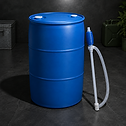
- 55-gallon food-grade barrels. Roughly $1 to $2 per gallon of capacity, and the barrel sits where you put it. One barrel covers two adults for about three weeks at baseline consumption. Fill with treated municipal water, dose it, date it, and keep it out of sunlight.
- Five-gallon jugs. Portable enough to carry between rooms, to a neighbour, or into a vehicle. Rotate them comfortably because you can lift them.
- Sealed one-gallon retail bottles. The least glamorous and most useful option: printed best-by dates, sealed, stackable, and easy to hand to someone else in an emergency.
Container discipline matters more than brand. Use food-grade HDPE (recycling code 2), never milk jugs — they degrade and harbour bacteria within weeks — and never containers that previously held fuel, pesticide or cleaning chemicals. Sanitise every container with a bleach solution before filling.
Tier two: water you find and treat
After storage, your supply comes from the environment. Rank sources before you need them: municipal mains that still have pressure, rainwater and cisterns, flowing surface water, then standing water as a last resort. Floodwater is never a drinking source: it carries sewage, fuel and agricultural runoff.
Assume every untreated source contains bacteria, protozoa, viruses and sediment. The treatment ladder exists because no single method handles all four.
The three-stage treatment ladder
- Clarify. Filter or let sediment settle, then pour off. Prefiltering with cloth or a coffee filter dramatically extends the life of any cartridge.
- Filter. A 0.1 micron hollow-fibre filter removes bacteria and protozoa — including Cryptosporidium and Giardia — but not viruses. Hollow-fibre filters are the workhorse of a bug-out bag.
- Disinfect. Boil, chemically treat, or use UV. Boiling is the most reliable method: bring water to a rolling boil for one minute, or three minutes above 6,500 feet. Unscented household bleach at roughly 1/8 teaspoon per gallon (about 8 drops) works on clear water with a thirty-minute contact time; double it for cloudy water. Chlorine dioxide or iodine tablets handle viruses where filters do not.
For a household, run the ladder in bulk: filter a large volume in the morning, then disinfect the day's drinking water in one batch. That keeps you out of the cycle of treating one bottle at a time.
A 30-day household water drill
Testing your plan matters more than owning the gear. Spread this over a month:
- Week one: measure actual consumption. Fill and date every container. Count what you really have.
- Week two: filter and disinfect five gallons from a non-mains source and use it for drinking only. Note how long it takes.
- Week three: run a no-running-water evening. Cook, clean and wash with stored water only.
- Week four: rotate, retest, and write the plan on one page that any family member can follow.
Common mistakes
- Storing water without treating it, then assuming it is still good a year later. Rotate municipal water every 6–12 months.
- Relying on a single filter for both households and bags. Buy the household volume, carry the compact unit.
- Forgetting pets, medical devices that need water, and the water your food requires.
- Storing everything in one location you cannot reach when a road closes.
Gear & Equipment // Tested
The gear we actually run
Bought at retail and used in the same drills described above. Links are affiliate links — they cost you nothing extra and keep this site independent.
As an Amazon Associate we earn from qualifying purchases.

Amazon pick · Water
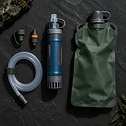
Sawyer Squeeze Water Filter
The default for any bag: 0.1 micron hollow-fibre filtration, backflushes with the included syringe, and filters up to 100,000 gallons. Squeeze, gravity-feed or inline.
Street price: $35–$45
Check price on Amazon
Amazon pick · Water
Stainless Gravity Water Filter (2-Stage)
For base-camp water: filters 2+ gallons without pumping and holds it ready. The right answer when a household is boiling and drinking all day.
Street price: $150–$300
Check price on Amazon
Amazon pick · Water
55-Gallon Food-Grade Water Barrel + Siphon Pump
The cheapest way to store real volume. One barrel covers two adults for roughly three weeks at baseline consumption — fill it, treat it, date it.
Street price: $90–$140
Check price on Amazon
Amazon pick · Water
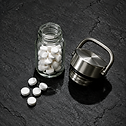
Water Purification Tablets (Potable Aqua)
A 50-tablet bottle weighs nothing and takes over when a filter clogs. Iodine or chlorine dioxide tabs kill viruses that filters miss.
Street price: $8–$14
Check price on AmazonFAQ // Read before you buy
Frequently asked questions
Newsletter // article
Get the next breakdown
New video articles, gear notes from testing and tool updates — one email a week.
No spam. Unsubscribe any time. We never sell subscriber data.
Keep going // 3 more
Related reading

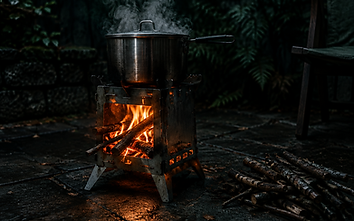
Grid-Down Cooking: 6 Ways to Cook Without Power
Cooking is the first thing that breaks a household's routine in an outage. Six methods, ranked by fuel independence, plus the carbon monoxide rule that keeps the plan safe.

Building a 12-Month Food Storage Program You Will Actually Eat
Most deep pantries fail for the same reason: they were bought in one weekend and nobody wants to eat them. This is the calorie-first approach that rotates as it builds.

Water Storage Done Right: Barrels, Dosing and Rotation
A barrel is only as good as its cleaning protocol and its rotation schedule. Here is the routine that keeps stored water genuinely drinkable.