Cornerstone Guide // Preparedness
Hardening Your Home: A Layered Home Defense and Security Plan
Security is not one decision, it is four layers. Most homes fail at layer one — a hollow door frame with two-inch screws — and never get to the layers that actually buy time.
Key takeaways // 30-second read
- Security is four layers: deterrence, detection, delay and response — most homes have the first two and none of the third.
- An entry door almost always fails at the frame, not the lock. Three-inch screws into framing studs plus a reinforced strike plate is the highest-value upgrade you can make.
- Ground-floor windows and sliding doors need treatment too: track bars, anti-lift screws and window film on large panes.
- Response is a written plan with a rally point, defined communication roles and a household drill twice a year.
- Physical defence is the last layer and is governed by local law built on reasonableness. Know your jurisdiction and train formally if you keep anything for defence.
- Re-tighten hardware every spring and run the family drill every autumn — hardening degrades quietly.
The four-layer model
Home security works the same way as a good shelter: layers that each slow an intruder or alert you. Deterrence keeps most attempts from starting. Detection tells you early. Delay buys the minutes that matter. Response is what your household actually does when the first three layers are breached.
Statistics favour the first layer. Attackers overwhelmingly choose the easiest target on the street, and visible hardening moves your home down the list.
Layer one: deterrence
- Lighting. Motion-activated lights at every ground-floor entry, plus low-level lighting that eliminates the dark spots where someone can work unseen. Light is cheaper and more effective than most gadgets.
- Landscaping. Keep hedges and shrubs below three feet near windows and doorways, and tree limbs pruned above six feet. Remove the cover, remove the opportunity.
- Visible condition. A maintained exterior, a fence in good repair and a car in the driveway during travel all signal occupancy. Use timers and a neighbour's routine when you are away.
Layer two: detection
- Cameras at the approach paths rather than the door itself, so you capture faces before arrival. Local recording beats cloud subscriptions that fail with the internet.
- Door and window sensors on every ground-floor opening, with a chime loud enough to wake you. A cheap chime has more practical value than an unmonitored app notification.
- Perimeter awareness. Gravel, gates and motion lights give audible warning. So does a dog.
Layer three: delay — the part most homes get wrong
An average entry door in an average frame fails to a single hard kick. The lock is rarely the weak point; the frame is. Fix the frame:
- Three-inch screws through the strike plate and hinges into the framing studs, not the trim.
- A reinforced strike plate or a metal wrap that distributes force across a longer section of the frame.
- Hinge pins or security hinges on outward-opening doors.
- A deadbolt with at least a one-inch throw, keyed separately from the handle.
- Sliding doors: a bar or pin in the track plus anti-lift screws, because the factory latch is decorative.
- Window film on large ground-floor panes to slow glass breakage, plus locks on every opening sash.
Do the exterior doors and ground-floor windows first. That single afternoon of work changes what an intruder is attempting from a shove into a prolonged, noisy effort.
Layer four: response
Response is a plan, not a reaction. Write it and rehearse it twice a year:
- Everyone knows the rally point. A specific room, with a door that locks and a phone charging there.
- Communication roles. One person calls emergency services and stays on the line; nobody shouts conflicting instructions.
- Children know the drill, including where to go and that they must not open doors for anyone, including someone claiming to be police.
- Your own conduct is deliberate. You do not go looking for the sound. You hold a defensible position, and you let the professionals clear the house.
Legal and ethical reality
Self-defence law varies by state and country, and it is built on reasonableness. Physical defence is the last layer, used only when life is in immediate danger and retreat is not possible. Never introduce a weapon into a plan you have not trained with, and never escalate a property crime into a lethal-force encounter. Learn your local law, and take a recognised defensive training course if you intend to keep anything for protection.
Rehearse it
- Spring: walk the perimeter and re-tighten every hinge and strike plate. Re-check lighting timers.
- Autumn: run the family drill, test detectors, and re-stock the safe room with a torch, water and a charged phone power bank.
- Every trip: tell a neighbour, use timers, and do not broadcast travel dates.
Gear & Equipment // Tested
The gear we actually run
Bought at retail and used in the same drills described above. Links are affiliate links — they cost you nothing extra and keep this site independent.
As an Amazon Associate we earn from qualifying purchases.

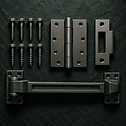
Amazon pick · Security
Door Reinforcement & Strike Plate Kit
Three-inch screws and a reinforced strike plate turn a one-kick door into a real barrier. Cheapest security upgrade that actually changes outcomes.
Street price: $25–$60
Check price on Amazon
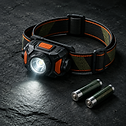
Amazon pick · Light
Rechargeable 400-Lumen Headlamp
Hands-free light for shelter, first aid and blackout cooking. Get one that takes both USB-C and AAA so you are never stranded without power.
Street price: $25–$50
Check price on Amazon
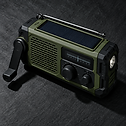
Amazon pick · Comms
NOAA Hand-Crank Emergency Radio
When towers drop, NOAA weather radio and local AM/FM are the only live information left. Crank or solar keeps it running without batteries.
Street price: $30–$60
Check price on AmazonFAQ // Read before you buy
Frequently asked questions
Newsletter // article
Get the next breakdown
New video articles, gear notes from testing and tool updates — one email a week.
No spam. Unsubscribe any time. We never sell subscriber data.
Keep going // 2 more
Related reading

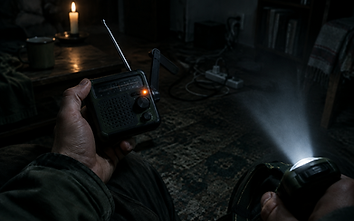
The 72-Hour Blackout Checklist
The first hour decides how much food you keep and how calm the next two days feel. Here is the sequence to follow, in order, when the lights go out.

Grid-Down Power: Solar, Storage and Load Management for Your Home
Backup power fails for one reason: the system was sized around a shopping decision instead of an actual load list. Start with watts, hours and priorities.