Cornerstone Guide // Preparedness
Grid-Down Power: Solar, Storage and Load Management for Your Home
Backup power fails for one reason: the system was sized around a shopping decision instead of an actual load list. Start with watts, hours and priorities.
Key takeaways // 30-second read
- Build a load list in watts and watt-hours before buying anything; a fridge-and-comms household typically needs 1.5–2.5 kWh per day.
- Watt-hours is capacity, watts is output. A station with ample capacity but a small inverter still will not start a well pump or other motor load.
- Real solar yield is roughly panel watts × peak sun hours × 0.7 — a 200W panel in three hours of sun returns about 420Wh.
- Use a written priority ladder during an outage: life safety, then food safety, then water, then comfort.
- Never run generators, propane heaters or charcoal indoors or in a garage. Carbon monoxide is the leading cause of outage deaths.
- Test the system with a planned four-hour outage on a weekend, not during a real emergency.
Audit the load before you buy anything
Every backup power mistake starts with buying a device before listing what it must run. Build the list first, in three columns: device, running watts, hours per day.
- Refrigeration: a modern fridge draws 100–200 running watts but cycles on and off — plan 800–1,200 watt-hours per day, not the nameplate multiplied by 24.
- Comms and light: router, phones, laptop, LED lighting — typically under 150 watt-hours per day combined.
- Medical devices: a CPAP without humidifier is roughly 100–200 watt-hours per night; treat these as non-negotiable.
- Water: a well pump is the hardest load in most homes — often 1,000+ starting watts. A booster pump for a cistern is far lighter.
- Heating and cooling: do not try to run these from a portable station. Plan space heating with fuel and insulation instead.
Add the watt-hours, then add 30 percent for inverter losses and cold. A household that just keeps a fridge, comms and lights running typically lands between 1.5 and 2.5 kilowatt-hours a day. That is a manageable number and a much smaller system than most people buy.
Battery capacity versus inverter output
Two specs matter and they are constantly confused. Watt-hours (Wh) is the tank — how long you can run your loads. Watts (W) is the tap — what you can run at once. A 1,000Wh station with a 500W inverter will not start a well pump no matter how full the battery is.
Check continuous and surge ratings. Motors need two to three times their running wattage for a second or two at start-up, and cheap inverters trip the moment that surge hits.
Chemistry and safety
- LiFePO4 is the current default for portable stations: safer, longer cycle life and better behaviour at temperature than older chemistries.
- Keep batteries out of freezing conditions where possible, and never charge a lithium battery below freezing.
- Store fuel safely. Petrol and propane away from living space, in approved containers, with ventilation and no ignition sources.
- Carbon monoxide kills. Never run a generator, propane heater or charcoal cooker indoors, in a garage, or within twenty feet of a window or vent.
Solar recharge: the honest math
Recharging from a folding panel is realistic but slower than advertising suggests. Take panel wattage, multiply by peak sun hours for your region (three to five in most of the United States, less in winter and overcast conditions), then apply roughly 70 percent for real-world losses. A 200-watt panel in three hours of sun returns about 420 watt-hours — enough to run the fridge-and-comms household for a day, provided the panels are repositioned through the day.
Two things make solar work: enough panel area, and load discipline. Cut the load in half and you double the effective capacity of everything else.
Load management: the priority ladder
- Life safety: medical devices, lighting, phone charging, and one NOAA radio.
- Food safety: refrigeration and freezer cycles, run in blocks rather than continuously.
- Water and hygiene: pumps, and the energy needed to boil or filter drinking water.
- Comfort: fans, small devices, entertainment, and everything you can live without.
Write the ladder on a card and tape it to the system. During an outage, the card decides what runs — not a family debate at eleven at night.
Build in phases
- Phase one, under $200: headlamps, battery lanterns, a hand-crank radio, power banks and a printed load list.
- Phase two: a portable station sized to your audit, plus a folding panel and an extension cord run that keeps the station inside the living space.
- Phase three: a transfer-ready system for critical circuits, installed by a qualified electrician — never by improvisation.
Test each phase with a planned outage: shut the main breaker for four hours on a weekend and run your ladder. You will find the gaps in an afternoon instead of at two in the morning during a storm.
Gear & Equipment // Tested
The gear we actually run
Bought at retail and used in the same drills described above. Links are affiliate links — they cost you nothing extra and keep this site independent.
As an Amazon Associate we earn from qualifying purchases.

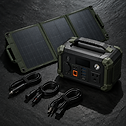
Amazon pick · Power
Portable Power Station + Folding Solar Panel
A 300–500Wh station runs a fridge cycle, comms, lighting and medical devices, and recharges from a panel when the grid does not come back.
Street price: $300–$700
Check price on Amazon
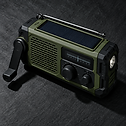
Amazon pick · Comms
NOAA Hand-Crank Emergency Radio
When towers drop, NOAA weather radio and local AM/FM are the only live information left. Crank or solar keeps it running without batteries.
Street price: $30–$60
Check price on Amazon
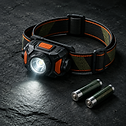
Amazon pick · Light
Rechargeable 400-Lumen Headlamp
Hands-free light for shelter, first aid and blackout cooking. Get one that takes both USB-C and AAA so you are never stranded without power.
Street price: $25–$50
Check price on AmazonFAQ // Read before you buy
Frequently asked questions
Newsletter // article
Get the next breakdown
New video articles, gear notes from testing and tool updates — one email a week.
No spam. Unsubscribe any time. We never sell subscriber data.
Keep going // 2 more
Related reading

The 72-Hour Blackout Checklist
The first hour decides how much food you keep and how calm the next two days feel. Here is the sequence to follow, in order, when the lights go out.

Hardening Your Home: A Layered Home Defense and Security Plan
Security is not one decision, it is four layers. Most homes fail at layer one — a hollow door frame with two-inch screws — and never get to the layers that actually buy time.