Field Article // Food & Water
Grid-Down Cooking: 6 Ways to Cook Without Power
Cooking is the first thing that breaks a household's routine in an outage. Six methods, ranked by fuel independence, plus the carbon monoxide rule that keeps the plan safe.
Key takeaways // 30-second read
- A one-pound propane canister gives roughly 60–90 minutes of cooking — about three to five meals — so budget fuel by meals, not by days.
- Wood-burning and rocket stoves are the only methods that scale beyond your stored fuel supply; both are used outdoors.
- Never burn charcoal, propane or wood indoors or in a garage. Carbon monoxide has no smell and kills during outages every year.
- Pre-soaking beans and grains, using a lid, and batching meals cut fuel use more than any piece of equipment.
- Match the method to the horizon: cold food for short outages, propane plus barbecue for 72 hours, wood-based cooking beyond a week.
Budget the fuel before the outage
One standard one-pound propane canister runs a small camp stove for roughly 60 to 90 minutes at a moderate flame: about three to five cooked meals for one household. Multiply by meals per day and days of coverage before you decide how many canisters to store, and remember that boiling water for drinking consumes more fuel than any cooking you will do.
Six methods, ranked by independence
- Wood-burning folding stove. Burns twigs, pine cones and debris, packs flat, and never runs out of fuel if you have trees. Best outdoor option for extended outages.
- Rocket stove. A brick or insulated-pipe build that burns a small bundle of sticks to boil litres faster than a conventional fire. Excellent for daily cooking during a long outage, built outdoors.
- Propane camp stove. Precise, fast and simple. Requires stored fuel, which means a finite supply — use for the first 72 hours while you establish other options.
- White gas or multi-fuel stove. Higher output than propane and usable in cold, but requires proper fuel handling and priming.
- Barbecue or fire pit. Already installed and free to use. Add a cast-iron Dutch oven and you have baking capability.
- Solar cooker. Zero fuel, but weather and hour dependent — a supplementary method, not a plan.
The rule that keeps the plan safe
Never burn fuel indoors. Charcoal, propane, petrol and wood produce carbon monoxide, which has no smell and kills quietly. Cooking happens outdoors, on a balcony or in an open carport — never in a garage, kitchen or tent. Keep a battery carbon monoxide alarm in the sleeping area regardless of season.
Make food easier to cook
- Pre-soak beans and grains for several hours to cut cooking fuel dramatically.
- A pressure cooker cuts fuel use on beans and tough cuts by more than half.
- Rehydrate freeze-dried food with hot, not boiling, water — a rolling boil is wasted fuel for most rehydration.
- Cook once, eat twice. Batch cooking uses one heating cycle for two meals.
- A lid on every pot. It is the single easiest efficiency change.
Match the method to the horizon
For a two-hour outage, do nothing — eat cold food and keep the fridge shut. For 72 hours, propane plus a barbecue covers you. Beyond a week, wood-based cooking with a folding stove or rocket stove, plus a pot you can use outdoors, is what keeps a household fed without a resupply.
Gear & Equipment // Tested
The gear we actually run
Bought at retail and used in the same drills described above. Links are affiliate links — they cost you nothing extra and keep this site independent.
As an Amazon Associate we earn from qualifying purchases.

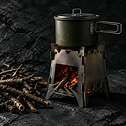
Amazon pick · Cooking
Folding Wood-Burning Camp Stove
Cooks on twigs, pine cones and debris instead of stored fuel. Packs flat, and pairs with a small pot for boiling and rehydrating.
Street price: $25–$50
Check price on Amazon
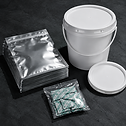
ShareASale pick · Food
Mylar Pouches + Oxygen Absorbers (55-Gallon Kit)
The 7-mil mylar plus absorber combination is what turns bulk rice and beans into a 10–25 year shelf life. Sold in kits sized to a bucket.
Street price: $45–$90
Check price on Amazon
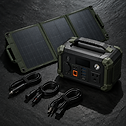
Amazon pick · Power
Portable Power Station + Folding Solar Panel
A 300–500Wh station runs a fridge cycle, comms, lighting and medical devices, and recharges from a panel when the grid does not come back.
Street price: $300–$700
Check price on AmazonFAQ // Read before you buy
Frequently asked questions
Newsletter // article
Get the next breakdown
New video articles, gear notes from testing and tool updates — one email a week.
No spam. Unsubscribe any time. We never sell subscriber data.
Keep going // 3 more
Related reading

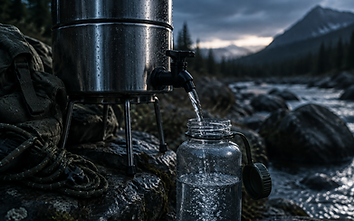
The Complete Off-Grid Water Plan: Sourcing, Filtering and Storing Water When the Tap Stops
Water is the first thing to fail and the last thing people plan for. This guide sets the number your household needs, the containers that hold it, and the treatment ladder that makes any source drinkable.

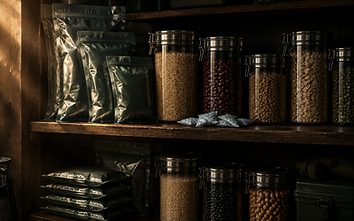
Building a 12-Month Food Storage Program You Will Actually Eat
Most deep pantries fail for the same reason: they were bought in one weekend and nobody wants to eat them. This is the calorie-first approach that rotates as it builds.

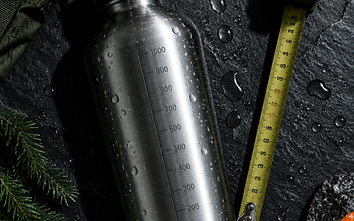
Water Storage Done Right: Barrels, Dosing and Rotation
A barrel is only as good as its cleaning protocol and its rotation schedule. Here is the routine that keeps stored water genuinely drinkable.