Cornerstone Guide // Food & Water
Building a 12-Month Food Storage Program You Will Actually Eat
Most deep pantries fail for the same reason: they were bought in one weekend and nobody wants to eat them. This is the calorie-first approach that rotates as it builds.
Key takeaways // 30-second read
- Work from calories, not packaging: an adult needs about 2,000 calories a day, so a family of four for a year is roughly 2.9 million calories.
- Build in three passes — three days, three weeks, three months — so every stage works on its own before you extend it.
- Grains, legumes, fats, sugar, protein, produce and salt cover the pantry; fats are the only staple that must be rotated annually.
- Mylar at 7 mil with oxygen absorbers inside a food-grade bucket moves bulk staples from 1–2 years of shelf life to 10–25 years.
- Add roughly a third of a gallon of water per person per day for cooking and rehydration, plus an off-grid cooking method and a fuel budget.
Calories first, products second
Food storage is an arithmetic problem before it is a shopping problem. An adult needs roughly 2,000 calories a day at moderate activity, more in cold weather or heavy work. A household of four for twelve months needs about 2.9 million calories. That number is uncomfortable, and it is exactly why most people buy a few buckets, feel prepared, and stop.
Do not start with twelve months. Build in three passes: three days, then three weeks, then three months. Each pass is a working system you can extend.
The seven staples that carry the pantry
- Grains — roughly 40 percent of calories. White rice, wheat berries, oats, pasta. Long storage life, cheap per calorie, endlessly flexible.
- Legumes — about 20 percent. Beans and lentils supply protein and fibre and cost less than anything else on the shelf.
- Fats and oils — 10 percent. Calorie-dense and the first thing to go rancid, so buy in sealed metal tins or rotate oil every twelve months.
- Sugar and honey — 5 percent. Honey stores indefinitely; sugar absorbs moisture, so keep it sealed.
- Freeze-dried or canned protein — 15 percent. Use items you already cook with, not novelty survival meals.
- Fruits and vegetables — 10 percent. Freeze-dried retains flavour best; canned is cheaper and easier to rotate.
- Salt and spices — store roughly one pound of salt per person per month, plus the spices that make staple food edible.
Packaging determines shelf life
Bulk rice and beans in a retail bag last a year or two. Mylar pouches rated at 7 mil, filled inside a food-grade bucket with oxygen absorbers, push that to 10 to 25 years. The method matters more than the brand:
- Fill the mylar three quarters full, leaving room to seal.
- Add oxygen absorbers sized to the volume — 300cc handles roughly a gallon of grain.
- Press out air, then seal with a hot iron leaving a one-inch margin.
- Label contents and the month packed, then seat the lid on the bucket.
Fats, nuts and anything with oil stay out of long-term storage. Buy small, rotate fast, and keep them in the dark.
Rotate, or lose the investment
A pantry you never eat is a donation to the bin. Two rules fix that. First, buy what you already cook. Second, use a first-in, first-out shelf: new stock goes behind old, and cooking comes off the front. Every staple in your storage should appear in a normal week's meals. If a bag reaches your rotation window untouched, that food does not belong in your plan.
Cooking and water are part of the plan
Dry staples are useless without heat and water. Rehydration and cooking add roughly a third of a gallon of water per person per day on top of drinking water, and they need an off-grid cooking method that does not depend on mains gas or electricity. A wood-burning stove or a propane camp stove with a fuel budget solves it; store fuel for the first week and plan to scavenge or burn wood after that.
A staged build you can finish
- Stage one — 3 days: food you can eat with no cooking at all, plus one gallon of water per person per day.
- Stage two — 3 weeks: the seven staples in retail packaging, plus a working cooking method and a fuel budget.
- Stage three — 3 months: move grains and legumes into mylar and buckets, and add a written rotation card on the shelf.
- Stage four — 12 months: extend stage three, and add variety in freeze-dried fruit and vegetables so meals stay edible, not just sufficient.
What breaks a storage program
- Heat and light. Store below 70°F where possible; heat shortens shelf life more than moisture.
- Pests. Buckets with sealed lids, plus traps and inspection twice a year.
- Forgetting the small things: a manual can opener, a grain mill, matches, and cooking pots you can use outdoors.
- Buying twelve months of food nobody likes. Variety is not a luxury; it is what keeps the plan running.
Gear & Equipment // Tested
The gear we actually run
Bought at retail and used in the same drills described above. Links are affiliate links — they cost you nothing extra and keep this site independent.
As an Amazon Associate we earn from qualifying purchases.

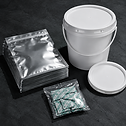
ShareASale pick · Food
Mylar Pouches + Oxygen Absorbers (55-Gallon Kit)
The 7-mil mylar plus absorber combination is what turns bulk rice and beans into a 10–25 year shelf life. Sold in kits sized to a bucket.
Street price: $45–$90
Check price on Amazon
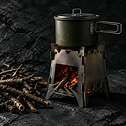
Amazon pick · Cooking
Folding Wood-Burning Camp Stove
Cooks on twigs, pine cones and debris instead of stored fuel. Packs flat, and pairs with a small pot for boiling and rehydrating.
Street price: $25–$50
Check price on Amazon
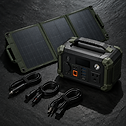
Amazon pick · Power
Portable Power Station + Folding Solar Panel
A 300–500Wh station runs a fridge cycle, comms, lighting and medical devices, and recharges from a panel when the grid does not come back.
Street price: $300–$700
Check price on AmazonFAQ // Read before you buy
Frequently asked questions
Newsletter // article
Get the next breakdown
New video articles, gear notes from testing and tool updates — one email a week.
No spam. Unsubscribe any time. We never sell subscriber data.
Keep going // 3 more
Related reading

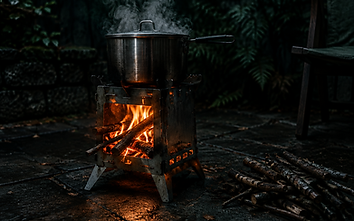
Grid-Down Cooking: 6 Ways to Cook Without Power
Cooking is the first thing that breaks a household's routine in an outage. Six methods, ranked by fuel independence, plus the carbon monoxide rule that keeps the plan safe.

The Complete Off-Grid Water Plan: Sourcing, Filtering and Storing Water When the Tap Stops
Water is the first thing to fail and the last thing people plan for. This guide sets the number your household needs, the containers that hold it, and the treatment ladder that makes any source drinkable.

Water Storage Done Right: Barrels, Dosing and Rotation
A barrel is only as good as its cleaning protocol and its rotation schedule. Here is the routine that keeps stored water genuinely drinkable.