Bartering Basics: Trading Skills and Goods During an Economic Collapse
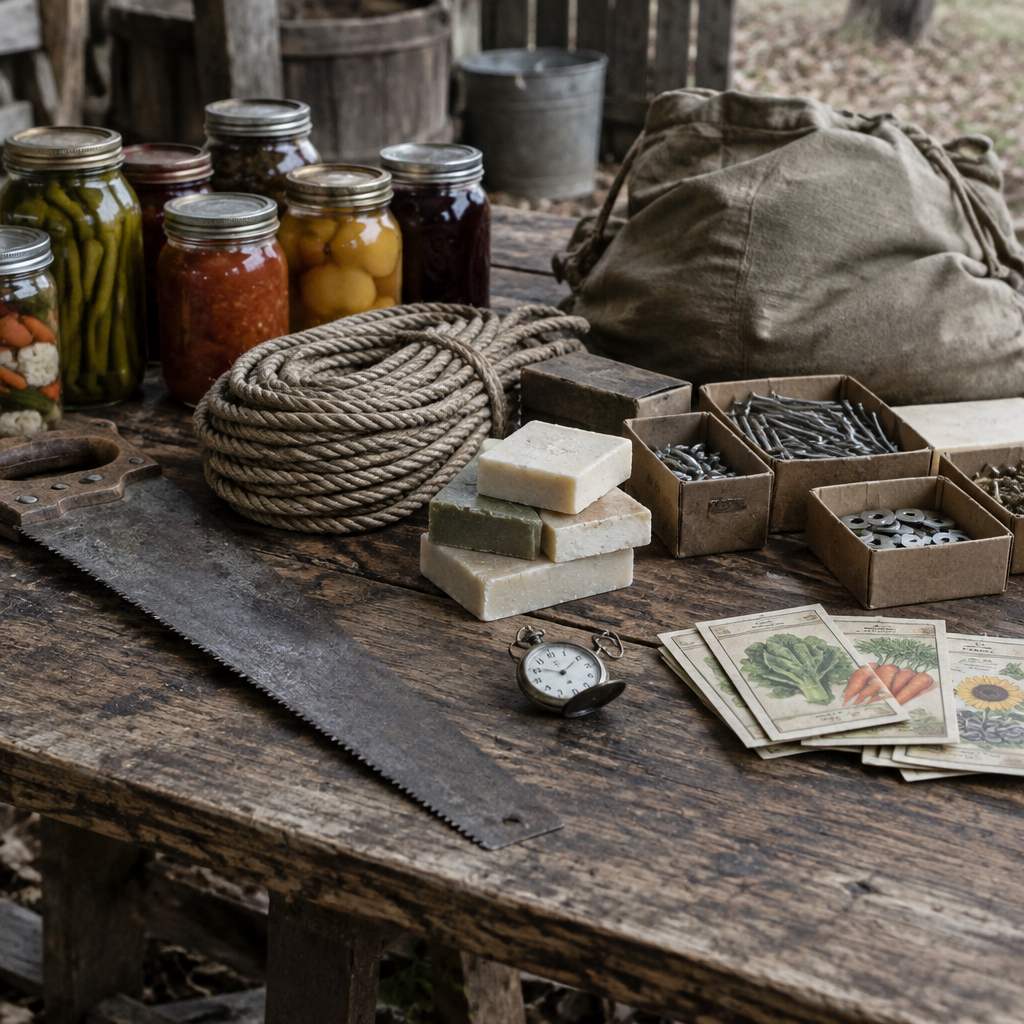
Bartering looks simple until you try it hungry. Two people with things the other wants, agreeing on a price without money and without a referee. It gets harder in a collapse, when everyone trades from need instead of preference and nobody can walk away.
Currency loses the one thing that makes it useful: trust that it will still buy something tomorrow. When that breaks, trade does not stop. It reverts to the oldest system there is, and the people who do well are not the ones with the most stuff. They hold what everyone needs and can move it without being fleeced.
Here is how barter behaves under stress, what to stock, and the mistake nearly everyone makes.
Why Money Stops Working
Currency is a promise, and a collapse is what happens when the promise stops being believable. Hyperinflation, capital controls, bank holidays, payment system outages: each breaks a different link in the chain. When the link snaps, the store of value transfers to things that cannot be printed and that people physically need.
The pattern repeats often enough to study. Argentina, Venezuela, Zimbabwe, and wartime economies all show the same sequence: people hoard goods, then trade them, then a substitute currency emerges, whether a foreign note, a precious metal, or cigarettes. The interim period, when no medium of exchange is accepted, is the one worth preparing for.
What Actually Holds Value
The instinct is to buy silver. Silver is not wrong, it is slow. In the first weeks of a currency break nobody wants a coin they cannot spend at a store. What moves is consumables with high demand, small unit size, and long shelf life.
Food that people already eat. Rice, beans, flour, cooking oil, sugar, salt, coffee. Not survival ration bars. Familiar food, in familiar packaging, in quantities a family uses in a week.
Consumables nobody stocks. Batteries in every size, lighters, matches, candles, fuel, propane, water filters. These are cheap now, and they disappear from shelves within hours of a panic because they are bought by people who were not prepared at all.
Hygiene and health. Soap, toothpaste, toilet paper, feminine hygiene products, bleach, rubbing alcohol, over-the-counter pain relievers, antibiotics if you can legally obtain them. Ask anyone who has lived through a real shortage which items became currency in the neighborhood. It is never the tactical gear.
Tools and repair. Hand tools, saw blades, files, screws, duct tape, paracord, sewing supplies. In a prolonged collapse the economy is mostly maintenance, and whoever can fix things is never out of work.
Skills. The most underrated category. A mechanic, a midwife, a diesel technician, a ham operator, and someone who can sew a wound hold a service with no shelf life. Skills trade at a premium precisely because they cannot be hoarded.
The Small-Denomination Problem
The classic error is stocking all your trade goods in large units. One silver coin, one brick of ammo, one full propane tank, one 50-pound bag of rice. Nobody can make change, and a trade that cannot be priced fairly does not happen. Divisible goods beat valuable goods.
That is why packs of cigarettes, ramen packets, individual lighters, single AA batteries, and one-ounce silver rounds work. Someone who needs ten dollars of rice can trade for ten dollars of rice. The person holding only a $500 silver bar cannot sell it where nobody has $500.
Trust, Reputation, and the Trade You Should Refuse
Barter runs on reputation because there is no court to sue in. The neighbor known for honest weights gets served first when something scarce appears. The person who gouged in week one is the person nobody sells to in week three.
The flip side is exposure. Trading reveals what you have. In a real collapse, visible abundance is a security problem, which is why experienced traders keep stores quiet, deal in small quantities, and never let a single buyer see the whole inventory. Meet away from your door. Trade in fixed, small amounts. Let people believe you are barely getting by, because that belief is worth more than the marginal trade.
Practice Before You Need It
Almost nobody has negotiated a barter exchange. It is a skill that degrades without use. The low-stakes version is a swap meet, a farmers market trade, or a neighborhood skills exchange: fix a neighbor's lamp, take payment in eggs. What you train is the negotiation and the social muscle of asking.
Write down what you would trade and what you would pay before the need is real. The list is uncomfortable and it tells you what you actually value, which is rarely what you stocked.
Key Survival Takeaways
- Barter returns when currency trust breaks. The dangerous window is before any substitute money emerges.
- Consumables beat precious metals early. Familiar food, batteries, fuel, and hygiene items move first.
- Divisible goods win. Many small units are tradeable; a single high-value item often is not.
- Skills have no shelf life. Repair, medical, and technical ability trade at a premium in any prolonged crisis.
- Reputation is the real currency. Fair dealing now is insurance for later, and visible abundance is a security risk.
Gear That Makes Sense as Trade Stock
Everything below doubles as something you would use, the only sane way to build barter stock: buy what you need, buy extra, keep it sealed and rotated.
- Bulk AA and AAA Batteries - the fastest-moving trade good in any outage
- Bulk Windproof Lighters - cheap, divisible, always in demand
- One-Ounce Silver Rounds - small denominations for a later-stage economy
- Hand Tool Sets - repair capability is a permanent trade asset
- Bulk Bar Soap - hygiene items vanish from shelves first
Disclosure: As an Amazon Associate, Survival Video Hacks earns from qualifying purchases made through the links on this page. We link to gear categories we judge relevant to the scenario, not the most expensive items.
Frequently Asked Questions
Should I stock silver or food for bartering?
Both, in that order of priority reversed. Food, batteries, fuel, and hygiene items trade first; silver matters once a substitute currency is being recognized again.
How much of a barter stock is enough?
Enough that trading does not touch what your household needs to live on. Many people target two to three times their own consumption for the items they expect to trade.
Is bartering during a collapse legal?
Barter itself is generally legal, but tax treatment and reporting rules vary and can apply. Check your local rules rather than assuming, and keep records.
What if nobody wants what I have?
That is the real risk. Diversity solves it: staples, consumables, tools, and a skill you can perform. The narrower your stock, the more you are betting on one market.
The Bottom Line
The point of a barter stock is not to become a trader. It is to make sure that when the price system wobbles you can still get what your family needs without paying a desperate price. Build it from things you use, keep it quiet, and practice while nothing is at stake. For the supply side, see fuel, food, power and water planning and what happens when the diesel runs out. And run the bug-out bag builder quiz so you are not bartering from an empty pack.
Get the next breakdown
New video articles, gear notes from the field and tool updates — one email a week.
No spam. Unsubscribe any time. We never sell subscriber data.

