Field Article // Survival Skills
Signaling for Rescue: Radios, Mirrors and Light Discipline
Being found is a communication problem. Signal in threes, conserve your light, and make yourself visible to aircraft rather than shouting into the wind.
Key takeaways // 30-second read
- Distress signals repeat in threes — three whistle blasts, three flashes, three fires — a pattern rescuers are trained to recognise.
- A signal mirror is the most effective daylight tool over long distances; learn to aim it before you need it.
- Ground-to-air symbols should be large enough to read from altitude — roughly 10 feet long per 1,000 feet of altitude — and built with contrast.
- At night, use directed three-flash sweeps and switch the light off between them rather than burning a continuous beam.
- Stay put once your route is known and you have signalled; only move when the location is dangerous or rescue is clearly not coming.
The rule of three
Universal distress signalling repeats in threes: three whistle blasts, three flashes, three fires, three gunshots, three of anything in a rhythmic group. Rescuers listen for that pattern, and it distinguishes distress from ordinary sound in the field.
Daytime: be seen from the air
- Signal mirror. The most effective daylight tool for miles of range. Aim by sighting through the mirror's hole or by holding a hand up and sweeping until the reflected light brushes it, then flash toward the aircraft in groups of three.
- Ground-to-air symbols. Build a large V (need help) or X (need medical help) in an open area from anything with contrast: logs, rocks, clothing, trampled snow. Make symbols at least 10 feet long — the standard for visibility from the air is roughly 10 feet for every 1,000 feet of altitude.
- Colour contrast. Orange, red or reflective material laid in the open beats a dark shelter in trees. Move your brightest items to open ground and leave a person there.
- Whistle. Six blasts per minute is the international distress pattern for sound. A whistle carries further than a voice and costs little energy.
Night: light discipline matters
At night, one bright light on a clear horizon is worth more than a fire in a valley. Point a light toward the direction you expect rescuers, sweep slowly, and flash in threes. Turn the light off between sweeps: continuous light from a forest is easy to mistake for a settlement, and batteries are finite. Keep a headlamp with a red mode for your own tasks so you do not destroy your night vision or advertise your camp more than necessary.
Radio and beacons
- NOAA weather radio is your information source, and during an emergency those channels carry official warnings you cannot get anywhere else.
- FRS/GMRS handhelds work between household members over short distances and on shared channels, but do not assume anyone is monitoring.
- PLB or satellite messenger is the only reliable way to summon rescue from remote country without cell coverage, and it is the piece of equipment that most changes survival odds.
- Phone discipline. Keep it warm and off until needed; a phone at 20 percent in a warm pocket outperforms a dead phone at full bars.
Stay or move?
Default to staying put once you have signalled and someone knows your route. Movement burns energy, erases your sign, and makes you harder to find. Move only when the location is genuinely dangerous, when you have a clear, achievable route to safety, or when you have passed the planned check-in well beyond its window and rescue is clearly not coming to that location.
Rehearse it
Practise in the daylight on a normal walk: fire three whistle blasts on cue, use a mirror to signal a partner 500 metres away, and lay out a ground symbol from what you are carrying. Signalling is a skill of hands and timing, not of equipment — and it is the last skill you want to learn for the first time when it counts.
Gear & Equipment // Tested
The gear we actually run
Bought at retail and used in the same drills described above. Links are affiliate links — they cost you nothing extra and keep this site independent.
As an Amazon Associate we earn from qualifying purchases.

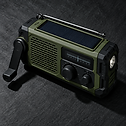
Amazon pick · Comms
NOAA Hand-Crank Emergency Radio
When towers drop, NOAA weather radio and local AM/FM are the only live information left. Crank or solar keeps it running without batteries.
Street price: $30–$60
Check price on Amazon
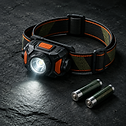
Amazon pick · Light
Rechargeable 400-Lumen Headlamp
Hands-free light for shelter, first aid and blackout cooking. Get one that takes both USB-C and AAA so you are never stranded without power.
Street price: $25–$50
Check price on Amazon
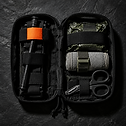
Amazon pick · Medical
Trauma IFAK with Windlass Tourniquet
Tourniquet, haemostatic gauze, pressure bandage, shears and tape in one pouch. Bleeding control is the one thing a household kit usually lacks.
Street price: $60–$130
Check price on AmazonFAQ // Read before you buy
Frequently asked questions
Newsletter // article
Get the next breakdown
New video articles, gear notes from testing and tool updates — one email a week.
No spam. Unsubscribe any time. We never sell subscriber data.
Keep going // 3 more
Related reading

Surviving a Blizzard in a Self-Built Underground Cabin
A builder rides out a brutal arctic blizzard inside a self-built underground log-and-stone cabin. See why earth-bermed shelters beat tents in extreme cold.

What a Ranger Carries Every Day: Survival Gear Breakdown
A veteran ranger empties his pockets and explains the everyday carry survival gear he actually trusts daily: knife, fire starter, cordage, and first aid kit.

Surviving a Severe Snowstorm in an Abandoned Stone House
Watch a survival expert ride out a brutal blizzard inside an abandoned stone house, with winter shelter tactics for insulation, drafts, and safe heating.