Field Article // Shelter Building
Build a Rain Catchment System for Under $150
Every thousand square feet of roof collects about 600 gallons per inch of rain. A basic diverter and first-flush setup turns that into usable water.
Key takeaways // 30-second read
- One inch of rain on 1,000 square feet of roof yields about 600 gallons — in most wet regions, storage capacity is the limiting factor, not rainfall.
- A first-flush diverter is the single most important component: it discards the contaminated first minutes of rain before it reaches your tank.
- Roof water is not drinking water until it is filtered to 0.1 micron and disinfected by boiling or chemical treatment.
- Keep storage opaque, covered and screened to prevent algae growth and mosquito breeding, and level the tank on a firm base.
- Check local collection rules and drain the system before hard freezes to avoid cracked barrels and fittings.
Do the yield math first
A general rule for planning: one inch of rain falling on 1,000 square feet of roof yields roughly 600 gallons, with losses to splashing, evaporation and first-flush diversion. Measure your roof footprint — not the total roof area on a pitched house, but the footprint that drains to your gutters — then multiply by inches of rain in a normal month for your region. Many households in wet regions collect more than their storage can hold, which means storage, not collection, is the limiting factor.
The components that matter
- Gutter and downspout. Any functional gutter works; add leaf screens or a gutter guard so debris does not reach your tank.
- First-flush diverter. The first minutes of rain wash bird droppings, pollen and roof grit off the roof. A diverter sends that water to a small drain before the tank starts filling — a five-gallon flush per 1,000 square feet is a reasonable starting point.
- Storage. Food-grade barrels or an IBC tote, opaque and covered. Clear containers grow algae; open containers breed mosquitoes.
- Filtration. Roof water still needs treatment for drinking: a 0.1 micron filter followed by boiling or chemical disinfection. For irrigation and washing, a screen and settling is usually enough.
- Overflow. Route surplus away from your foundation, ideally to a rain garden or a second tank.
Build order for an afternoon
- Clear the gutter and test that water flows to the downspout you intend to use.
- Cut in the diverter below the downspout, angled so debris falls out before the tank.
- Level your barrel or tote on a firm base — full weight is enormous, and a barrel that tips is a hazard.
- Connect the downspout to the tank with the diverter as the entry point, then add the overflow line.
- Cover the opening with mosquito mesh and add a tap or a pump at the lowest point.
Keeping the water safe
Roof runoff is not drinking water until it is treated. Birds, roofing materials and airborne dust all contribute contamination. Treat drinking water with the same ladder as any surface source: filter to 0.1 micron, then disinfect. Keep tanks opaque and covered to reduce algae and mosquito breeding, label and date stored volumes, and rotate for outdoor use rather than letting water sit for months.
Practical notes
- Check local rules. Some states and municipalities restrict rainwater collection or require permits, and HOA rules often apply.
- Roof material matters. Uncoated metal and asphalt shingles are common; avoid collecting from roofs treated with biocides or with lead flashing in poor condition.
- Winter. Draining the system before a hard freeze prevents cracked barrels and broken fittings.
Gear & Equipment // Tested
The gear we actually run
Bought at retail and used in the same drills described above. Links are affiliate links — they cost you nothing extra and keep this site independent.
As an Amazon Associate we earn from qualifying purchases.

Amazon pick · Water
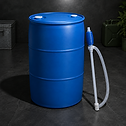
55-Gallon Food-Grade Water Barrel + Siphon Pump
The cheapest way to store real volume. One barrel covers two adults for roughly three weeks at baseline consumption — fill it, treat it, date it.
Street price: $90–$140
Check price on Amazon

Amazon pick · Water
Water Purification Tablets (Potable Aqua)
A 50-tablet bottle weighs nothing and takes over when a filter clogs. Iodine or chlorine dioxide tabs kill viruses that filters miss.
Street price: $8–$14
Check price on Amazon
Amazon pick · Water
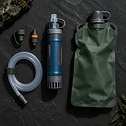
Sawyer Squeeze Water Filter
The default for any bag: 0.1 micron hollow-fibre filtration, backflushes with the included syringe, and filters up to 100,000 gallons. Squeeze, gravity-feed or inline.
Street price: $35–$45
Check price on AmazonFAQ // Read before you buy
Frequently asked questions
Newsletter // article
Get the next breakdown
New video articles, gear notes from testing and tool updates — one email a week.
No spam. Unsubscribe any time. We never sell subscriber data.
Keep going // 2 more
Related reading

How to Build an Elevated Survival Tree Shelter in the Jungle
Learn to build an elevated survival tree shelter in the jungle: site selection, timber lashing, platform construction, and two nights sleeping safely in the canopy.

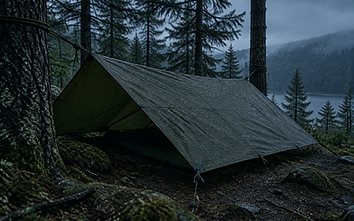
Emergency Shelter: The 20-Minute Tarp System
A tarp is the fastest route to real shelter. Pick the site first, then the shape — the difference between a dry night and a wet one is usually the ground, not the knot.